
The Shape of Things to Come#
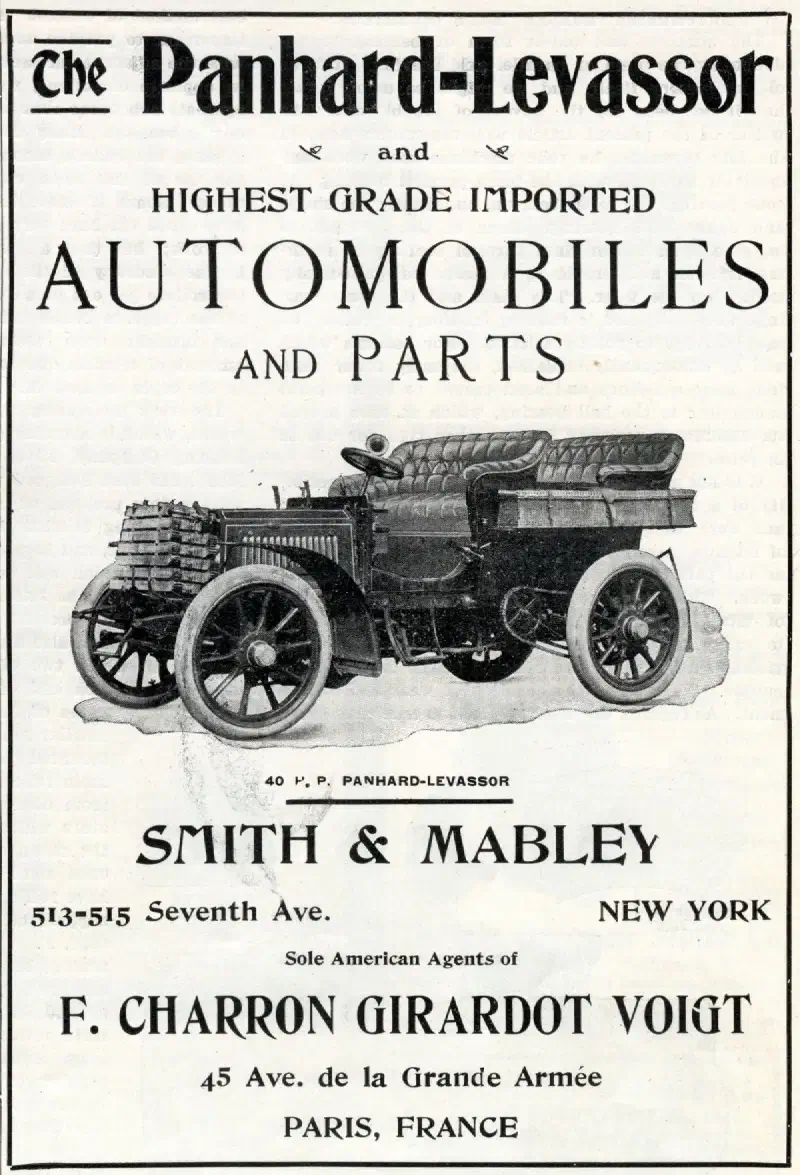
IN THE 1880s, the most distinguishing feature between a horse-drawn coach and Gottlieb Daimler's first motor vehicle was a simple absence: no place to tie a horse. Early "horseless carriages" copied the Phaeton and Cabriolet styles so faithfully that the engine—tucked inconveniently in the rear—felt like an afterthought. It took Panhard-Levassor's 1891 decision to move the engine to the front for the automobile to finally assert its own mechanical logic.
That logic has since evolved into something no horse-drawn carriage ever needed to contemplate: a drag coefficient of 0.095, a chassis rigid enough to withstand 34,712 Newtons of impact force, and an interior so attuned to human psychology that the dashboard knows you are stressed before you do.
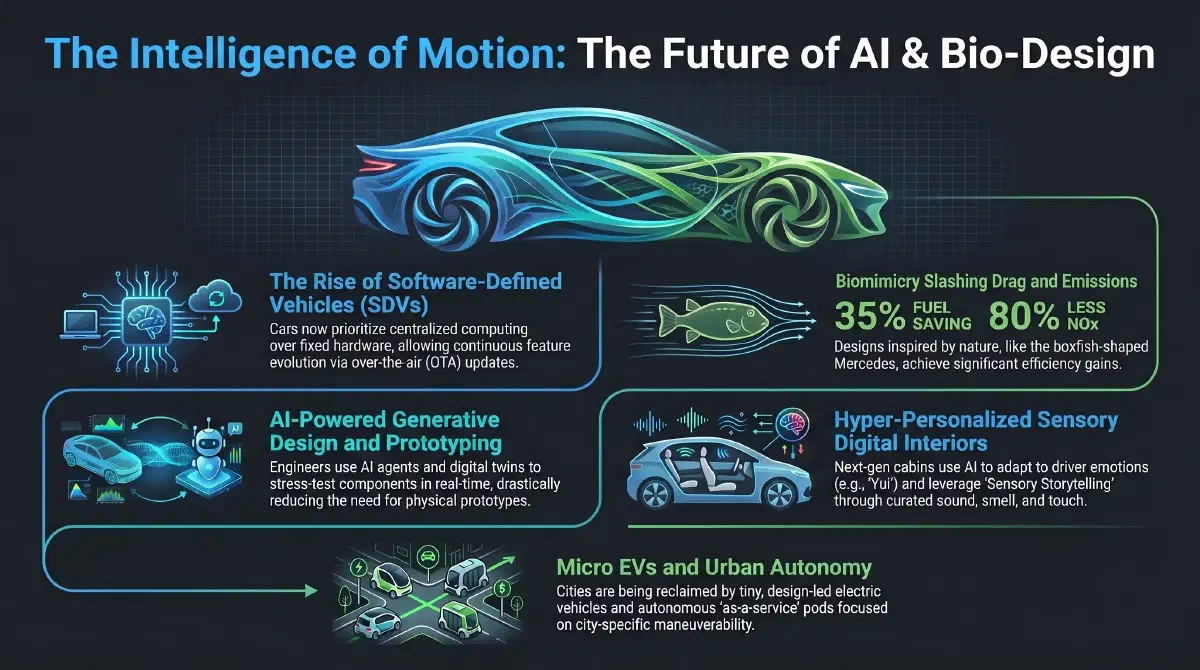
Welcome to the new science of the car—where the vehicle is no longer just a machine for transport but a "kinetic canvas" painted by algorithms, shaped by nature, and increasingly capable of reading the mind of its operator.
Nature's Blueprint#
Speaking of bionics: the tropical boxfish is an unlikely muse for automotive aerodynamics. It looks clumsy. Yet its natural drag coefficient is 0.04—remarkably close to the teardrop, the theoretical ideal. Mercedes-Benz built a full-size vehicle based on the boxfish and achieved a Cd of 0.095, just shy of the 0.09 considered perfect for a ground-based vehicle.
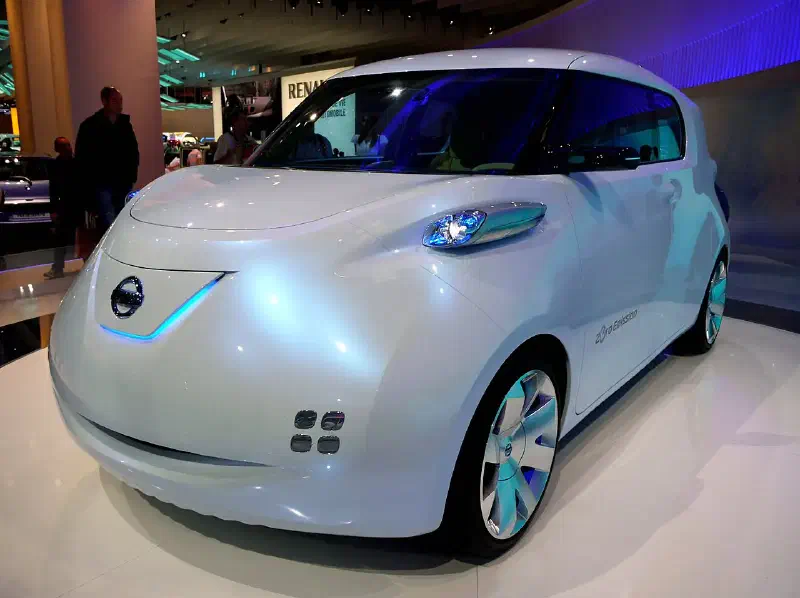
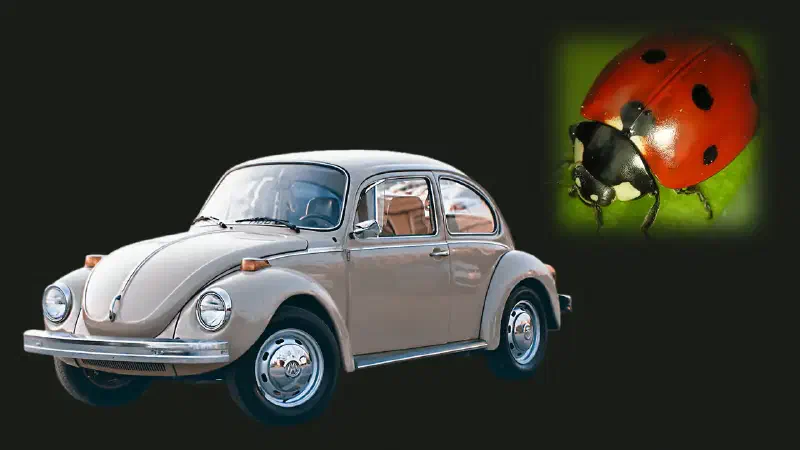
The Volkswagen Beetle echoes the ladybird. The Aesthetics No. 2 sculpture draws from the fin whale's skeleton. Even the Nissan Townpod mimics a human smiling face—emotional bionics designed to foster connection rather than just efficiency. Nature solved fluid dynamics millions of years before the internal combustion engine. Automakers are finally paying attention.
The Silicon Skeleton#
Underneath the skin lies the chassis—a skeleton that must balance rigidity, weight, and safety. The monocoque, or single shell, distributes stress across the entire frame and dominates consumer car production. The space frame, a lattice of interconnected tubes, offers modularity and stiffness for racing. Lattice structures, which distribute forces through triangular arrangements, represent the pinnacle of material efficiency.
Validation happens in silicon before steel ever bends. Finite Element Analysis applies virtual torque—2,000 Nm, say—and measures displacement. Front impact simulations crash a digital vehicle into a rigid barrier at 27.78 metres per second, generating 34,712.5 Newtons of force. The resulting von Mises stress patterns reveal weak points in a spectrum of colours: tranquil blues for low stress, warning yellows, critical reds. This is how engineers ensure the skeleton can survive reality before a single piece of metal is cut.
The Physics of the Crash#
Crashworthiness is the science of failing safely. A well-designed vehicle absorbs energy in sacrificial zones while preserving the passenger cell. Side impacts apply 7,500 Newtons to simulate 3G forces. Rear impacts model 10 kilo-Newtons—a 4G collision. The torsional test applies 2,000 Nm of torque, and the displacement plot becomes a map of structural safety.
For high-performance electric vehicles, the chassis must also accommodate battery arrays that can weigh as much as a small engine. The trade-offs between reinforcement and weight are now calculated with a precision that makes the chassis a "silicon skeleton"—optimised by autonomous simulation before physical prototypes exist.
The Ghost in the Machine#
Yet for all this engineering sophistication, the most unpredictable component remains the one behind the steering wheel.
For most of the twentieth century, the automotive industry treated the driver as a nuisance—the proverbial "nut behind the wheel." Collisions were "accidents," a shrug of the shoulders. Between 1900 and 1920, crashes were viewed as chance phenomena, acts of God. Between 1920 and 1950, the paradigm of "accident proneness" blamed certain individuals as biologically destined for calamity. The remedy was punitive: legislation, education, and occasional public shaming.
Only recently has the field shifted to a "systems approach"—acknowledging that crashes are multi-causal system failures, not moral failings. The term "accident" has precipitously declined in academic literature, replaced by the clinical "crash." An accident is a shrug; a crash is a system failure demanding analysis.
Peering Through the Skull#
Modern researchers no longer ask drivers how they feel. They measure.
Electroencephalography (EEG) detects changes in cognitive demand in real time. In a study of 20 drivers navigating real-world environments, an EEG-based workload index proved significantly more sensitive than traditional eye-tracking or subjective questionnaires. While an eye-tracker might show a driver looking at the road, the EEG reveals whether their brain is actually processing the information—or drowning in a "stochastic fog."
The findings were stark. Traffic intensity and road complexity do not subtly influence the driver; they cause objective, measurable spikes in cognitive demand. When a dashboard interface increases mental workload by even a few percentage points during a high-complexity scenario, it could mean the difference between a successful intervention and a catastrophe.
Heart rate variability (HRV)—the millisecond-by-millisecond variation between heartbeats—offers a window into psychological stress. It is the signature of the autonomic nervous system struggling to maintain equilibrium. HRV research has revealed a "fatigue paradox": Driver Fatigue Monitor Systems, designed to ensure safety, can themselves become significant stressors. A camera integrated directly into the steering wheel induces higher psychological load than one mounted independently. The steering wheel camera feels like a panopticon—an intrusive mechanical eye the driver cannot escape.
Voice-based warnings prove significantly less stressful than ambiguous icons. A voice provides clarity and partnership; a flashing icon is a cold, demanding signal that heightens alarm without offering resolution.
The Emotional Road#
Facial-expression analysis adds another layer. A study of 21 drivers on real-world roads found that major roads—high traffic density, deteriorating conditions—elicited the highest frequency of emotional expressions: a surge of 11.15 percent above average, predominantly disgust and anger. Rural roads increased expressions by 4.88 percent, driven by surprise at limited visibility.
Urban roads saw a 6.09 percent decrease in emotional expression, though they were frequently the site of joy—often attributed not to traffic but to the novelty of the test vehicle itself. The car remains an aspirational object.
Perhaps most critically, the navigation device emerged as a primary trigger for negative emotions across all environments. The friction between a driver's intuition and a device's cold, delayed instructions remains a significant source of systemic stress.
The Three Levels of Awareness#
At the heart of driving lies situation awareness—a three-tiered hierarchy. Level 1 is perception of elements in the environment. Level 2 is comprehension of their meaning. Level 3 is projection of their future status. When a driver fails to brake for a pedestrian, the failure is rarely a lack of physical strength; it is a collapse at one of these levels.
Computational cognitive architectures like QN-ACTR-SA model this process. In simulator trials with 14 participants, researchers validated that situation awareness degrades rapidly as traffic density and the number of road signs increase. The most striking finding was the "tunneling" of awareness: under high cognitive load, peripheral perception suffers significantly. The human mind, overwhelmed by information from the front, effectively shuts down lateral surveillance. We do not see what we do not expect to see.
A driver does not crash because they are a bad person. They crash because their cognitive architecture reached its physical limit.
The Calculus of Desire#
This new science extends even to aesthetics. Traditionally, vehicle styling was a matter of artistic intuition—the "divine spark" of a designer in a Turin studio. Today, desire is being subjected to the rigor of Kansei Engineering.
Kansei—a Japanese term for the psychological feeling a consumer has about a product—translates vague emotions into mathematical weights. Words like "futuristic," "elegant," and "robust" map to specific physical features. The curve of a fender becomes a calculated attempt to trigger a specific emotional response.
A study of Chinese electric vehicles revealed a fascinating hierarchy. Even in a market ostensibly driven by "vague user feelings," functionality remains the ultimate arbiter. The top three influential factors were: functionality (reliability and safety) with a weight of 0.195; elegance of design with 0.183; and intricacy of structure with 0.134. The Nio ES6 emerged as the most successful exterior design among the brands tested. By quantifying these weights, manufacturers allocate resources to design elements that yield the highest emotional return on investment.
Forecasting Beyond the Spreadsheet#
This data-driven approach also transforms business forecasting. Traditional models relied on broad macroeconomic indicators—GDP growth, oil prices, interest rates—but these are notoriously blunt instruments. A new approach using the Stack Ensemble model combines multiple machine-learning learners (Random Forests, Neural Networks, SGD) into a single predictive engine, achieving an R-squared value of 0.901—a significant leap over linear regression.
The model blends exogenous factors (housing price indices, stock indexes) with endogenous firm-level data: test drive volume, wholesale numbers to dealers, "stock months." The precision is remarkable: a mean absolute error of just 76.6 units on an average monthly sales volume of 714 units. For manufacturers, this accuracy is the antidote to the "bullwhip effect"—small fluctuations amplified upstream into costly volatility. By predicting demand with R-squared above 0.90, automakers stabilise supply chains, optimise capital efficiency, and avoid the ruinous costs of overproduction.
The Intrusive Assistant#
As vehicles become more intelligent, the relationship between driver and machine grows more fraught. Driver Fatigue Monitor Systems use AI-powered cameras to monitor the driver's face for signs of exhaustion—but must do so without becoming a source of the very fatigue they aim to prevent.
Researchers have used Support Vector Machine algorithms to classify which system configuration a driver is observing based solely on their physiological response—heart rate variability and eye movements—with 86.957 percent accuracy. The machine can now "read" the driver's level of stress and engagement with nearly 87 percent precision.
This level of insight is essential for building trust. If a car knows you are stressed by its behaviour, it can adjust its driving style or provide more reassuring feedback. The goal is a seamless interaction where the human and the machine are so well-attuned that the transition of control is invisible.
The Self-Explaining Road#
The ultimate realisation of this systems approach is the "self-explaining road": a driving environment so intuitive that it inherently guides the driver toward safe behaviour while adapting to their natural cognitive limitations. A wide, straight lane whispers "speed." A narrow, textured street screams "caution." The vehicle acts as a sympathetic buffer, recognising that human attention is a finite resource.
This is the future of the automobile: not a tool for transport but an empathetic system that monitors, predicts, and accommodates the human condition. The old image of the driver as a "road devil" to be disciplined has been replaced by a view of the driver as a biological system with fixed limits and predictable emotional patterns.
The Human Signature#
The threads of this transformation—aerodynamics, structural analysis, bionic modelling, cognitive neuroscience, Kansei engineering—are becoming too complex for a single human mind to optimise simultaneously. Artificial intelligence is the logical successor to the computational tools already in use, capable of managing the intricate interplay between a 0.095 drag coefficient and a chassis that withstands 34,712 Newtons of force.
Yet the role of the designer is not disappearing. It is shifting. The designer is no longer a solitary creator of forms but a curator of algorithmic outputs. Their task is to define the parameters and translate the brand's message into a recognisable identity—ensuring that a Mercedes or a Ferrari remains identifiable even as its lines are optimised by a machine.
This transition may be viewed with skepticism by those raised on the fine arts foundation of traditional design. But it is a technological inevitability. The challenge for the future is to ensure that as the tools of design become increasingly autonomous, the message of the vehicle—its power to communicate emotion and identity—remains clear and precise.
The kinetic canvas of the future will be painted by algorithms. But the signature must remain human.
References available upon request.