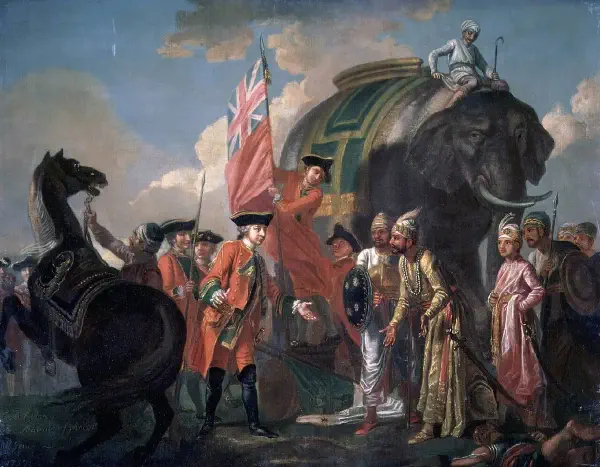
How a London joint-stock company founded to trade pepper ended up ruling the richest province of Mughal India. The East India Company's trajectory from warehouse to taxman, and the corporate sovereign that Edmund Burke and Adam Smith could not quite categorise.
A six-part narrative history of the British Empire's formation, from Elizabethan privateers raiding Spanish treasure fleets to the paper infrastructure of bonds, bills of exchange and admiralty courts that knitted the imperial world together.
The Elizabethan prehistory of British empire: privateers raiding Spain's treasure fleets, the Irish plantations as colonial laboratory, a lost colony at Roanoke, and the Protestant ideology that turned piracy into a providential mission.
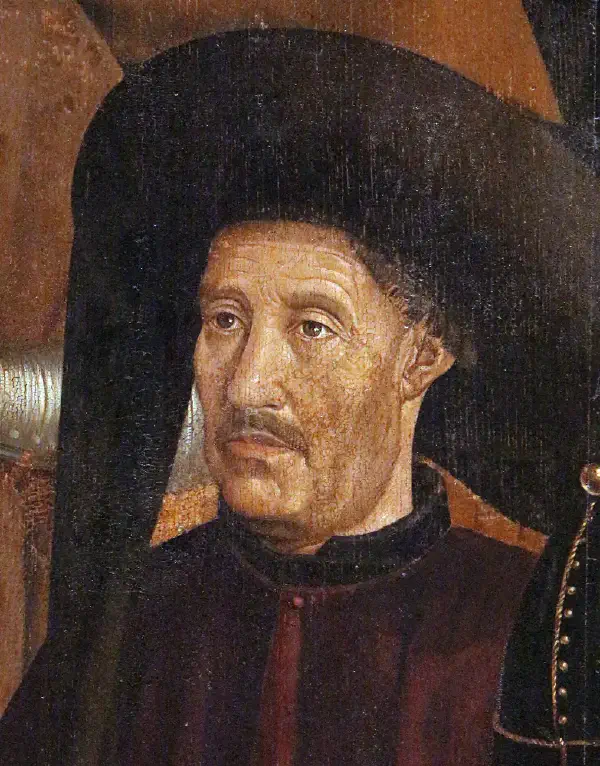
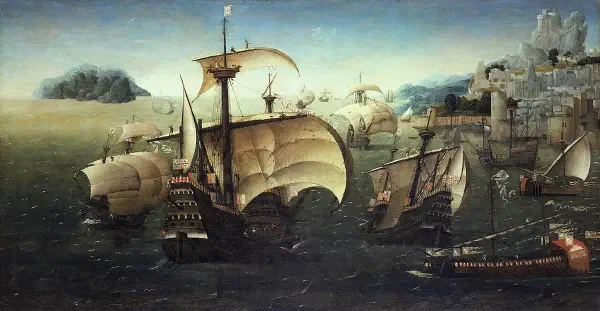
Prince Henry never captained an ocean voyage, but his workshop at Sagres dismantled the fear of the unknown. The caravel, the African coast, and the methodical assault on the horizon.
A twelve-part narrative history of Portuguese expansion from the assault on Ceuta in 1415 to the empire's long aftermath. From Prince Henry's workshop to Albuquerque's choke-point strategy, from the spice trade's disruption of Venice to the Creole societies that outlasted the galleons.
Five rival kingdoms, a crumbling Moroccan sultanate, and one fortified city at the throat of the strait. How Portugal's assault on Ceuta in 1415 turned a crusading momentum into an oceanic destiny.
When the guns fall silent, the economists arrive with their spreadsheets and their promises of a recovery. But for most war-torn countries, the true legacy of conflict is not a peace dividend but a permanent subtraction from prosperity—a scar that deepens with each passing generation.
War is the ultimate uninsurable risk—and yet, in the shadowy syndicates of Lloyd’s of London and the boardrooms of Washington’s development-finance bureaucracy, a price is placed on it every day. The insurers who underwrite the costs of missiles, mines and maritime chaos do not simply reflect the reality of conflict. They shape it.