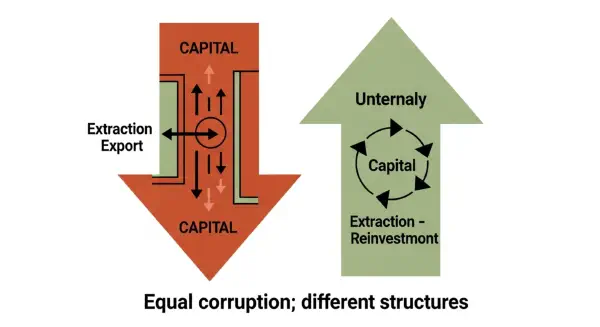
This post examines the two most common non-economic explanations for why poor countries stay poor: corruption and culture. It evaluates the empirical relationship between corruption and growth, asks why culturally identical countries at different levels of development exhibit different behavioral patterns, and traces the historical use of cultural argument as post-hoc justification for development outcomes.
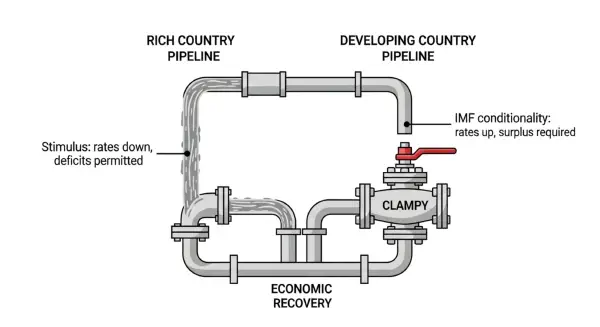
This post examines the macroeconomic policy prescriptions applied to developing countries through IMF conditionality, evaluating the empirical relationship between inflation, interest rates, fiscal policy, and economic growth across the historical record. It draws on the cases of Brazil, South Korea, South Africa, and Argentina to assess whether the standard orthodoxy of very low inflation and balanced budgets produces the outcomes its proponents claim.
This post examines the history and current architecture of the international intellectual property rights system, tracing its evolution from the first patent law in 15th-century Venice through the 1994 TRIPS agreement. It asks whether the current system reflects a principle of rewarding innovation or a mechanism for managing competition between nations at different stages of technological development.
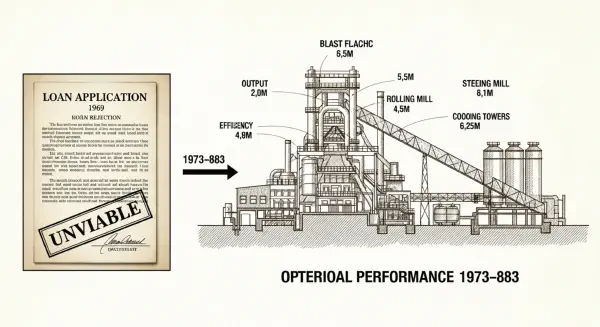
This post examines the institutional economics of state-owned enterprises, interrogating both the theoretical case against public ownership and the empirical record of actual SOE performance across Asia, Latin America, and Europe. It asks whether the dominant policy prescription — privatize — reflects the evidence or the ideology.
This post examines the relationship between foreign direct investment and economic development, asking whether the unconditional welcome recommended to developing countries by international institutions reflects the historical practices of today's wealthiest nations. It draws on the cases of Finland, Japan, Korea, the United States, Singapore, and Ireland to evaluate what conditions determine whether FDI accelerates or constrains long-run development.
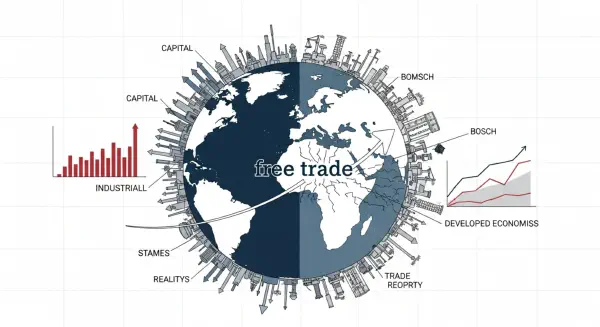
This post examines the theoretical and empirical foundations of free trade as a development strategy, focusing on the gap between the theory's assumptions and the observable conditions of developing country economies. It draws on case studies from Mexico, Ivory Coast, Zimbabwe, and Korea to assess whether rapid trade liberalization produces the outcomes its advocates predict. The argument about capability versus incentive is the analytical core.
This post examines the development strategies of today's wealthiest nations during the centuries in which they became wealthy, drawing on archival evidence from Britain, the United States, Germany, Japan, and other industrial powers. It places those strategies alongside the policy prescriptions those same countries currently deliver to the developing world. The gap between what rich countries did and what they now recommend is the central subject of the inquiry.