A comprehensive exploration of how technological innovation is shaped by path dependency, structural lock-in, and biomimicry as a pathway to more resilient design systems.
Examining how technological innovation is constrained by path dependency and structural lock-in, using QWERTY keyboards and other examples to illustrate why superior technologies often fail to displace incumbents.
Contrasts aerospace mass budget culture — where mass is the primary design currency — with ground transport engineering, demonstrating what the discipline of mass management achieves when enforced.
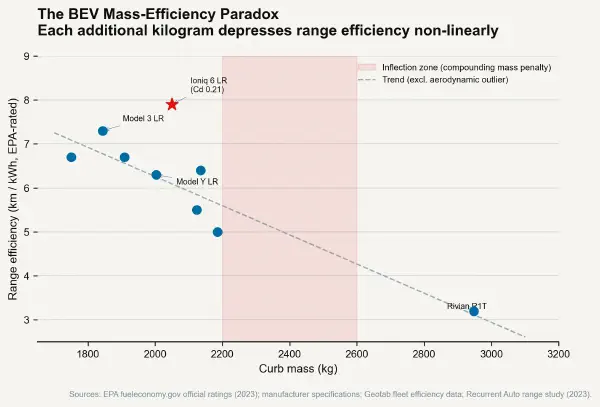
Applies MAF analysis to reveal that above approximately 2,400 kg total vehicle mass, adding battery capacity reduces net range per unit of additional battery mass — placing the 10 best-selling BEVs at or near this inflection point.