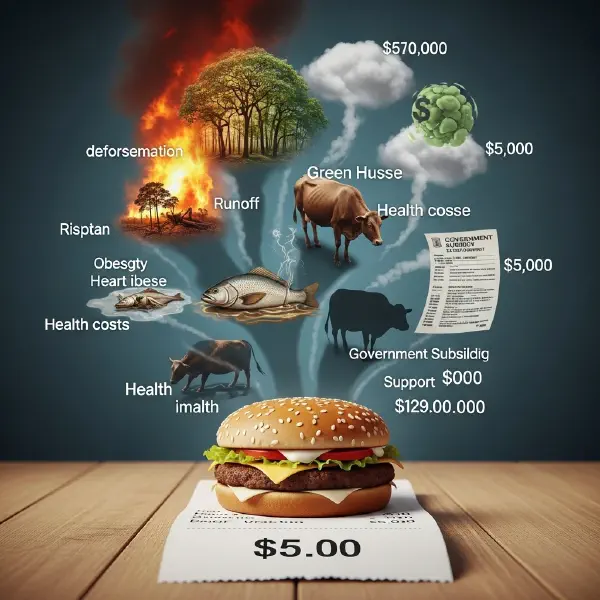
Economics is never just about numbers: it is about who controls the rules, who writes the contracts, and who pays the price. This page draws together content from across the site; history, systems, human behavior, and industrial analysis, examining how economic power is constructed through colonial extraction, ideological architecture, development traps, and the behavioral mechanics of consumption.
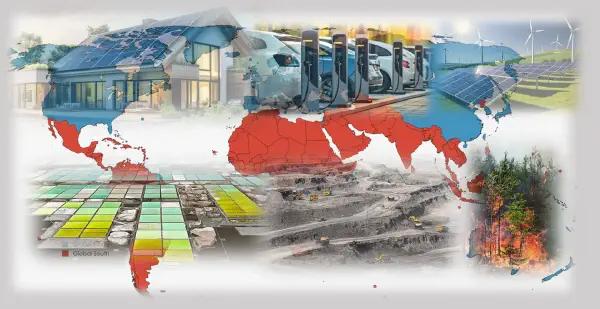
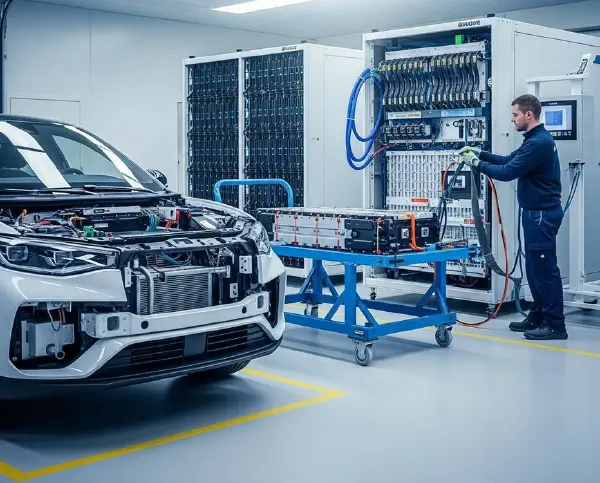
The global shift toward a post-carbon economy is functionally a new phase of imperialism, where the ecological costs of renewable energy are externalized onto the Global South. This analysis examines the historical parallels between fossil fuel extraction and the emerging mineral economy, revealing how the 'green transition' reproduces colonial dependencies while exacerbating environmental destruction. We explore the devastating material demands of technologies like electric vehicles and batteries, the weaponization of lithium and rare earth minerals in geopolitical conflicts, and the systematic silencing of indigenous and marginalized communities whose lands are sacrificed for the sake of planetary salvation.
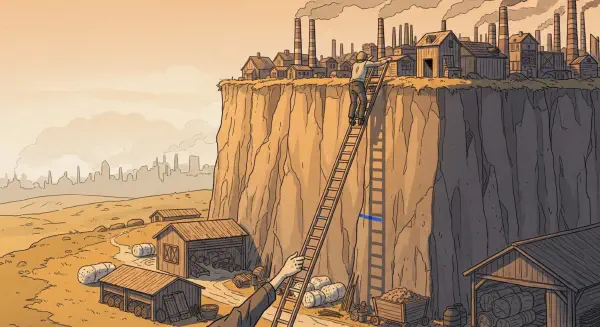
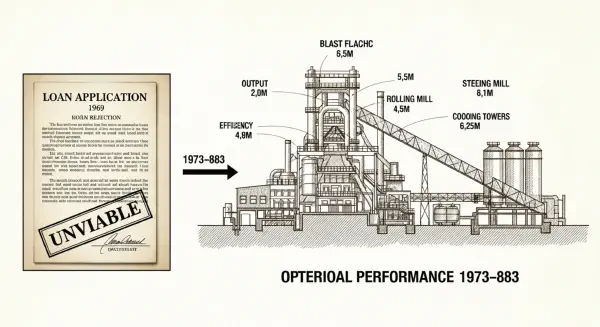
Why knowledge spillovers, not natural resources, determine which economies sustain durable prosperity, and what Sweden's industrial history reveals about the institutions that make the difference.
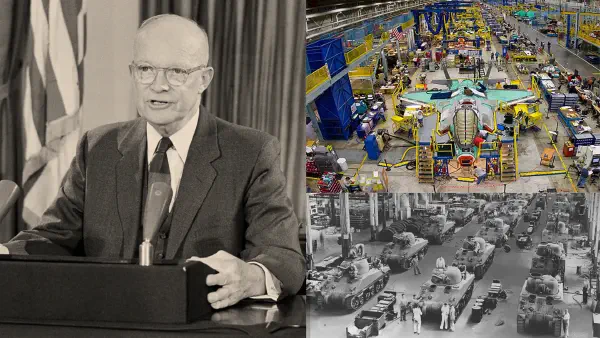
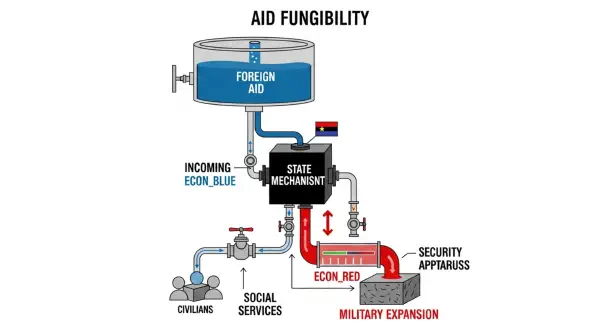
The military-industrial complex did not merely survive the Cold War. It metamorphosed into a global system of software dependencies, bilateral legal frameworks, and maintenance contracts that bind sovereign nations to exporters for decades after the last shot is fired.
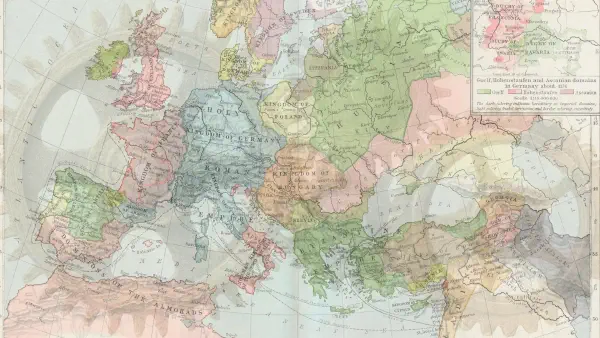
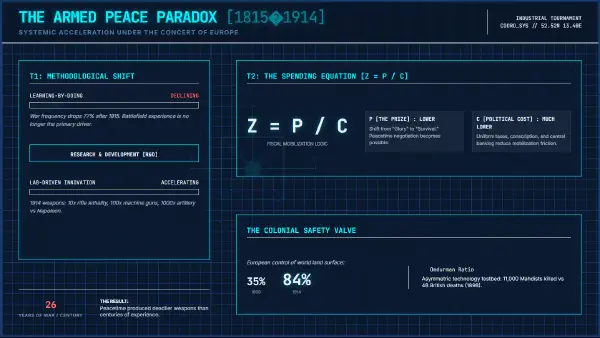
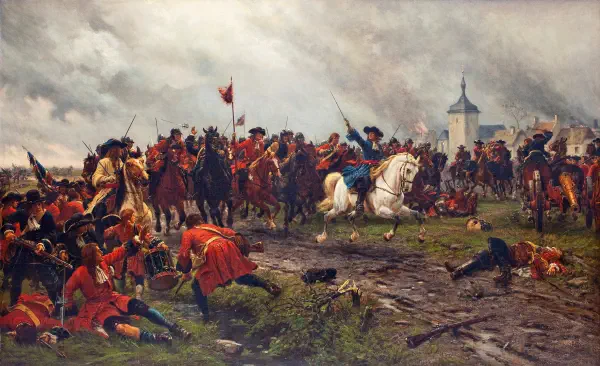
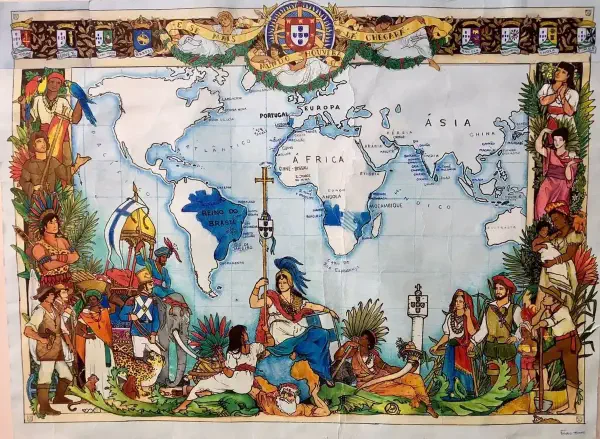
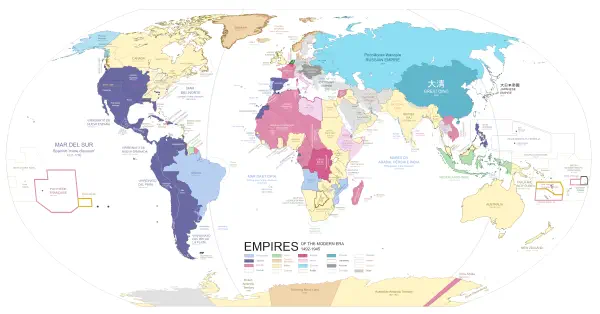
In 900 AD, western Europe was poorer, more violent, and more backward than China, India, or the Muslim Middle East. By 1914, Europeans controlled 84 percent of the world's land surface.
China, the Ottoman Empire, and eighteenth-century India all had frequent warfare and access to gunpowder weapons. None sustained military innovation at Europe's pace.
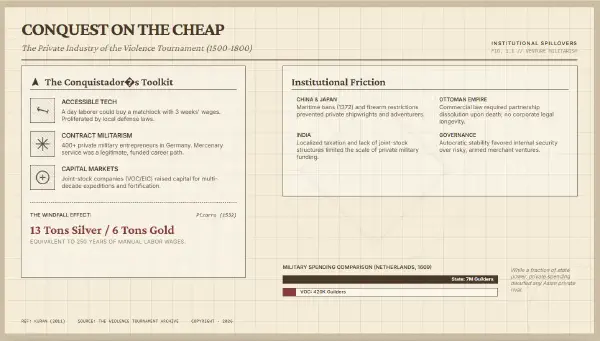
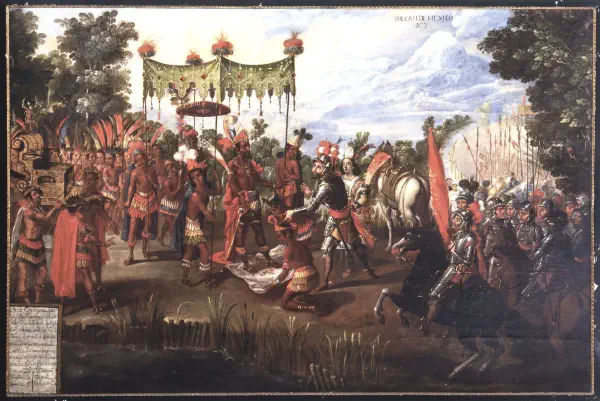
State-funded tournaments produced Europe's military lead, but private adventurers did most of the actual conquering. Cortés, Pizarro, da Gama, and the East India Company all operated with minimal government oversight.
In 900 AD, western Europe was poorer, more violent, and more backward than China, India, or the Muslim Middle East. By 1914, Europeans controlled 84 percent of the world's land surface.
A six-part analytical series drawing on Acemoglu and Robinson's Why Nations Fail, examining how political and economic institutions, not geography, culture, or ignorance, explain the vast disparities in global prosperity.
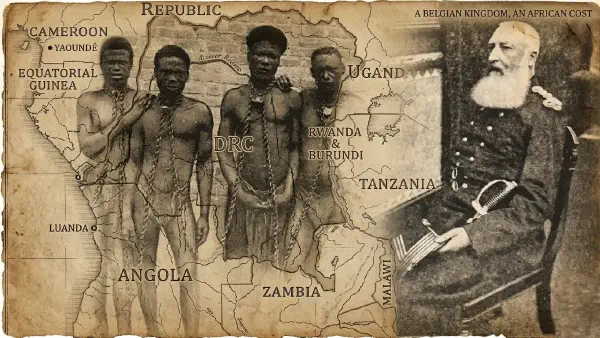
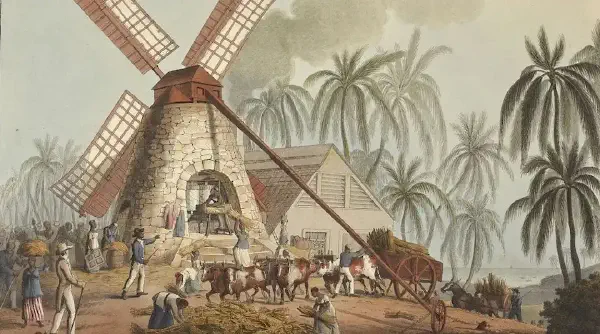
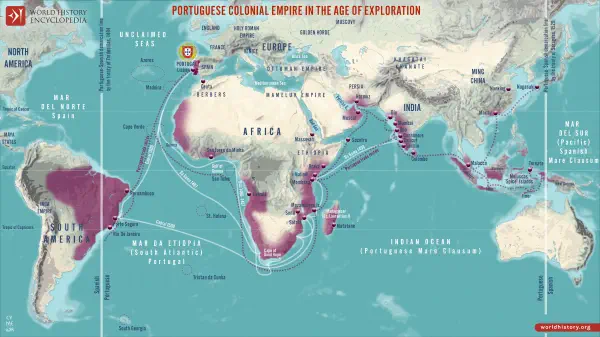
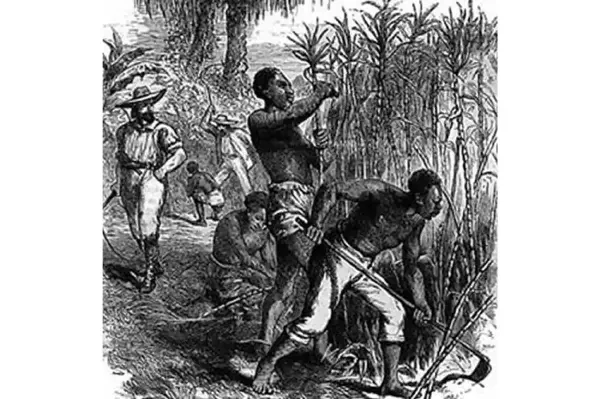
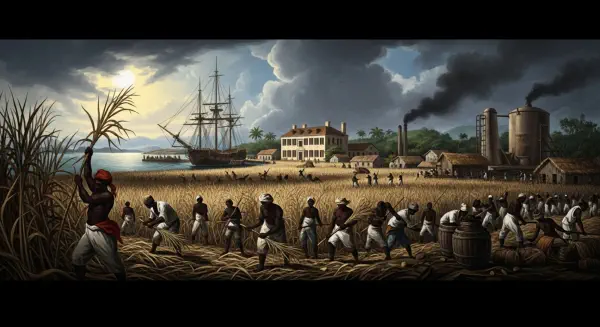
The modern enthusiasm for Foreign Direct Investment (FDI) in developing countries often overlooks a troubling historical precedent. Before the era of global supply chains and special economic zones, there was the colonial plantation system. For centuries, European powers established enclave economies in Asia, Africa, and the Americas designed for one purpose: extraction.
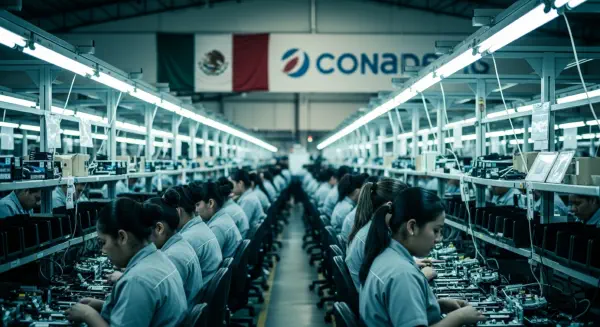
If the colonial plantation was the original extraction machine, Mexico’s IMMEX (Industria Manufacturera, Maquiladora y de Servicios de Exportación) program is its most sophisticated 21st‑century descendant. Launched in 2006 as a successor to the earlier maquiladora scheme, IMMEX now encompasses over 3,000 plants, employs more than 1 million workers, and accounts for roughly half of Mexico’s exports. Yet the economic structure remains eerily familiar: foreign ownership, low wages, minimal local value‑added, and a legal framework designed to repatriate profits rather than reinvest them.
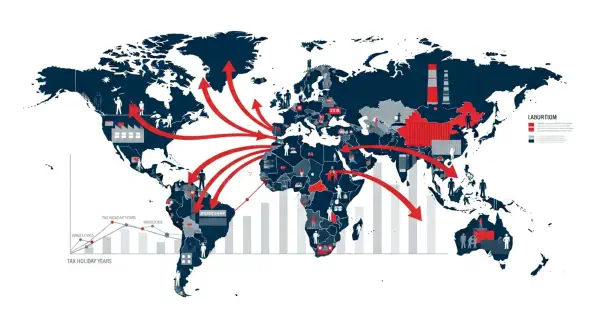
The Mexican IMMEX model did not emerge in isolation. It is one variant of a global policy template promoted by international financial institutions, bilateral donors, and development agencies since the 1980s. Today, dozens of countries operate Special Economic Zones (SEZs) and export‑processing zones (EPZs) that offer foreign investors the same deal: duty‑free imports, tax holidays, weak labour protections, and unrestricted profit repatriation. In exchange, they receive jobs – but rarely the kind of industrial deepening that builds self‑sustaining economies.
The previous three parts have traced a grim continuity: from colonial plantations to Mexico’s IMMEX program to the special economic zones of Vietnam, Bangladesh, Ethiopia, and beyond. In each case, foreign capital gains access to cheap labour, tax breaks, and unrestricted profit repatriation, while the host country receives low‑wage jobs but little industrial deepening. This is not development; it is extraction.
Foreign Direct Investment (FDI) is often celebrated as a shortcut to development. But for many developing countries, the reality resembles an old colonial plantation: foreign‑owned enclaves extract cheap labor, land, and tax breaks, while profits flow back to wealthy home countries. Local economies receive low‑wage jobs but little industrial deepening.
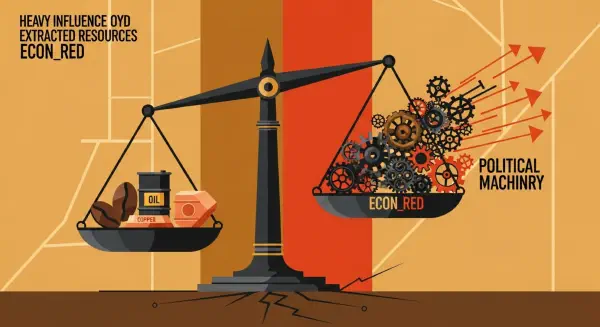
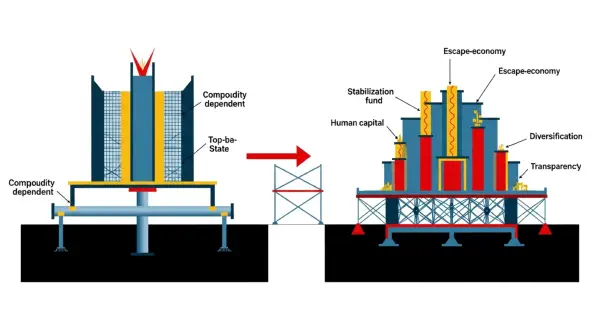
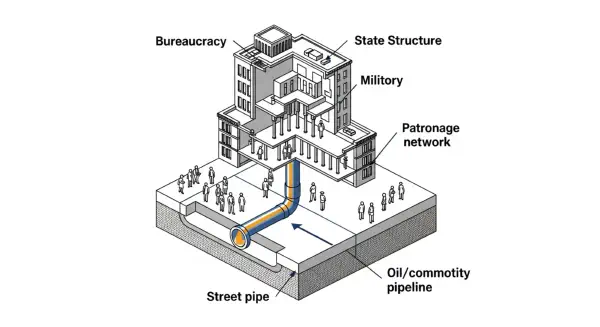
A five-part series examining why the countries best endowed with natural resources are so frequently the worst governed, and how the arithmetic of commodity dependence — not culture, not climate, not colonial history alone — explains the pattern.
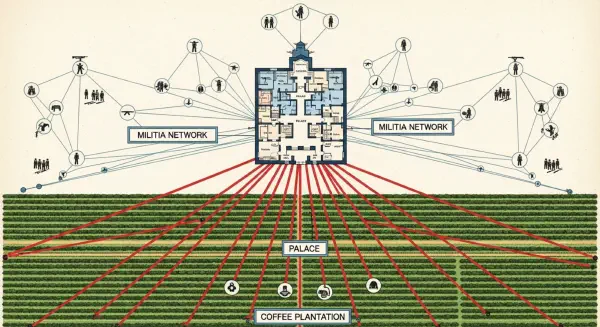
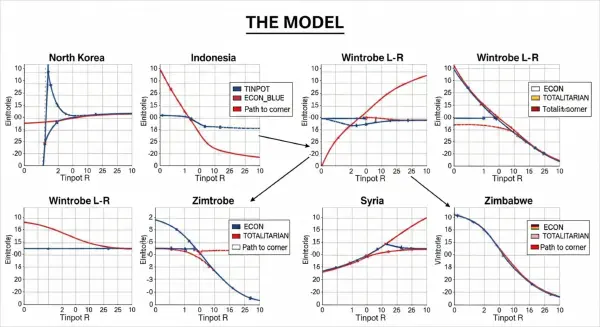
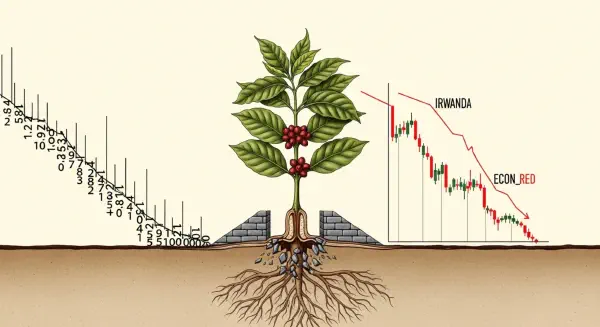
A five-part series using Wintrobe's loyalty-repression model and Verwimp's commune-level data to show that the Rwandan genocide was not the explosion of ancient hatreds but the rational outcome of a budget constraint the dictator could no longer meet.
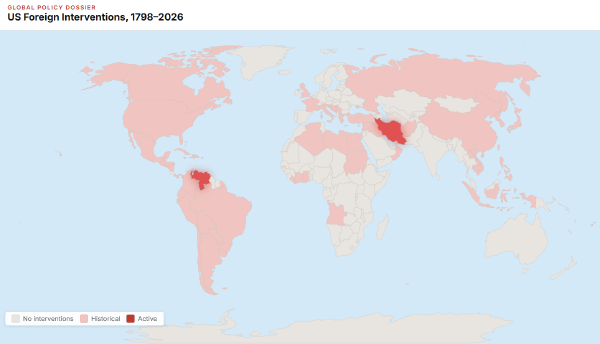
This three-part series examines how the United States turned democracy from a political principle into the moral packaging of imperial power. It traces the machinery beneath that language—institutions, law, finance, and force—and shows how these structures sustained hierarchy while preserving the image of universal order. It concludes by arguing that Trump did not create this contradiction, but exposed it by openly consuming the very myth America once sold to the world.
Deciphering the Architecture of Global Control, provides a critical investigation into how the concepts of development and globalization have been utilized as strategic tools for United States hegemony and world domination. Drawing from the analytical framework of Henry Veltmeyer, the series challenges the conventional narrative of global progress, framing it instead as a sophisticated system of imperial extraction and political containment
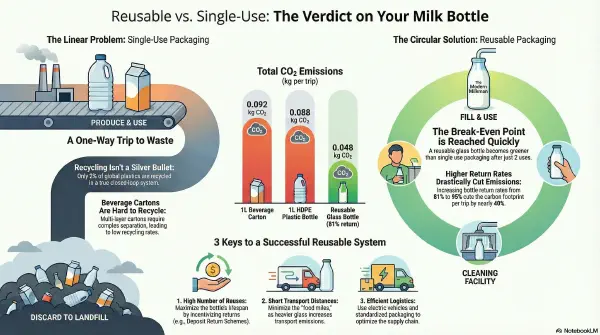
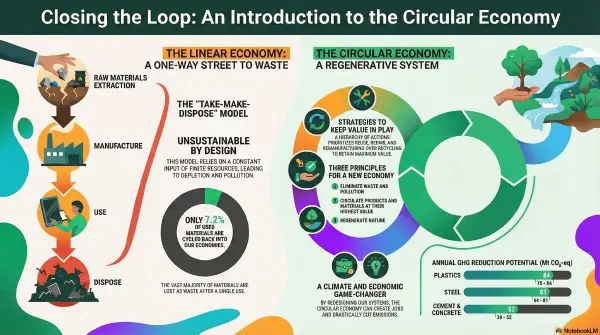
Exploring the inconvenient truths of the circular economy, from thermodynamic limits to systemic barriers, and how to build a more realistic and just system.
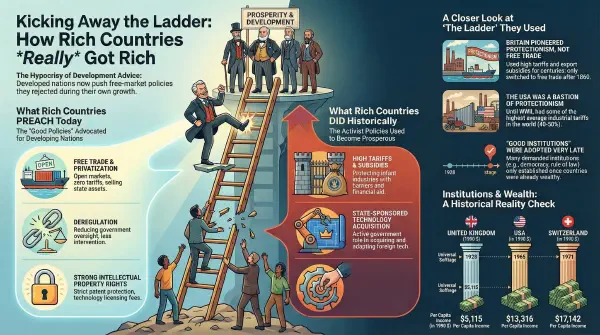
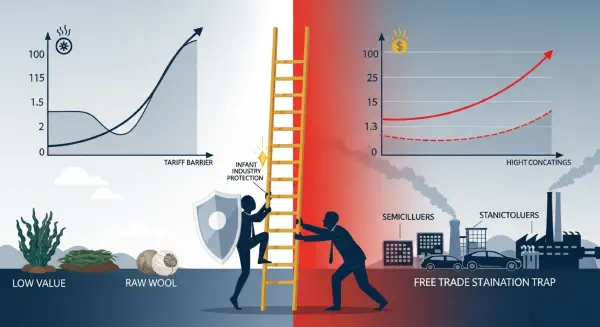
An exploration of how today's rich nations built their wealth using policies they now deny to developing countries, revealing the tale of two histories.
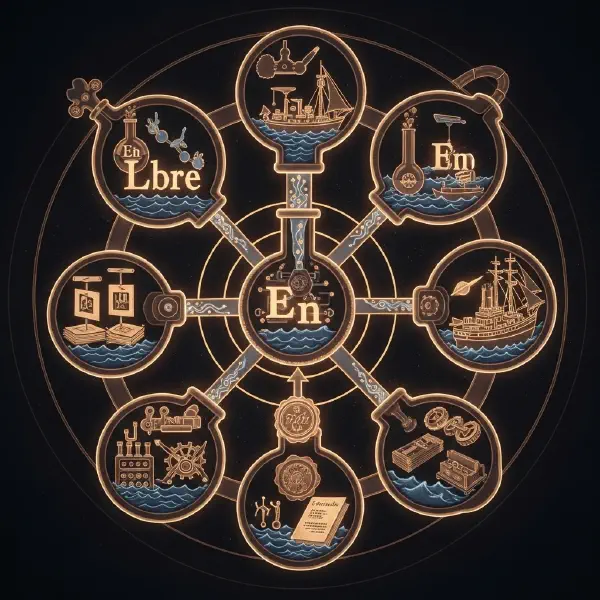
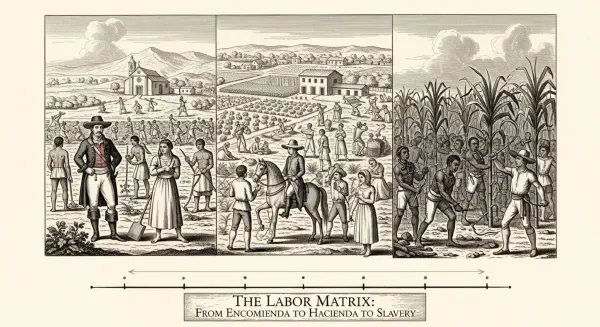
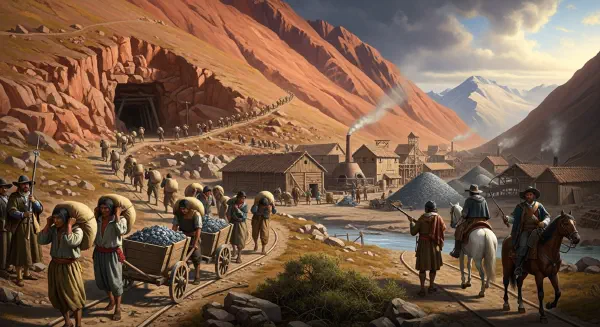
The empire is gone. But its operating system still runs Latin America, the Philippines, and even Spain itself. How three centuries of colonialism shaped the modern world.
A deep dive into the complex systems that allowed Spain to conquer and rule a vast empire for over three centuries—and how those systems still shape the modern world.
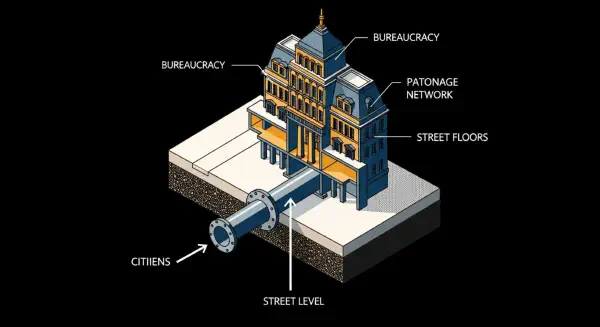
Spain didn't just conquer with swords—it ruled with bribes. The sale of offices, noble titles, and royal favors turned potential rebels into pillars of the empire.
This series examines the evolution of sports from survival-driven physicality to a commodified spectacle that serves economic and political interests. Through historical analysis, it reveals how mechanization birthed sublimated labor, engineered tribalism, and created mechanisms of social control and distraction.
Exploring the global sand extraction crisis and its impacts on communities, ecosystems, and inequality—from artisanal miners to elite capture and hidden health costs.
A five-part exploration of how manufacturers deliberately design products to fail, from the Phoebus Cartel to modern software lock-ins and repair prevention.
A three-part forensic series analyzing the unaccounted financial flows, perverse incentives, and power asymmetries that define the true price of car ownership and shape the global automotive industry.
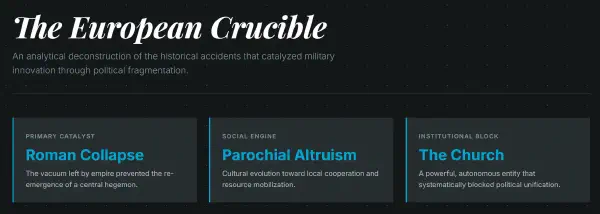
A critical analysis of how Europe's competitive fragmentation and imperial innovations created the modern global system of power, finance, and inequality.
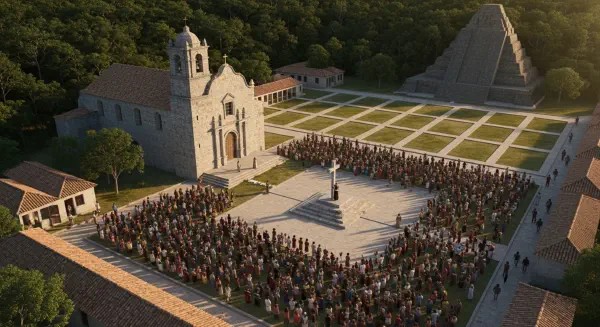
The Church was more than a spiritual guide—it was the empire's operating system. From birth to death, it controlled every aspect of colonial life, shaping bodies, minds, and souls into faithful subjects of the Crown.
A four-part investigation into the Dutch East India Company, separating popular legend from historical reality using economic history, systems analysis, and institutional critique.
A critical analysis of how defense procurement decisions reveal deeper theories of state value, sovereignty, and economic welfare through the lens of two contrasting fighter jet programs.
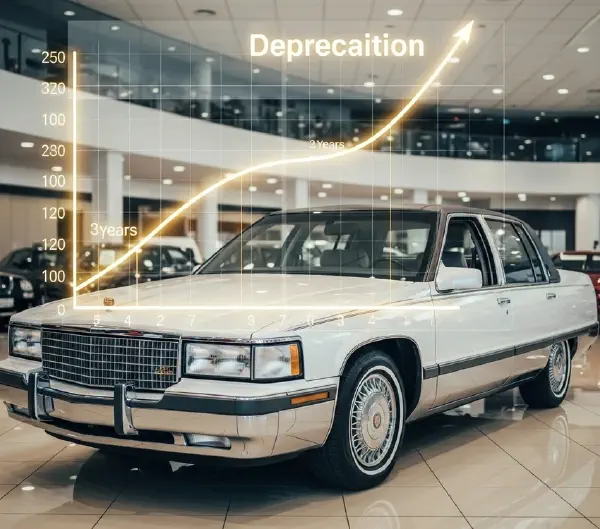
Analyzing the broader economic, environmental, and social impacts of the lease model, and how electric vehicles are challenging and potentially transforming the 36-month paradigm.
Examining how the 36-month lease cycle reshaped automotive product planning, manufacturing, and the used car market, creating a data-driven feedback loop focused on short-term performance.
Tracing the origins of modern automotive leasing from GM's 1992 innovation, exploring how financial engineering transformed the car from a durable asset into a subscription service.
An exploration of how automotive leasing transformed the car from a durable asset into a subscription service, reshaping industry economics, consumer behavior, and the global vehicle lifecycle.
Exploring the environmental and social impacts of repair restrictions, the role of salvage yards in circumventing digital locks, and the global implications for developing economies.
Examining the evolution to subscription models where features are rented rather than owned, and the policy battles pushing back against manufacturer control over product capabilities.
Tracing the origins of repair restrictions, from John Deere's software-locked tractors to Apple's glued components, and how manufacturers shifted from selling durable goods to controlling product lifecycles.
An exploration of the right to repair movement, examining how manufacturers use software locks and proprietary designs to control product lifecycles, from tractors to smartphones, and the battle for ownership rights.
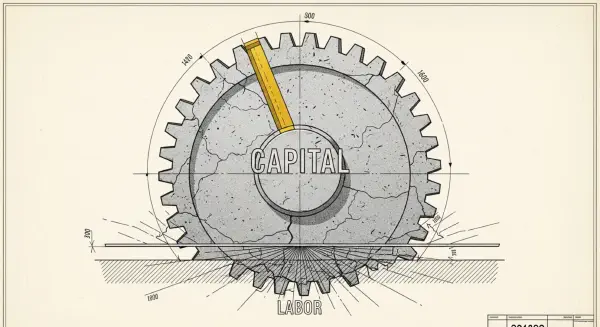
A systemic X-ray of neoliberalism, turning citizens into consumers, a tollbooth economy extracting rent from essentials, and shifting blame onto individuals. The fix, a restoration story built on cooperation, commons, and participatory democracy.
Exploring how ancient civilizations developed sophisticated circular economic systems through recycling, reuse, and resource optimization, revealing practices that modern economies are rediscovering.
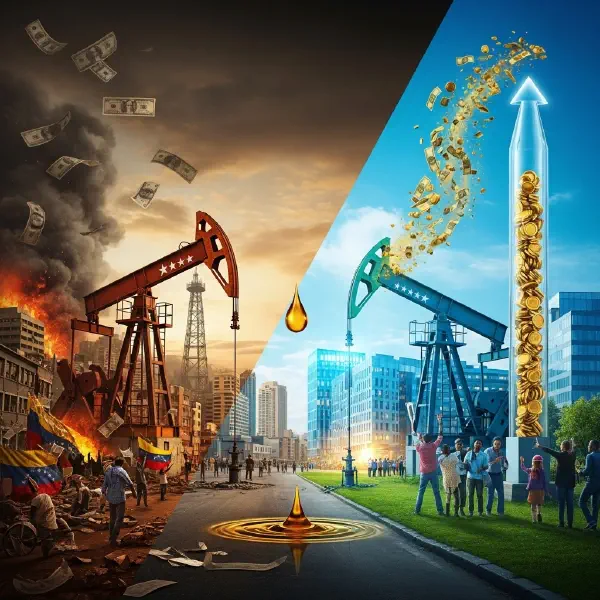
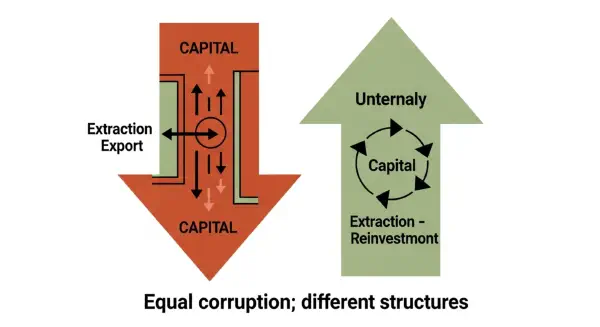
Most oil-rich nations suffer economic decline, corruption, and political instability. Norway did the opposite. Here's the counterintuitive economics of why natural wealth usually destroys nations – and the specific policies that made Norway the exception.
From the paralysis of too many options to the strange power of ownership, discover the cognitive biases and emotional triggers that marketers exploit – and that shape every purchasing decision you make.
Military spending looks like a black hole for taxpayer money. But economic analysis of the Swedish Gripen jet reveals a counter-intuitive truth: the civilian spillovers were so valuable they paid for the entire program – and then some.
Examines how digital platforms follow a predictable three-stage decay lifecycle from user-centric value creation to shareholder extraction, using Google's internal DOJ memos as the primary evidentiary case.
Examines how digital platforms follow a predictable three-stage decay lifecycle from user-centric value creation to shareholder extraction, using Google's internal DOJ memos as the primary evidentiary case.
A two-part forensic analysis of enshittification — the structural decay of digital platforms — tracing its mechanism, its institutional enablers, and the legal scaffolding that makes perpetual extraction possible.
Explores how Egypt’s status as a wartime creditor to Britain became a mechanism of post-colonial wealth extraction, freezing capital that could have funded industrialization.
This series traces how economies absorb, adapt, and evolve through 'development blocks' where technologies and logistics create new worlds, but policy shapes their direction and social impact.
Analyzing the long-term consequences of the gasoline tax pact, including urban sprawl, systemic fragility, and the challenges of rebuilding transit in an auto-dependent landscape.
Examining the systematic dismantling of streetcar networks by National City Lines, backed by GM and oil companies, and the criminal conspiracy that replaced electric transit with buses.
Tracing the origins of the gasoline tax as a user-funded model that created a self-reinforcing loop favoring roads over transit, setting the stage for America's auto-dependent infrastructure.
An exploration of how the gasoline tax created a dedicated funding stream for roads while systematically undermining transit, leading to auto-dependent cities and the Great Streetcar Scandal.
This post examines the dominant narrative about globalization — its origins, its internal logic, and its relationship to the actual historical record. Drawing on comparative development data from the post-war period through the present, it asks whether the policies prescribed to poor countries today bear any resemblance to the policies that made rich countries rich. The stakes are not academic: how a country understands the history of capitalism determines whether it believes it has options.
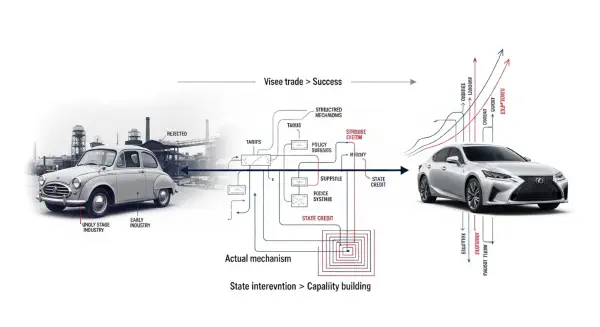
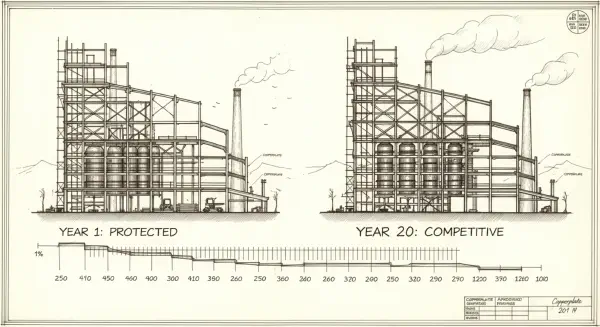
This post examines the development strategies of today's wealthiest nations during the centuries in which they became wealthy, drawing on archival evidence from Britain, the United States, Germany, Japan, and other industrial powers. It places those strategies alongside the policy prescriptions those same countries currently deliver to the developing world. The gap between what rich countries did and what they now recommend is the central subject of the inquiry.
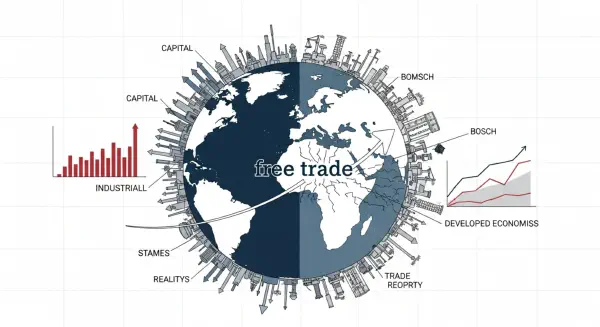
This post examines the theoretical and empirical foundations of free trade as a development strategy, focusing on the gap between the theory's assumptions and the observable conditions of developing country economies. It draws on case studies from Mexico, Ivory Coast, Zimbabwe, and Korea to assess whether rapid trade liberalization produces the outcomes its advocates predict. The argument about capability versus incentive is the analytical core.
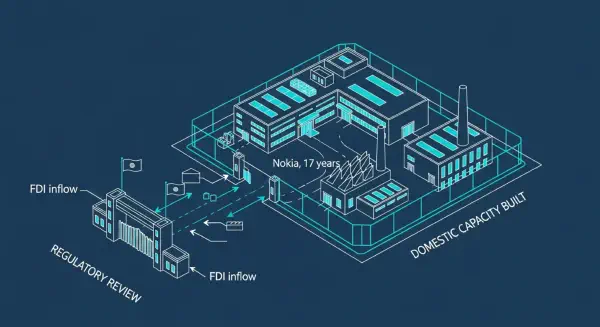
This post examines the relationship between foreign direct investment and economic development, asking whether the unconditional welcome recommended to developing countries by international institutions reflects the historical practices of today's wealthiest nations. It draws on the cases of Finland, Japan, Korea, the United States, Singapore, and Ireland to evaluate what conditions determine whether FDI accelerates or constrains long-run development.
This post examines the institutional economics of state-owned enterprises, interrogating both the theoretical case against public ownership and the empirical record of actual SOE performance across Asia, Latin America, and Europe. It asks whether the dominant policy prescription — privatize — reflects the evidence or the ideology.
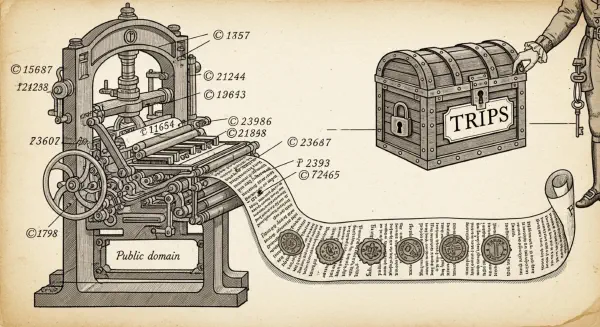
This post examines the history and current architecture of the international intellectual property rights system, tracing its evolution from the first patent law in 15th-century Venice through the 1994 TRIPS agreement. It asks whether the current system reflects a principle of rewarding innovation or a mechanism for managing competition between nations at different stages of technological development.
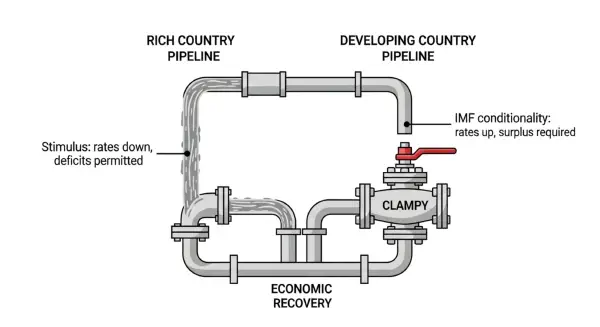
This post examines the macroeconomic policy prescriptions applied to developing countries through IMF conditionality, evaluating the empirical relationship between inflation, interest rates, fiscal policy, and economic growth across the historical record. It draws on the cases of Brazil, South Korea, South Africa, and Argentina to assess whether the standard orthodoxy of very low inflation and balanced budgets produces the outcomes its proponents claim.
This post examines the two most common non-economic explanations for why poor countries stay poor: corruption and culture. It evaluates the empirical relationship between corruption and growth, asks why culturally identical countries at different levels of development exhibit different behavioral patterns, and traces the historical use of cultural argument as post-hoc justification for development outcomes.
A four-part forensic examination of how the Suez Canal concession of 1854 set in motion a chain of financial, agricultural, and sovereign losses that culminated in British occupation. Anchored in primary sources and economic data.
A historical-psychological post-mortem that traces neoliberalism to colonial rent-seeking in Madeira. It frames atomization as a neurobiological assault fueling authoritarian killer clowns and uses complexity theory to show deregulation turning networks into mutual incendiary devices. The answer, a politics of belonging built on commons and public luxury.
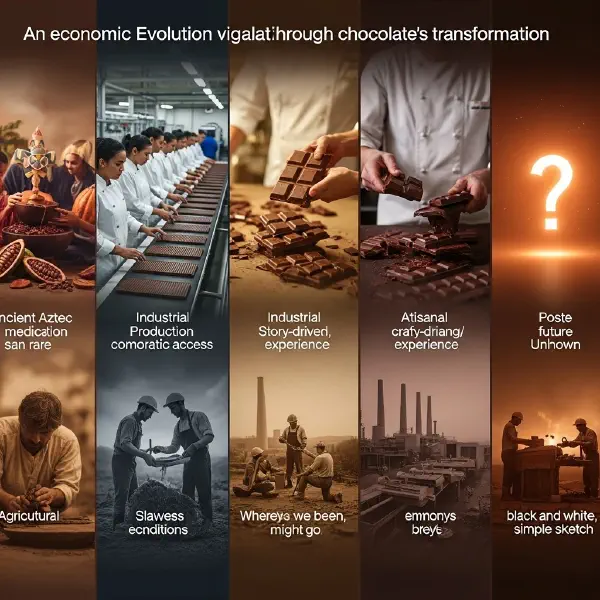
Chocolate went from bitter medicine to mass commodity to artisanal luxury. Its journey maps the economy's past and hints at its future—where meaning matters more than material.
Strawberries are still picked by hand—automation hasn't replaced farmworkers. But other jobs have vanished. What determines whether technology helps or harms workers?
Spices built empires and funded revolutions. The spice trade created the first global economy—through monopoly, violence, and state power. Modern trade pretends this history didn't happen.
Limes saved British sailors from scurvy—not through market forces, but through government mandate. The 'Limey' nickname reminds us that states create knowledge markets can't produce.
Chilli peppers spread globally after Columbus—but not through 'free trade.' Countries that developed used protection. The free-trade story is history written by winners.
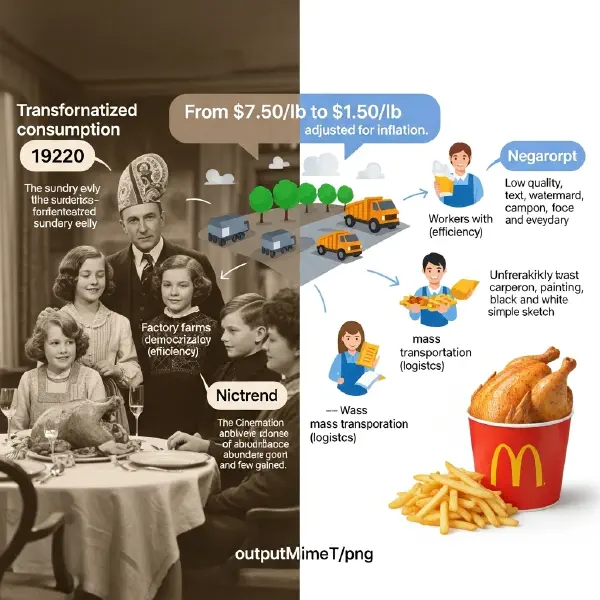
Chicken was once a luxury. Now it's cheap protein for billions. The same pattern—from elite good to mass consumption—drives economic development. Equality isn't just fair; it's efficient.
Rye bread sustained Northern European peasants through harsh winters. Those same countries built the strongest welfare states. Coincidence? The ability to survive risk shapes society's approach to sharing it.
Coca-Cola's 'secret formula' is worth more than the liquid in the can. Intellectual property creates fortunes—but also restricts knowledge that could save lives and advance humanity.
The term 'banana republic' describes real history: American fruit companies controlled Central American governments, overthrew democracies, and shaped economies for their profit. The pattern persists.
Economics assumes consumers know what they want. But the baby carrot industry created a want that didn't exist. Preferences aren't given—they're manufactured.
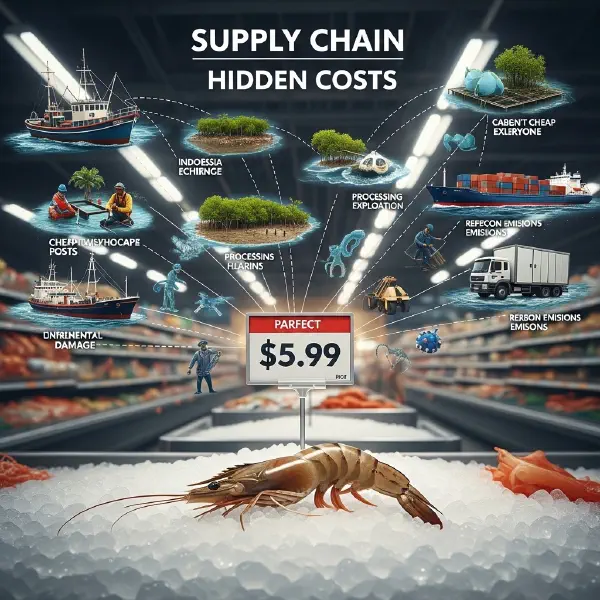
Cheap prawns in your grocery store hide a supply chain that spans continents, exploits workers, and destroys ecosystems. The price you pay doesn't include the real costs.
Anchovies in a dish add flavor you can't quite identify. Care work in the economy does the same—invisible, unquantified, but essential. What happens when we notice what we've been missing?
Economists love imagining Robinson Crusoe on an island with coconuts. But this thought experiment reveals more about economics' limitations than about how real economies work.
Okra traveled from Africa to America in slave ships. Its journey reveals how slavery and colonialism created economic structures that persist centuries later—and why some countries struggle to escape poverty.
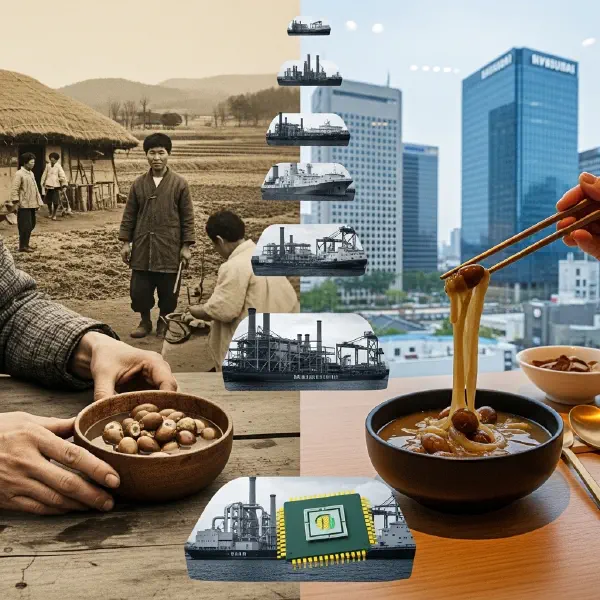
In the 1960s, Koreans ate acorns to survive. Today, South Korea is the world's 10th largest economy. The acorn's journey from famine food to nostalgic delicacy reveals how nations actually develop—and it's not the story economists usually tell.
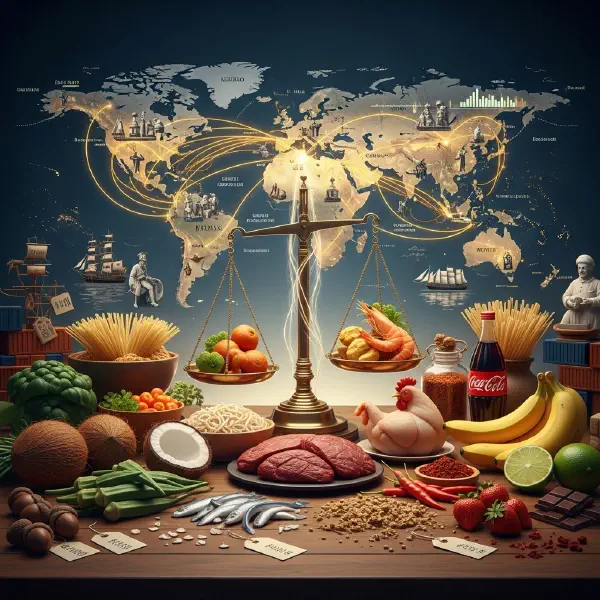
What your dinner plate reveals about markets, power, and the future of work. A series exploring how everyday foods expose the hidden forces shaping our economy—from the care economy to corporate power, from automation to trade wars.
A brutally honest examination of everyday financial decisions—from your morning coffee to your subscription creep—through the lens of behavioral economics and monetary reality.
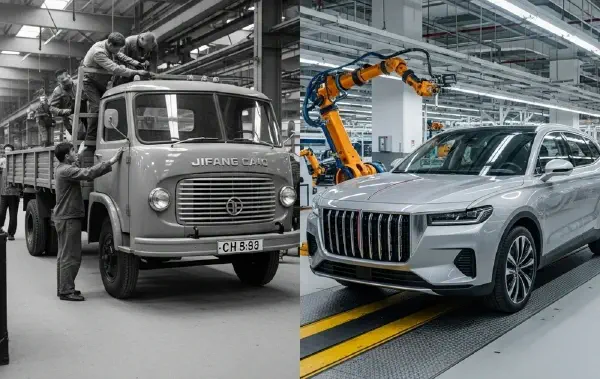
How political systems have shaped the global automotive industry, from command economies to state capitalism, revealing the intersection of power, technology, and geopolitics.
A historical analysis of Mohamed Ali Pasha's industrialization and state-building in Egypt, examining the human cost of his brutal 'New Order' and the systematic extraction of Upper Egypt.
A critical exploration of how intellectual captivity persists beyond formal decolonization, examining the pedagogical, ideological, technological, and globalization mechanisms that perpetuate Western dominance over the minds of formerly colonized nations.
A critical examination of how Europe's competitive fragmentation and British innovation created the world's largest empire, and how its structures persist in modern global systems.