History and Critical Analysis

History and Critical Analysis


Empires follow patterns. So do their collapses. This category uses historical case studies to trace the mechanics of power: how states are built and broken, how resources are extracted and controlled, how wars are decided by logistics rather than battlefield valor, and how the decisions of a few reshape the lives of millions across generations.




Series & Articles
#

Khaled ibn al-Walid: A System Analysis of the Brilliance and Controversy of the 'Sword of Allah'

·1196 words·6 mins
A comprehensive analysis of Khaled ibn al-Walid, one of history's most brilliant and controversial military commanders. Known as the 'Sword of Allah,' Khaled's career spanned the early Islamic conquests, where he achieved unprecedented victories against formidable adversaries. Through a rigorous examination of his battles, leadership style, and the political context of his era, this series aims to separate myth from reality and provide a nuanced understanding of his legacy.

The Oceanic Imperative: Why Geography Is the Initial and Boundary Condition of History

·2971 words·14 mins
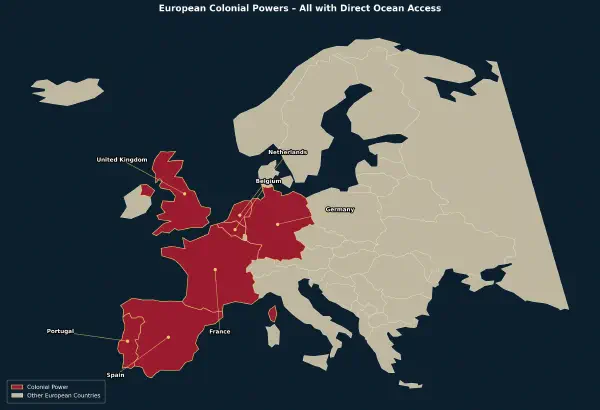
This article argues that geography is both the initial and boundary condition of history—and that open-ocean access, not landmass or population, is the necessary foundation of global empire. It traces the Ottoman Empire’s fatal confinement to a closed Mediterranean cul-de-sac, contrasts its vast size with the tiny but ocean-facing Atlantic powers that carved up the world, and presents the United States as the ultimate geographic synthesis: a continental tellurocracy protected by two oceanic moats, free to project power anywhere on the planet.

Prisoners of the Sea: Geography, Technology, and the Ottoman Collapse

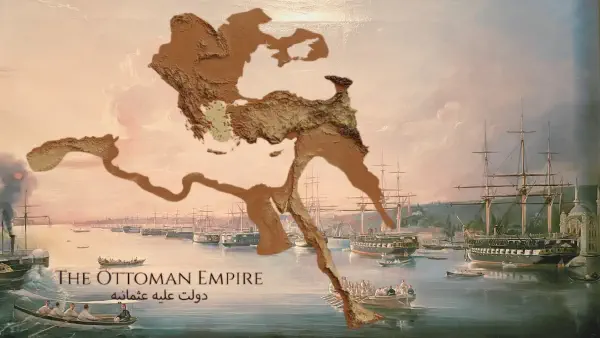
This series re-examines the centuries-long decline of the Ottoman Empire through a maritime lens. It begins with a simple but powerful theory—that a lack of ocean access was a primary cause of collapse—and then complicates that idea by exploring the strategic choices, technological constraints, and painful naval transformations that defined the empire's fate as a "Mediterranean prisoner."

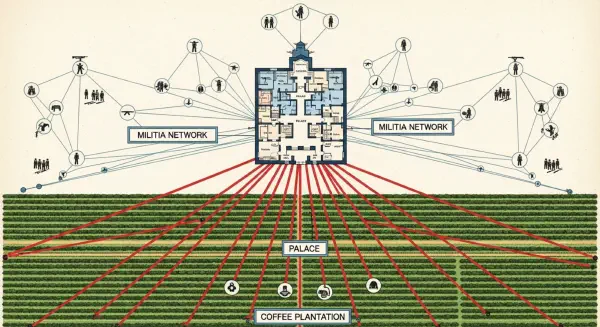
The Dictator's Calculus: How Habyarimana Used Coffee to Buy Power and Genocide to Keep It

A five-part series using Wintrobe's loyalty-repression model and Verwimp's commune-level data to show that the Rwandan genocide was not the explosion of ancient hatreds but the rational outcome of a budget constraint the dictator could no longer meet.

The Peace That Never Came: Measuring the True Scale of Modern War

A four-part series tracing the arc from Cold War-era academic optimism about declining conflict, through 25 years of contradicting data, to two new metrics — the Human Cost Index and Casualty Rate — that expose the true human cost and velocity of asymmetric modern war.

The Edible Idol of Empire

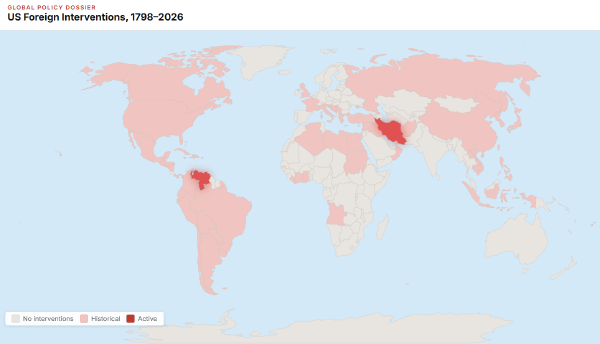
This three-part series examines how the United States turned democracy from a political principle into the moral packaging of imperial power. It traces the machinery beneath that language—institutions, law, finance, and force—and shows how these structures sustained hierarchy while preserving the image of universal order. It concludes by arguing that Trump did not create this contradiction, but exposed it by openly consuming the very myth America once sold to the world.

The Invisible Hegemon: Deciphering the Architecture of Global Control

Deciphering the Architecture of Global Control, provides a critical investigation into how the concepts of development and globalization have been utilized as strategic tools for United States hegemony and world domination. Drawing from the analytical framework of Henry Veltmeyer, the series challenges the conventional narrative of global progress, framing it instead as a sophisticated system of imperial extraction and political containment

The Debt Architecture: How Sovereign Borrowing Became a Mechanism of Permanent Extraction

A five-part series examining how the arithmetic of dollar-denominated borrowing, a fragmented creditor landscape, and an international restructuring architecture designed for a different era combine to trap developing economies in a cycle of debt that systematically displaces spending on health and education.

The Vermilion Bird's Flight: How the Tang Dynasty Burned

A sweeping historical analysis of how Tang China's very success created the centrifugal forces that would tear it apart over 150 years. This series traces the empire's long descent through the An Lushan Rebellion, eunuch ascendancy, peasant uprisings, and eventual fragmentation into warlord kingdoms. It argues that the Tang did not fall to external invaders but decomposed from within—a cautionary tale about prosperity's hidden costs and the institutional contradictions that can bring down even the mightiest civilizations.

The Crescent and the Ganges: Eight Centuries of the "Andalusia of the East"

A comprehensive historical exploration of eight centuries of Islamic rule in India, from the Umayyad governors to the fall of the Mughal Empire, examining the cultural, political, and spiritual synthesis that created one of history's greatest civilizations.

The Predator's Calculus: Power, Deception, and the Choice to Resist

An exploration of the fundamental mechanisms through which powerful entities—corporations, states, and institutions—maximize their interests. Drawing on historical examples and systemic analysis, it reveals how coercion, exchange, and deception operate as tools of power, how institutions often serve to legitimize predation rather than constrain it, and what effective resistance requires in the face of such dynamics.

The Great Enclosure: How Neoliberalism Turned Citizens into Consumers

A systemic X-ray of neoliberalism, turning citizens into consumers, a tollbooth economy extracting rent from essentials, and shifting blame onto individuals. The fix, a restoration story built on cooperation, commons, and participatory democracy.

The Invisible Economy: How Ancient Societies Mastered Circularity

Exploring how ancient civilizations developed sophisticated circular economic systems through recycling, reuse, and resource optimization, revealing practices that modern economies are rediscovering.

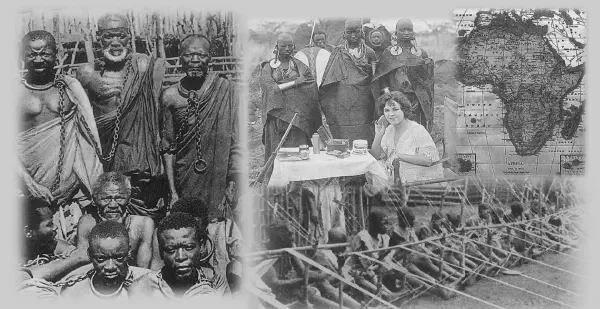
The Invisible Empire: Colonization of the Mind and the Long War for Consciousness

A historical exploration of how colonization shaped not just territories but minds, examining the mechanisms of mental subjugation and the ongoing struggle for decolonization in a globalized world.

The Architecture of Cognitive Dependency: Structural Legacies of the Colonial Project

A critical examination of how colonialism created permanent psychological and institutional structures that persist long after formal independence, trapping former colonies in cycles of intellectual and economic dependency.

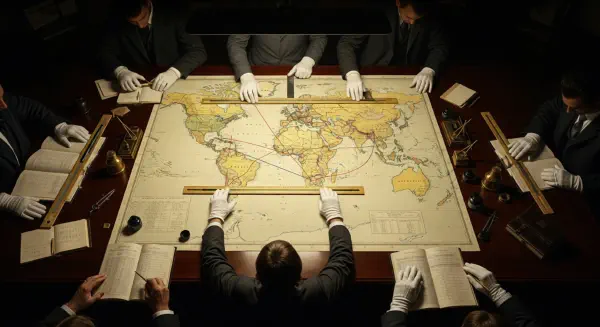
The Imperial Balance Sheet

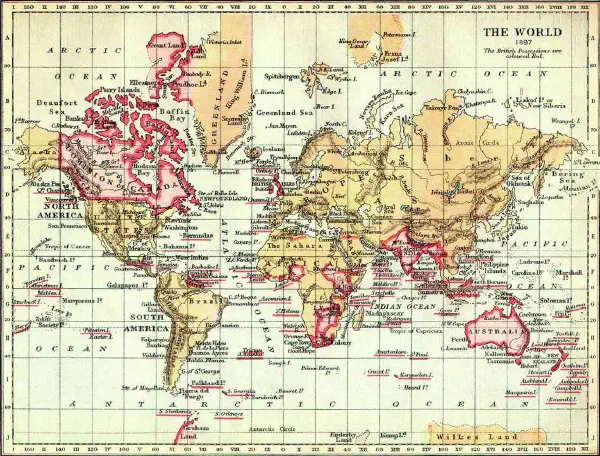
For most of the nineteenth century, British politicians debated whether empire paid. The question was never cleanly resolved. This series applies cost-benefit analysis to the imperial project — not as a moral verdict, but as a fiscal one. Who bore the costs? Who captured the gains? The ledgers have answers that the speeches avoided.

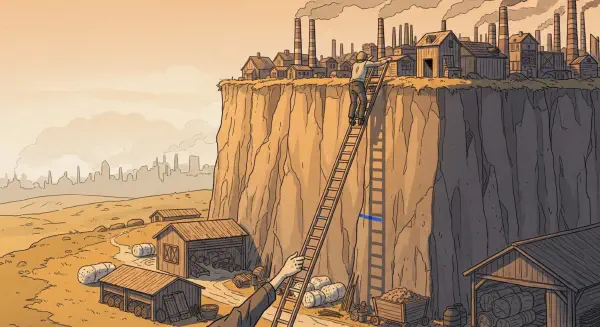
Occupation Without Armies: The Architecture of Permanent Dependency

A structural analysis of how colonial extraction survived decolonisation by trading armies for financial institutions — and why a country's engineering capacity, not its legal status, determines whether it is truly free.

Colony to Collapse: A Psychological Autopsy of the Neoliberal Era

A historical-psychological post-mortem that traces neoliberalism to colonial rent-seeking in Madeira. It frames atomization as a neurobiological assault fueling authoritarian killer clowns and uses complexity theory to show deregulation turning networks into mutual incendiary devices. The answer, a politics of belonging built on commons and public luxury.

The Master and the Machine: Mohamed Ali’s Brutal Blueprint for Egypt

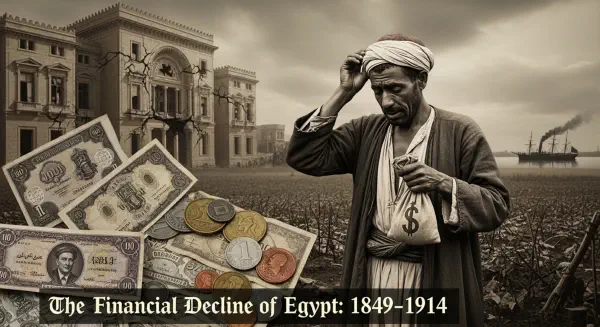
A historical analysis of Mohamed Ali Pasha's industrialization and state-building in Egypt, examining the human cost of his brutal 'New Order' and the systematic extraction of Upper Egypt.

The Specter of Hegemony: Deconstructing the Colonized Brain

A critical exploration of how intellectual captivity persists beyond formal decolonization, examining the pedagogical, ideological, technological, and globalization mechanisms that perpetuate Western dominance over the minds of formerly colonized nations.