
It began with Native Americans, freeing them from their lands — and, where necessary, from their lives. It kept spreading freedom across the continent, freeing land and lives all the way from the Atlantic to the Pacific Oceans. To the north, it tried to free even more land until 1812, where freedom stopped at Canada. To the south, however, freedom advanced more successfully. The US freed vast portions of Mexico—California, Nevada, Utah, New Mexico, most of Arizona, and parts of Colorado and Wyoming: roughly 555,000 square miles (about 1.44 million km²), around 55% of Mexico’s pre-1846 territory.

Having largely completed freedom at home, America moved on to Latin America, then crossed the oceans to bring freedom to places like Cuba, the Philippines, and Puerto Rico. Eventually, freedom went global: Vietnam, Iraq, Libya, Venezuela, and now Iran.
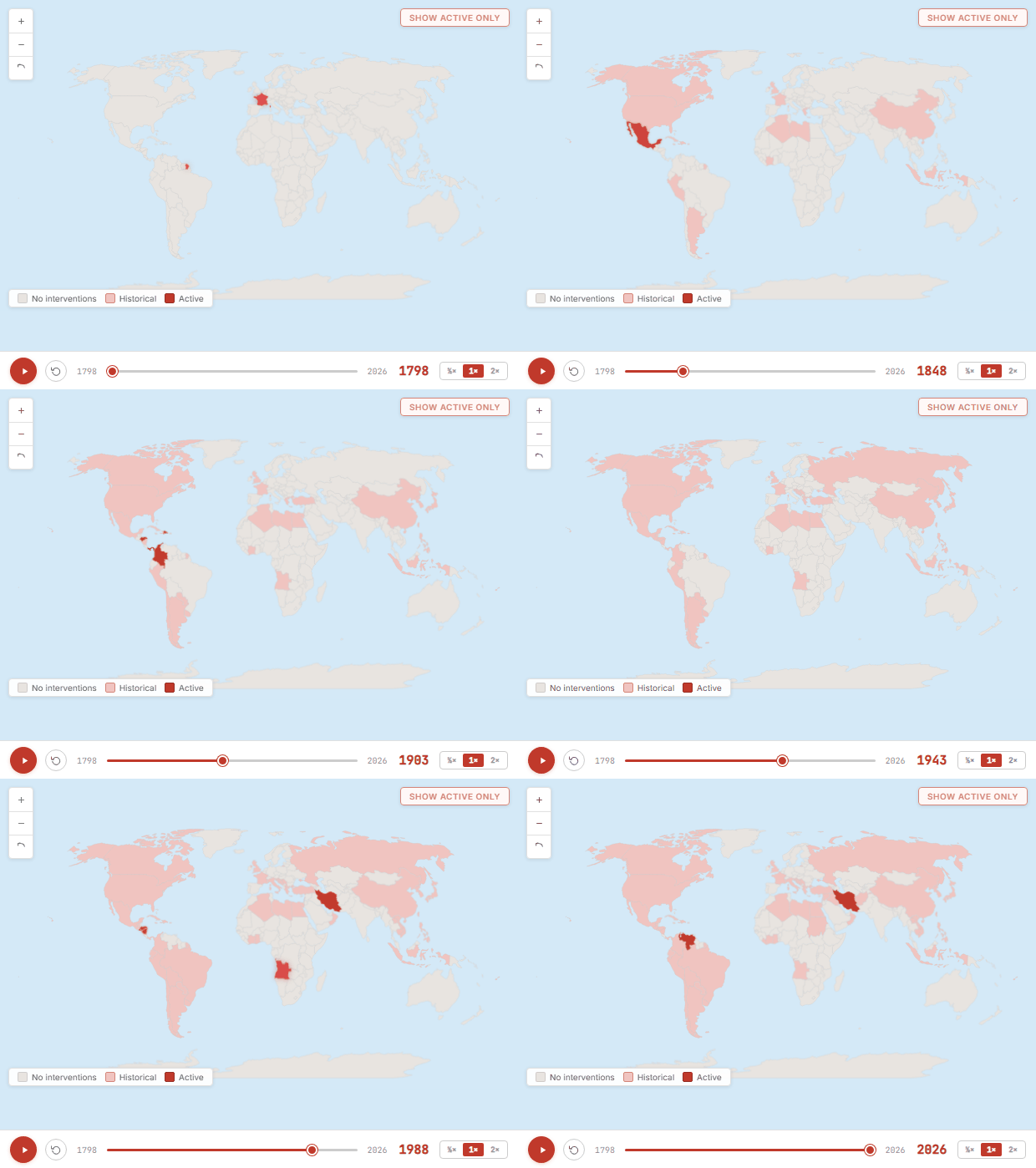
After spreading “FREEDOM” across the planet’s surface, the US is now moving underwater through deep-sea mining, freeing the seabed from rare earth elements. The ultimate goal, it seems, is to free the planet from both its resources and its inhabitants. After that, philanthropists like Elon Musk are going after Mars.
The modern method of spreading freedom is often economic rather than military.
Institutions like the International Monetary Fund and World Bank help free countries from their resources and sovereignty, liberating people from worldly distractions so they can devote themselves fully to servicing perpetual debt.
But sometimes countries are led by people too stupid, too stubborn, or too selfish to accept freedom voluntarily. They insist on keeping control of their own wealth and resources. In such unfortunate cases, war becomes necessary to free those countries from such leaders and replace them with smarter ones—leaders who understand what is good for them. Consider Iran's Mossadegh (1953), Guatemala's Jacobo Árbenz (1954), Chile's Salvador Allende (1973).
Under Trump, the mission has expanded to territories not previously on the menu — Canada in its entirety, Greenland for its real estate. Having met resistance there, attention turned, fully and finally, to Iran.
Let us drop the corporate euphemisms. Since 28 February 2026, the United States and Israel have been at war with Iran. On the first day, a Tomahawk strike US investigators have since linked to American forces hit Shajareh Tayyebeh Elementary School, killing 120 schoolchildren and 36 civilians, and injuring 95 more. The total casualties since are in the tens of thousands. Small numbers, against Operation Iraqi Freedom's estimated 150,000 to over a million dead — or against the 30,177 post-9/11 veterans who ended their own lives, more than four times the combat death toll.
Freedom also includes freeing people from material possessions—such as their homes. In the US, roughly 745,652 people are homeless, about 4% of them veterans.
Freedom is expensive. The enacted Fiscal Year 2026 Department of Defense budget totaled roughly $961.6 billion, including reconciliation funding. The Trump administration's Fiscal Year 2027 request raises that figure to approximately $1.5 trillion.
Freedom, it turns out, does not spread itself.