
I have always loved history. Over time, my passion shifted from simply enjoying stories and learning What, Who, and How into a deeper drive to understand Why.
This curiosity eventually led me to investigate the origins of colonialism, which naturally brought me to the Age of Discovery. This term traditionally refers to the period between the 15th and 17th centuries when European nations sought new, direct trade routes to Asia to bypass Ottoman-controlled land networks, resulting in the "discovery" of the New World.
The choice of the word discovery immediately grabbed my attention. According to the Merriam-Webster dictionary, to discover is to obtain sight or knowledge of for the first time. This single word carries a bold and deeply arrogant implication: it suggests that an entire world consisting of lands, oceans, and civilizations was somehow "lost" until Western Europeans arrived to find them. Furthermore, history often paints these moments as uniquely enlightening, scientific, and even heroic.
But what happens when we look at the actual data? Was Columbus truly the first to cross the Atlantic? The short answer is no. When we deconstruct this Eurocentric argument using modern science and archaeology, a complete different story emerges.
What does the deep archaeological record reveal about human arrival?#
If we look back 15,000 years, multiple independent lines of scientific evidence prove that humans successfully crossed between Asia and the Americas long before Europeans ever dreamed of sailing west.
In eastern Beringia—the ancient land bridge that once connected modern-day Siberia and Alaska during the Pleistocene epoch—archaeological sites show well-preserved artifact collections dating back 13,000 to 14,200 years. When massive glaciers locked up the Earth's water, sea levels dropped, creating a massive grassland bridge that allowed animals and the very first human pioneers to migrate between continents.
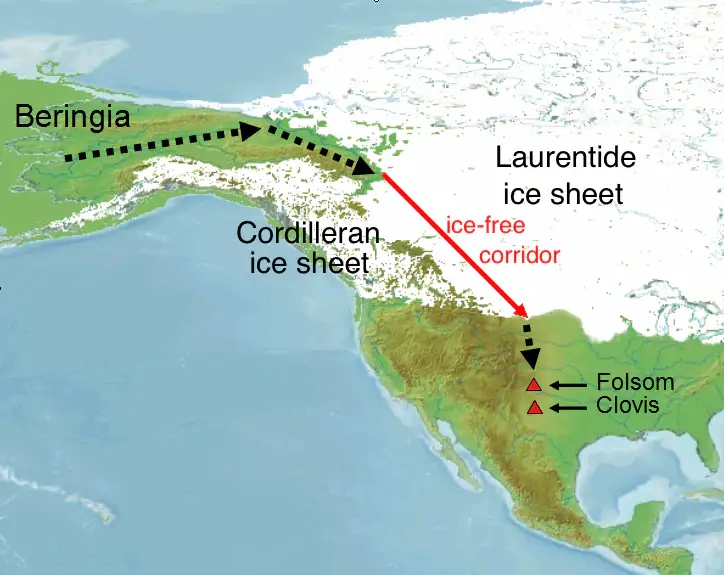
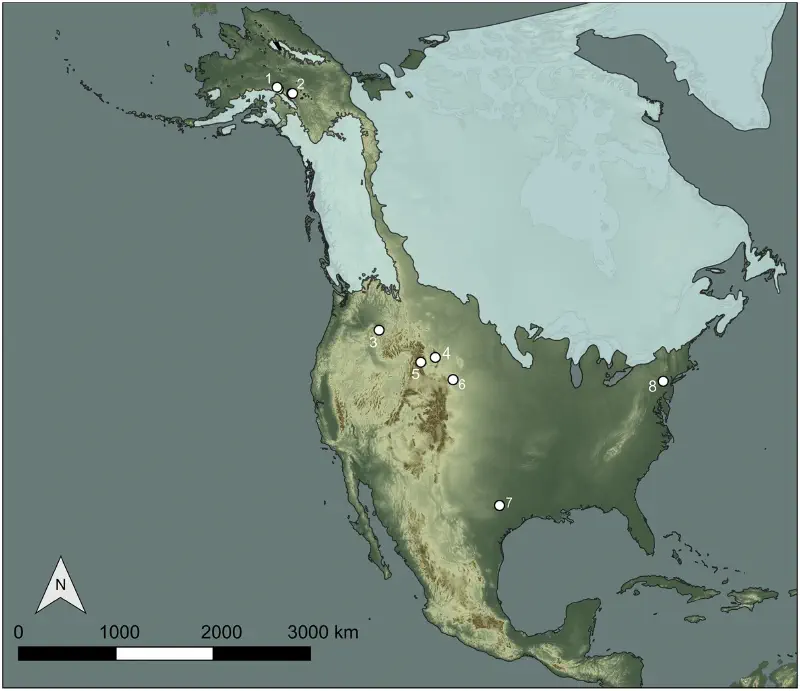
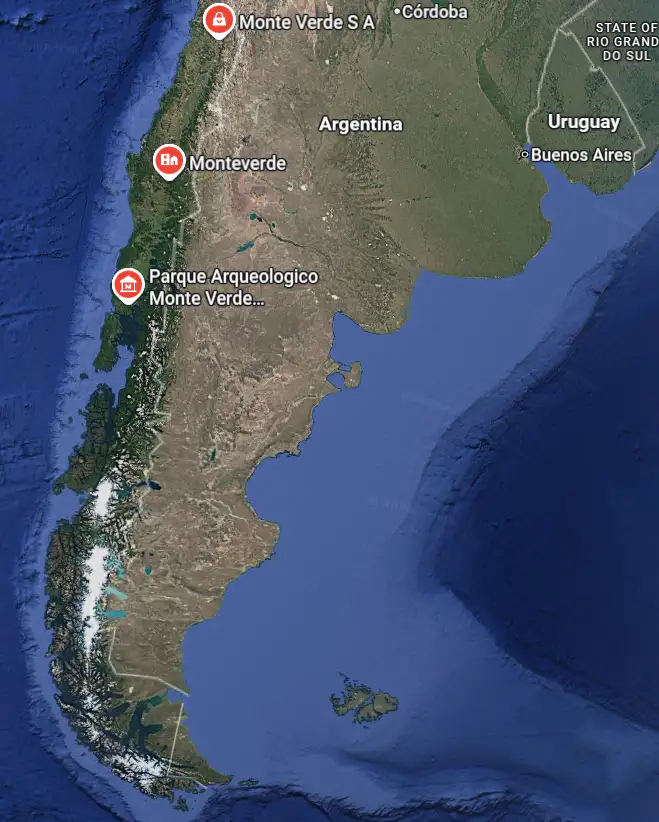
But humans didn't stop in the north. Further south, the Monte Verde site in Chile is securely dated to 14,500 years ago. This timeline presents a fascinating puzzle: to reach the deep south that early, humans must have moved from Beringia long before the interior ice-free corridor even opened. This necessitates a rapid Pacific coastal migration route using watercraft long before the inland corridor was accessible.
Modern genetic studies back this up perfectly. Mitochondrial population genomics points to a single migration from Asia via a coastal route, completely predating the Clovis cultural complex that was long thought to represent the "first" Americans. Our environmental and multidisciplinary models now point to a truth that history books often ignore: the peopling of the Americas wasn't a single accidental trek, but a series of plausible migration pathways, including Beringian, coastal, and even transoceanic scenarios.
Did humans only cross when the continents were physically connected?#
The immediate counter-argument is often that these ancient peoples only migrated because the continents were physically connected as one landmass. But how do we explain routes outside of the frozen Arctic crossing?
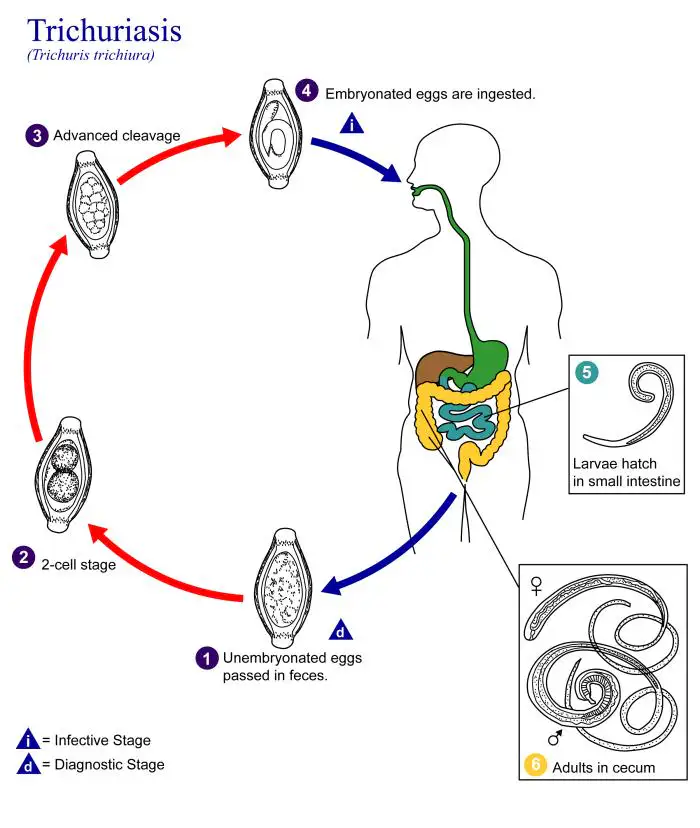
The answer lies in biological data. Scientists tracking ancient human migrations have found something remarkable preserved in pre-Columbian mummies and ancient feces across the Americas: human-specific intestinal parasites like hookworms and whipworms.
These are tropical parasites. They cannot survive the freezing temperatures of the Arctic. If early travelers had exclusively crossed into the New World via the icy Bering Land Bridge, the intense cold would have naturally cured them of the infection. Finding these active tropical parasites in ancient American remains is biological proof that humans entered the Americas at least twice, with at least one wave completely bypassing the frozen north by using warm coastal or transoceanic sea routes.
How could early mariners navigate such vast oceanic gaps?#
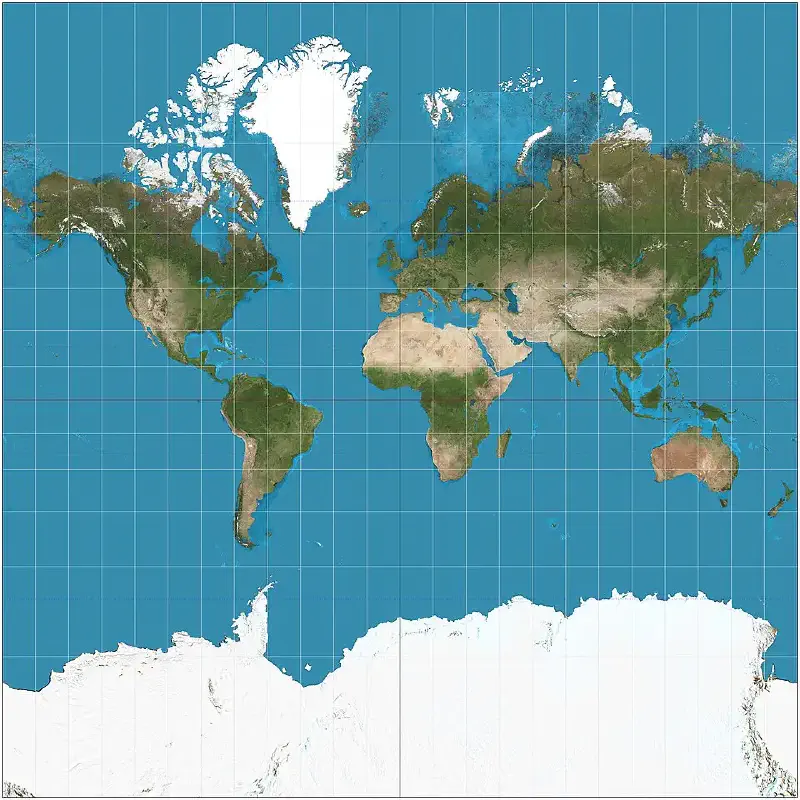
When we look at a standard map, the distances across the Atlantic and Pacific oceans seem far too immense for ancient technology. But there is a catch: our mental map of the world is deeply distorted by the traditional Mercator map projection. This specific map design stretches the regions near the poles, making ocean gaps look drastically wider and more daunting than they actually are in physical reality.
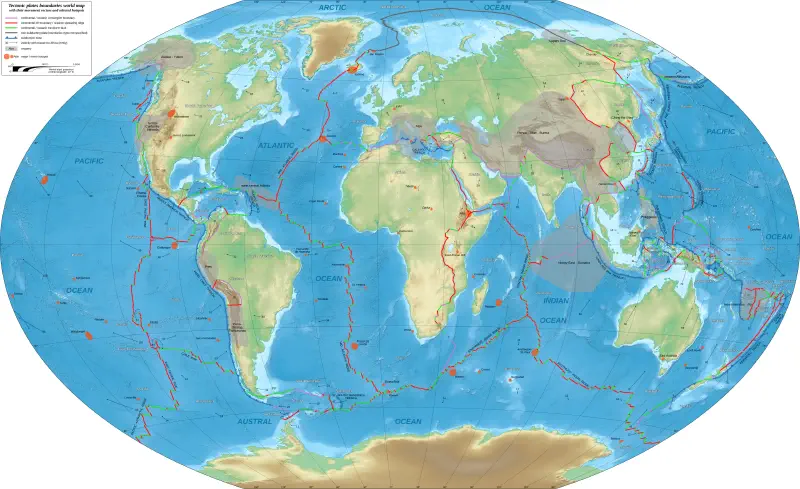
In truth, the ocean gaps across the North Atlantic and North Pacific are entirely manageable. Early mariners didn't just sail blindly into the void; they used chains of islands as geographic stepping-stones, relying on line-of-sight navigation where they could frequently see their next destination before leaving the last one.
This visibility was powerfully amplified by unique Arctic atmospheric conditions known as arctic mirages and ice-blink. In these frozen environments, layers of cold, dense air bend light over the horizon, acting like a natural lens. This optical trick allows light refraction to bridge massive gaps. For example, a sailor standing on Iceland's Snaefells Glacier at 1446 meters can actually see the 3700-meter mountain peaks of eastern Greenland over the horizon, turning a daunting 286-kilometer ocean gap into a visible, reachable destination.
What nautical technology and survival strategies enabled these journeys?#
It is easy to dismiss ancient mariners as primitive, imagining them floating helplessly on basic rafts. But the engineering data tells a different story. Ancient navigation relied on environmental literacy rather than instruments
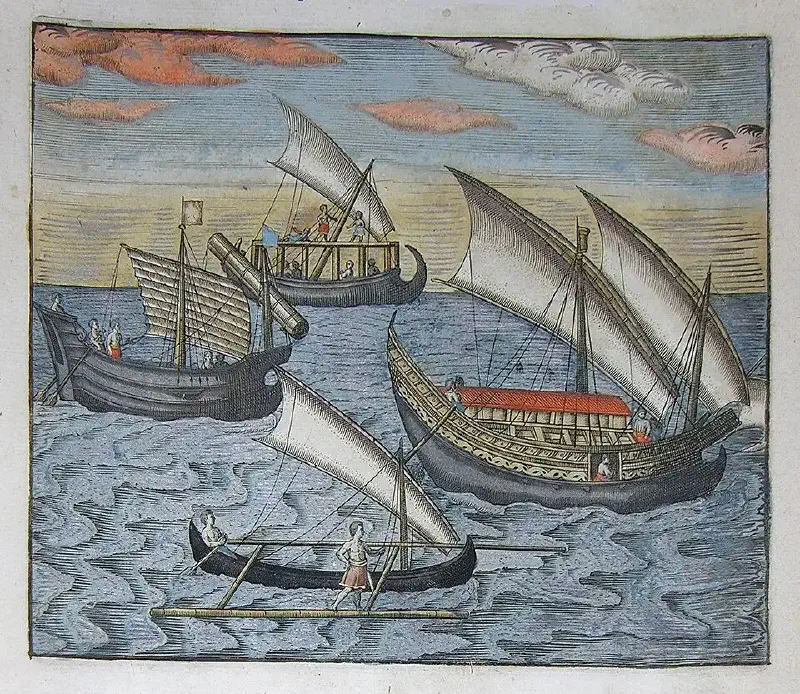
Early humans utilized sophisticated, high-capacity transport systems specifically designed for the open ocean:
Bamboo Sailing-Rafts: Highly flexible, incredibly buoyant, and virtually unsinkable in rough surf.
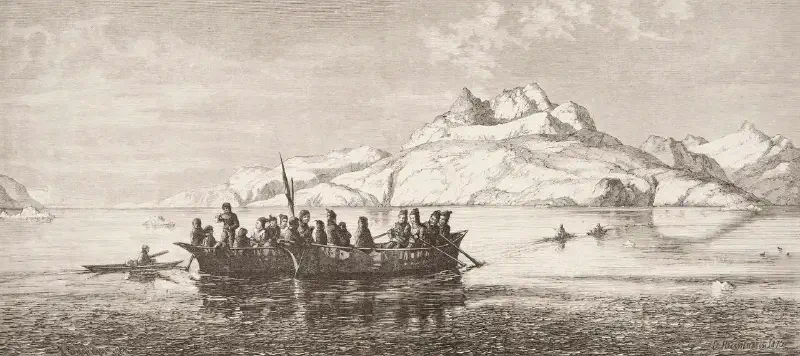
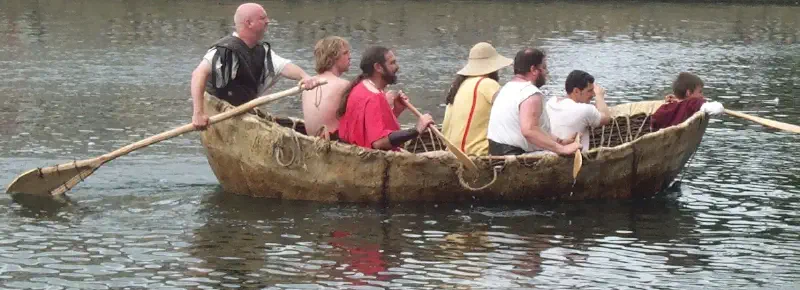
Skin-Covered Boats: Vessels like umiaks and currachs, which combined lightweight frames with durable, ocean-resistant hides to navigate rough, icy waters.
Hulled Wooden Ships: Advanced designs like the Chinese Junk, built with watertight compartments and massive carrying capacities.
How did ocean currents act as planetary highways?#
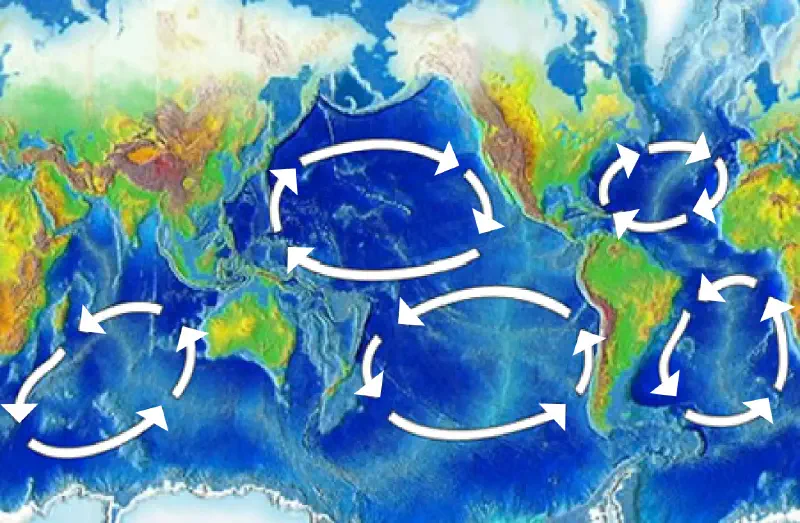
The oceans are not static pools; they contain powerful surface rivers driven by global winds that act as predictable, one-way conveyor belts across the globe:
- Subtropical Gyres: These massive clockwise loops in the Northern Hemisphere and counter-clockwise loops in the Southern Hemisphere, such as the Canary Current, offered mariners a passive free ride across the Atlantic and Pacific.
- Trade Winds: Highly reliable easterlies in the tropics that pushed vessels westward with consistent, predictable force.
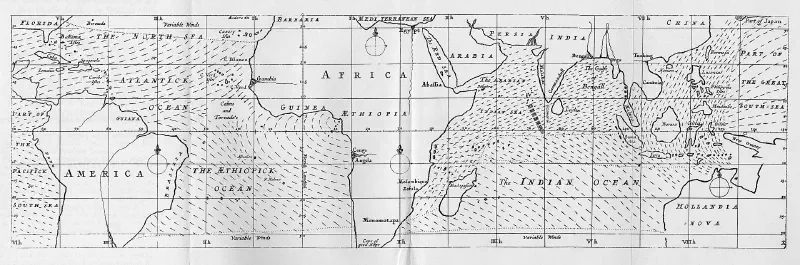
- Asiatic Monsoon System: Seasonal wind reversals in the Indian Ocean that acted like a round-trip transit system, facilitating regular voyages between East Africa and South Asia.
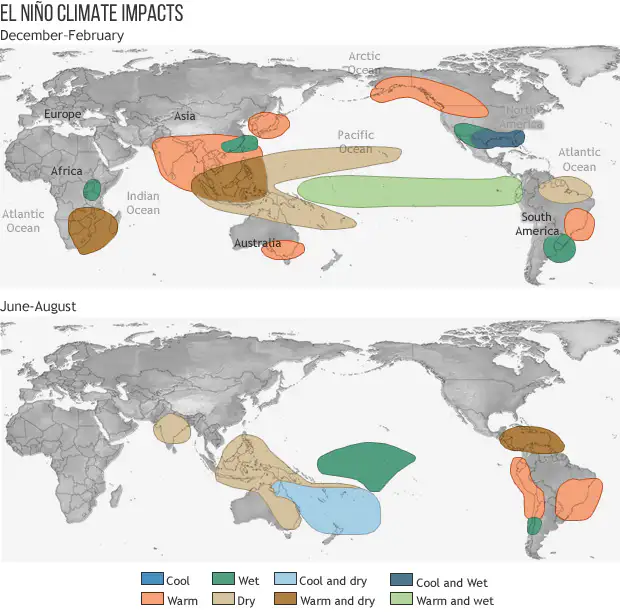
- The El Niño–Southern Oscillation (ENSO): Periodic climatic shifts that temporarily reverse trade winds and supercharge the Equatorial Countercurrent, creating powerful eastward surges right across the Pacific.
How did crews survive extended periods at sea?#
Skeptics often argue that even with good currents, long voyages were impossible because crews would run out of resources or die of nutritional deficiencies. Yet, ancient mariners possessed brilliant survival strategies that solved these exact problems:
The Scurvy Solution: While European sailors famously succumbed to scurvy centuries later, ancient maritime cultures avoided it entirely by consuming seaweed, sprouted vegetables, and fresh fish organs—specifically the eyes and pancreas, which are naturally rich in Vitamin C.
Sourcing Fresh Water: Fresh water wasn't just stored; it was actively harvested. Mariners used rainwater collection systems, built rudimentary distillation stills using simple rice tubs and kettles, and even extracted hydration directly from fish fluids.
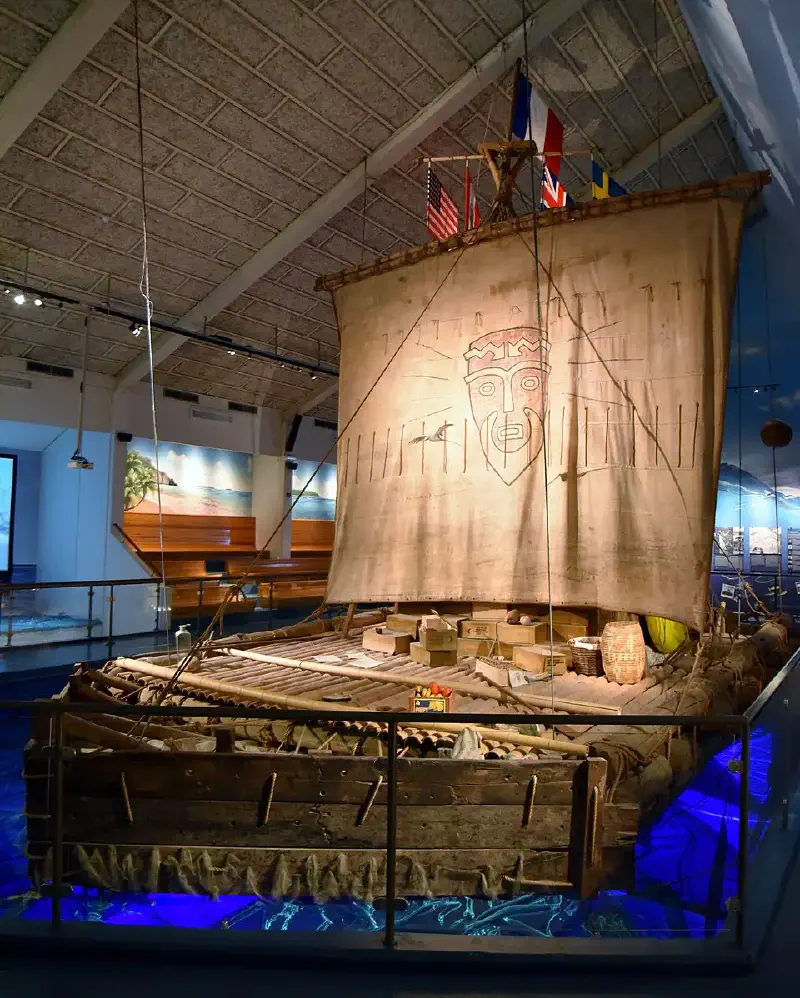
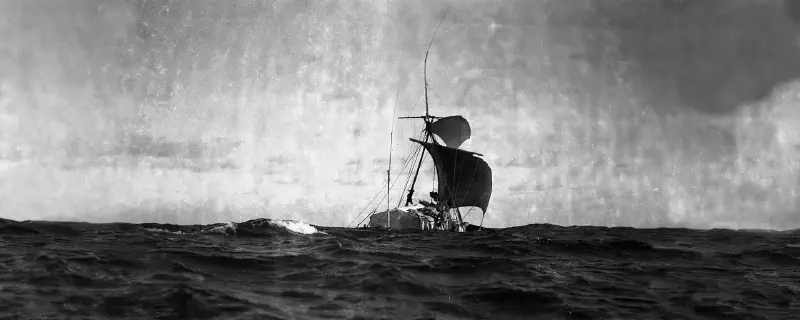
We don't have to guess if this worked; we have experimental proof. In 1947, the Kon-Tiki expedition, and later in 1970, the Ra II, successfully proved that balsa wood and reed vessels could cross major oceans using only ancient technology. More recently, the voyages of the Hōkūleʻa proved to the world that traditional celestial wayfinding—navigating entirely by stars, waves, and birds—is fully capable of guiding a crew across thousands of miles of open Pacific water.

Was transoceanic contact a mathematical certainty?#
When we look at the sheer volume of maritime activity in East Asia and the Mediterranean over millennia, computer simulations reveal a fascinating truth: transoceanic landfalls were not just possible—they were mathematically inevitable.
We see this reflected clearly in historical records. During the Tokugawa period, hundreds of Japanese junks were disabled by storms and caught by the powerful Japan Current, which carried them directly across the ocean to the Northwest Coast of North America.
Physical archaeology provides the tangible proof for these simulations:
Ming Dynasty Ceramics: Non-export ceramic fragments dating between AD 1550 and 1650 have been recovered from the Oregon coast, pointing directly to the salvage of transpacific Asian wrecks long before European settlement.
Iron Blades: Long before Europeans arrived with metal tools, indigenous peoples at the Ozette site in Washington were using iron blades—tools that material analysis suggests were salvaged from Asian shipwrecks swept across the Pacific.
What do shared biology and cultural rituals reveal about early contact?#
The footprints of ancient global contact are also recorded in the living world through the plants we grow and the rituals we practice.
Botanical Transfers: While some plants like the bottle gourd can float naturally across the Atlantic from Africa and self-seed, others require human hands. The presence of the medicinal plant Datura in the Old World prior to Columbus points directly to an intentional, human-mediated transfer from the New World during the first millennium.
Jade Rituals: Working with jade requires an incredibly difficult, highly specific technology. Yet, ancient China and Mesoamerica didn't just share the technical skill; they shared a deeply specific spiritual ritual: placing a red-painted piece of jade carved in the precise shape of a cicada into the mouth of the deceased. The complexity of this practice suggests a deep cultural diffusion rather than two cultures randomly inventing the exact same ritual on opposite sides of the world.
Why did these early contacts not trigger massive epidemics?#
If humans were crossing the oceans and making contact for millennia, it raises a glaring paradox: why were Native American populations so devastatingly vulnerable to European diseases in 1492?
The "Time-Filter" model elegantly explains this mystery through four natural limiting factors that kept ancient contacts safe:
Critical Community Size: Severe crowd diseases like measles and smallpox require a massive, dense population threshold of 315,000 to 500,000 people to remain endemic. The small, isolated crews on ancient ships simply didn't have the numbers to keep a chain of infection alive.
Duration of Infection: Most acute diseases burn through a host within weeks, leading to either death or permanent immunity. On slow, ancient transoceanic voyages, a disease would completely run its course and die out long before the ship ever made landfall.
The Cold Screen: For the populations migrating via the north, the freezing temperatures of Beringia acted as a natural environmental filter, killing off tropical pathogens and the vectors like mosquitoes needed to transmit them.
Absence of Zoonotic Reservoirs: Native Americans did not raise the specific domesticated animals like cattle or pigs that serve as natural breeding grounds for Old World pathogens. Even if a disease had been introduced early on, it had no natural animal reservoir to sustain it, causing the infection to vanish.
How does modern genetics dismantle the Clovis-First paradigm?#
For decades, mainstream history relied heavily on the "Clovis-First" model, which confidently asserted that humans first arrived in the Americas around 13,400 years ago. Today, that model has completely collapsed under the weight of genetic data.
With the Monte Verde site proving human presence up to 18,500 years ago, science has forced us to accept that humans were using watercraft to navigate the Pacific coast long before any interior land corridors opened up through the ice.
Modern ancient DNA (aDNA) analysis reveals a history that is beautifully complex:
The Beringian Bottleneck: Genetic modeling shows that the ancestors of Native Americans were isolated in the Beringian region for a long period between 23,000 and 19,000 years ago.
Rapid Settlement: Once they moved past this bottleneck, an incredibly rapid southward expansion occurred between 18,000 and 15,000 years ago.
Deep Connections: Genetic markers explicitly link early American populations with the Jōmon population of ancient Japan and early Polynesian travellers. In fact, major genetic differences between Amazonian and Andean groups were already firmly established by 13,900 years ago, showing a deeply rooted, vibrant, and highly connected hemispheric history.
Why does it matter?#
It matters because Words shape thoughts. Thoughts dictate actions. Actions determine consequences..
Evidence proves the "Age of Discovery" is a manufactured Eurocentric narrative, not an empirical history. Engineered between 1777 and 1828, this framing deliberately erased earlier human crossings and Indigenous presence to justify colonialism. Decolonizing this narrative is essential to building a free world.
References#
- Surovell, T. A., Allaun, S. A., Crass, B. A., et al. (2022). Late date of human arrival to North America: Continental scale differences in stratigraphic integrity of pre-13,000 BP archaeological sites. PLoS ONE. https://doi.org/10.1371/journal.pone.0264092
- Hoffecker, J. F., Pitul'Ko, V. V., & Pavlova, E. Y. (2022). Beringia and the settlement of the Western Hemisphere. Vestnik Sankt-Peterburgskogo Universiteta, Istoriya. https://doi.org/10.21638/SPBU02.2022.313
- Fagundes, N. J. R., Kanitz, R., Eckert, R., et al. (2008). Mitochondrial population genomics supports a single pre-Clovis origin with a coastal route for the peopling of the Americas. American Journal of Human Genetics. https://doi.org/10.1016/j.ajhg.2007.11.013
- Gautney, J. R. (2018). New world paleoenvironments during the Last Glacial Maximum: Implications for habitable land area and human dispersal. Journal of Archaeological Science: Reports. https://doi.org/10.1016/j.jasrep.2018.02.043
- Szpiech, Z. A., Jakobsson, M., & Rosenberg, N. A. (2008). ADZE: A rarefaction approach for counting alleles private to combinations of populations. Bioinformatics. https://doi.org/10.1093/bioinformatics/btn478
- Kehoe, A. B. (2003). The fringe of American archaeology: Transoceanic and transcontinental contacts in prehistoric America. Journal of Scientific Exploration.
- Jett, S. C. (2017). Ancient ocean crossings: Reconsidering the case for contacts with the pre-Columbian Americas. University of Alabama Press.
- Jett, S. C. (2014). Pre-Columbian transoceanic influences: Far-out fantasy, unproven possibility, or undeniable reality? Journal of Scientific Exploration.
- Geeta, R., & Gharaibeh, W. (2007). Historical evidence for a pre-Columbian presence of Datura in the Old World and implications for a first millennium transfer from the New World. Journal of Biosciences. https://doi.org/10.1007/s12038-007-0132-y
- Kistler, L., Montenegro, Á., Smith, B. D., et al. (2014). Transoceanic drift and the domestication of African bottle gourds in the Americas. Proceedings of the National Academy of Sciences of the United States of America. https://doi.org/10.1073/pnas.1318678111
- Araújo, A., Reinhard, K. J., Ferreira, L. F., & Gardner, S. L. (2008). Parasites as probes for prehistoric human migrations? Trends in Parasitology. https://doi.org/10.1016/j.pt.2007.11.007
- Nielsen, R., Akey, J. M., Jakobsson, M., et al. (2017). Tracing the peopling of the world through genomics. Nature. https://doi.org/10.1038/nature21347
- Nagele, K., Rivollat, M., Yu, H., & Wang, K. (2022). Ancient genomic research—From broad strokes to nuanced reconstructions of the past. Journal of Anthropological Sciences. https://doi.org/10.4436/jass10017
- Brace, C. L., Nelson, A. R., Seguchi, N., et al. (2001). Old World sources of the first New World human inhabitants: A comparative craniofacial view. Proceedings of the National Academy of Sciences of the United States of America. https://doi.org/10.1073/pnas.171305898
- Eggers, S., Parks, M., Grupe, G., & Reinhard, K. J. (2011). Paleoamerican diet, migration and morphology in Brazil: Archaeological complexity of the earliest Americans. PLoS ONE. https://doi.org/10.1371/journal.pone.0023962
- Stoneking, M. (2017). The contribution of genetic ancestry from archaic humans to modern humans. In On Human Nature: Biology, Psychology, Ethics, Politics, and Religion. https://doi.org/10.1016/B978-0-12-420190-3.00004-1
- Crèvecoeur, I. (2024). Upper Pleistocene population dynamics (Neandertals, Denisovans, Homo sapiens). In Encyclopedia of Quaternary Science. https://doi.org/10.1016/B978-0-323-99931-1.00257-9
- de Azevedo, S., Quinto-Sánchez, M., Paschetta, C., & González-José, R. (2017). The first human settlement of the New World: A closer look at craniofacial variation and evolution of early and late Holocene Native American groups. Quaternary International. https://doi.org/10.1016/j.quaint.2015.11.012
- Metallurgy in pre-Columbian America. (2026, May 22). In Wikipedia. https://en.wikipedia.org/wiki/Metallurgy_in_pre-Columbian_America#Iron_in_the_Pacific_Northwest