
In the summer of 1411, a torpid heat lay over the royal palace at Sintra, perched high on its granite crag above the Atlantic. In the great hall, where the sea wind rattled the tapestries, King John I sat in council with his constable, the legendary Nuno Álvares Pereira. The news they had just received was, on its face, a triumph. Castile, the ancient enemy, had finally been forced to the negotiating table. The Treaty of Ayllón, signed that October, would seal a peace that had eluded the kingdom for a generation. The dynastic wars that had begun with John’s own contested rise to the throne in 1385 were, at long last, over.
No one in the hall dared to celebrate.
The chronicler Gomes Eannes de Azurara, looking back on those years, captured the unease with a clarity that would define an age. The kingdom, he wrote, was "full of men who had been trained in war, and whose whole lives had been spent in the exercise of arms." These were the sons of the conquest, raised on tales of Aljubarrota, the great battle where their fathers had shattered a Castilian host and secured Portugal’s independence. They knew nothing but the saddle, the lance, and the sharp, singing purpose of a campaign season. Peace, for them, was not a blessing. It was a slow, suffocating death.
The king understood this. John I was no mere administrator; he was a warrior who had won his crown on a bloody field, the Master of the military Order of Avis. He looked at his three eldest sons—Duarte, the careful, melancholic heir; Pedro, the restless traveler; and Henry, the ascetic, burning with a crusader’s faith—and he saw in them the same fierce, undirected energy that coursed through the kingdom’s noble houses. They were princes of a realm that had been forged in war and now had no war to fight. The peace with Castile, so hard-won, was a dam holding back a flood. If the king did not find a release, that flood would break inward, into the treacherous currents of court conspiracy and civil strife.
The obvious answer was Granada. The last emirate on Iberian soil, a jewel of Islamic civilization clinging to the southern coast, was an open wound in Christendom. For centuries, the Reconquista had been the defining mission of the peninsula’s Christian kingdoms, a holy war that offered earthly plunder and heavenly reward in equal measure. A crusade against Granada would absorb the kingdom’s martial fury, win glory for the royal house, and prove Portugal's piety to all of Europe. The young Prince Henry, whose entire imagination had been shaped by tales of chivalric romance and crusading zeal, could think of little else.
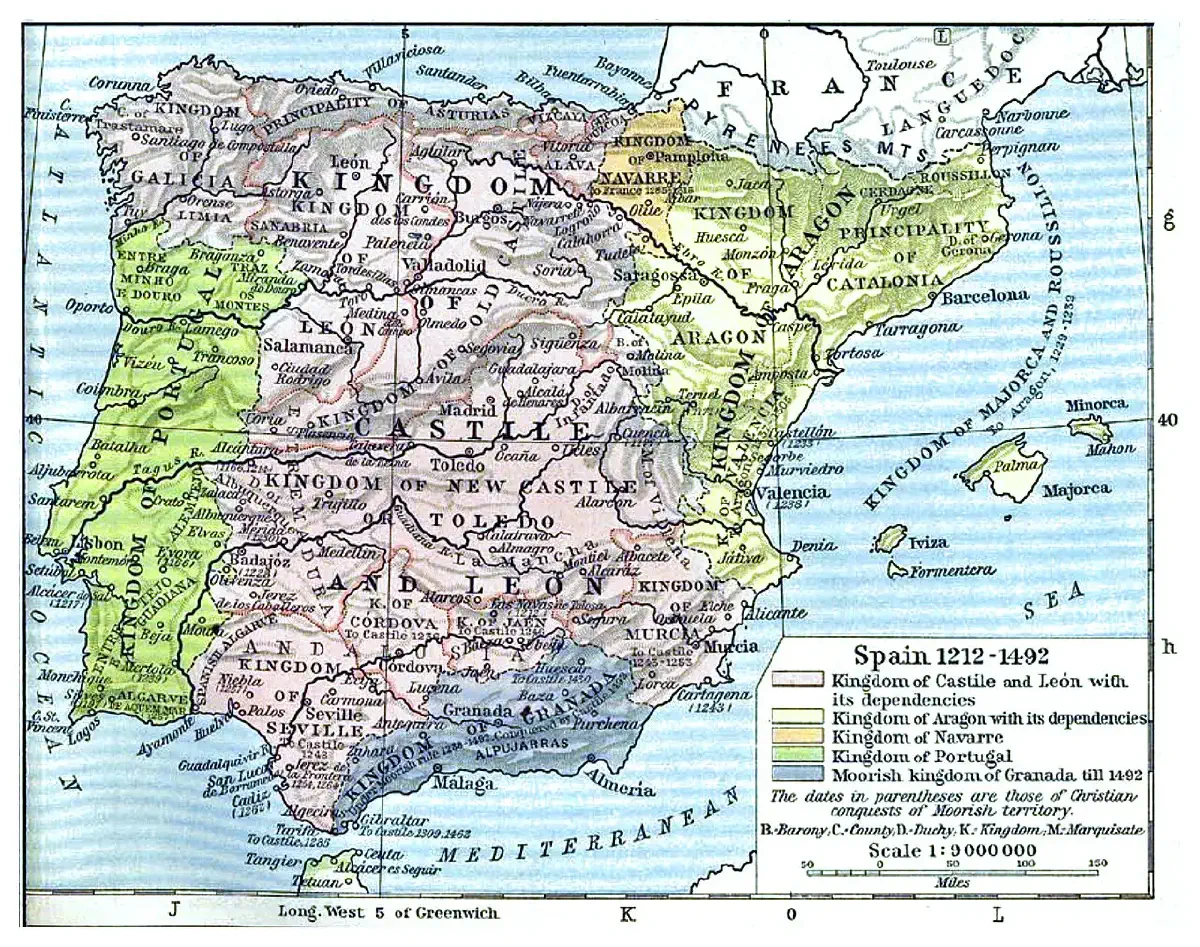
But the world had changed while the Portuguese knights were training in their dusty castle yards. Granada was no longer a free target; it was a Castilian protectorate. By a precise, cynical agreement, the Emirate was recognized as a tributary vassal of the Crown of Castile. Any attack on Granada was, by diplomatic extension, an attack on the most powerful kingdom on the peninsula. To invade would be to shatter the Treaty of Ayllón and reignite a war that Portugal, a small, poor nation on the edge of Europe, could not hope to win. The King and his council were boxed in, their crusading fervor a lit torch with nothing to set ablaze.
And so, during those long, frustrated months, the royal gaze turned elsewhere. It drifted past the familiar horizons of the peninsula, past the exhausted battlefields of the Reconquista, and out across the treacherous blue water of the Strait of Gibraltar. There, shimmering in the haze of a North African dawn, lay the coast of Morocco. It was a land of fable and fear, the domain of the Marinid Sultanate, a once-mighty empire now rotting from within. And at the very tip of that coast, like a dagger pointing at the heart of the sea lanes, stood a city.
Ceuta.
The idea was whispered first in the king’s private chambers, between John and his sons. It was a secret so dangerous that to speak of it openly could invite disaster—a preemptive strike from Castile, a warning to the Marinids, the ruin of everything. But the whispers grew more urgent, the arguments more compelling. Ceuta was no ordinary port. It was the northern terminus of the trans-Saharan gold trade, a caravan city where merchants from the mysterious interior brought their precious cargo to exchange for European silver and cloth. It was a nest of corsairs, the base from which Barbary pirates launched their swift galleys to raid the Algarve, carrying off Portuguese villagers to the slave markets of Fez. And, for a prince like Henry, it was a gateway to the unknown—a Christian foothold on the continent of Africa, a first step into the vast, unmapped world beyond the Pillars of Hercules.
Sometime around 1409, the secret council was formalized. Only the king, his three eldest sons, and a handful of trusted officers whose silence was guaranteed by oaths and the threat of death were admitted. They met in rooms where the servants had been dismissed, poring over maps that were little more than rumors drawn on vellum. They debated the tides, the moon, the seasons of the Mediterranean wind. They were planning not a raid, but a conquest, an amphibious assault on a fortress city whose walls had repelled invaders for a thousand years. The scale of the ambition was breathtaking, the chance of catastrophic failure immense.
And in that council, a kingdom that had been aimless found its terrible purpose. The dam was about to break, and the flood, when it came, would sweep south across the sea. The rusting knights would have their war, and it would be a war of the young princes’ imagining: a crusade of fire and blood, launched from the edge of the known world, aimed directly at the heart of Africa.
They had found their war. Now all they had to do was build an invasion fleet in absolute secrecy, deceive every spy in Christendom, and storm a city that had never fallen.
The clock had started ticking.