
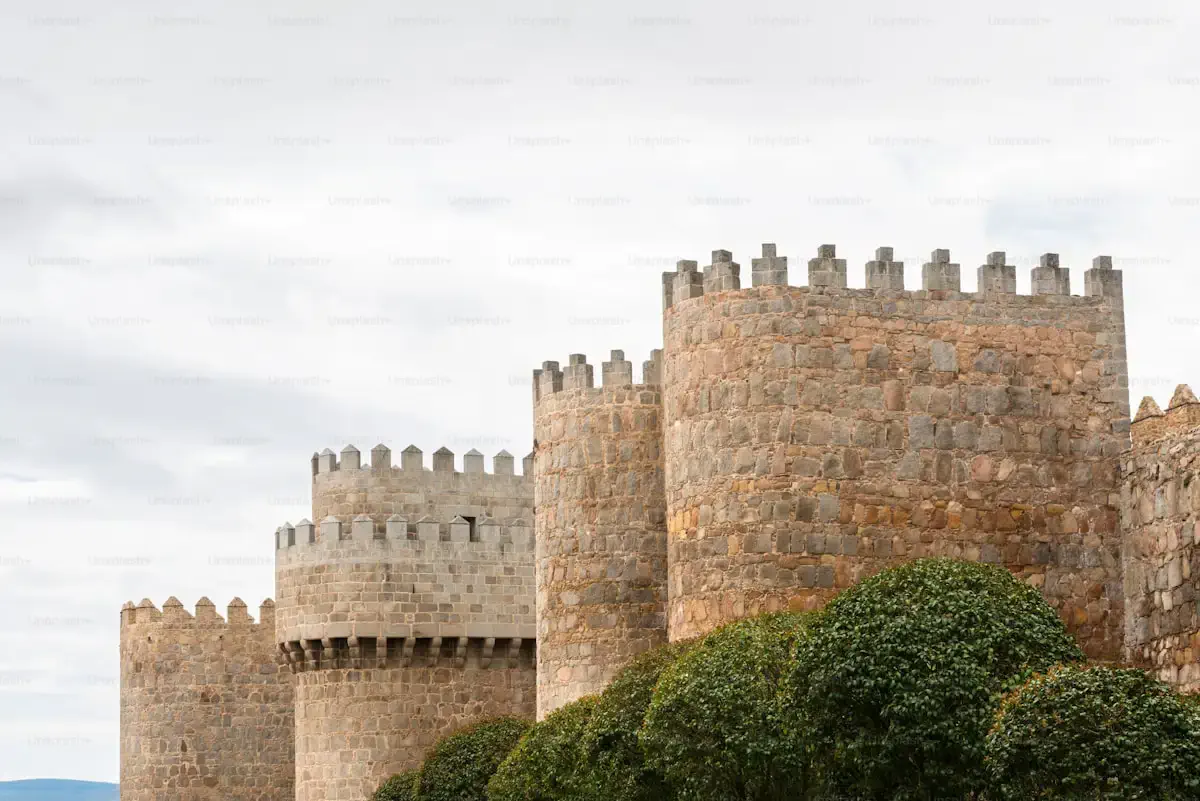
There were about three thousand of them, and they stood on the parapets of a ghost city. Ceuta, which had teemed with the noise of markets and muezzins and the endless shuffle of caravans, was empty. The Portuguese assault and the three-day sack had been as thorough as a scour. The original inhabitants—the merchants, the artisans, the moneychangers, the fishermen, the women and children who had called this city theirs for centuries—had fled in a great, terrified exodus, pouring out of the land gate with whatever they could carry, leaving behind their houses, their goods, their mosques, their dead. Those who had not fled in time lay in the alleys or had been marched to the slave pens on the waterfront. The conquerors now walked through silent bazaars where the spices had been spilled and trampled, through splendid courtyards whose fountains had stopped running, through rooms still scented with sandalwood and the ghost of a civilization that had vanished overnight.
Dom Pedro de Meneses, the new governor, stood on the highest tower of the citadel and looked down at his domain. He had won it with a wooden stick and a desperate gamble. Now he had to hold it with three thousand men, a handful of crossbow bolts, and a supply line that stretched two hundred miles across hostile water. The chroniclers recorded the moment with the solemnity of a coronation, but the reality was starker. Pedro was the master of a mausoleum. The luxury of the Marinid palaces mocked the men who slept in them, their fine plaster walls echoing with the coughs of soldiers who had never before seen a tiled floor. The great houses, abandoned in the panic of flight, became barracks for archers and stables for horses. The mosques were reconsecrated as churches, their mihrabs ripped out, their minarets topped with crosses. But the smell of incense could not quite cover the smell of fear.
Fear was the constant companion of every man in the garrison. It rose with the sun and settled with the dusk. Beyond the walls, the land was alive with enemies. The Marinid forces, scattered but not destroyed, had regrouped in the hills. The refugees who had fled to Tétouan were hardening their hearts and sharpening their scimitars. Every day, scouts reported movement in the valleys, the smoke of campfires, the glint of lance points among the olive groves. The Portuguese were not the conquerors of a continent; they were the occupants of a single, isolated fortress, surrounded by a sea of hostile territory, pinned against the coast like a butterfly on a board.
The rhythm of life in this garrison of ghosts was dictated by a single, terrible imperative: vigilance. A bell, not a cannon, was used to sound the alarm, because gunpowder was precious and the bell's iron voice cost nothing. It rang at the first sight of a mounted scout racing for the gate, at the first plume of dust that might herald a raiding party. When the bell tolled, every man dropped his task—his meal, his repair work, his fitful sleep—and ran to his post on the walls. The Marinid forces, operating in swift, fluid squadrons, tested the defenses constantly. They struck at dawn, when the light was treacherous, or at dusk, when the guards' eyes were straining into the gathering gloom. They did not need to storm the city; they simply needed to make life inside its walls unendurable, to kill the unwary, to strangle the garrison's ability to forage, to remind the Portuguese every single day that they were not safe.
The men who endured this existence were not colonists. They were conscripts of circumstance, soldiers who had been ordered to stay when their comrades sailed home. There were no families, no markets, no fields to till. The few women who remained were a handful of officers' wives, some camp followers who had stowed away, and the enslaved Muslim women whose silence and sorrow were a constant, uncomfortable presence. The garrison was a male society, brutal and monotonous, where the only pastimes were gambling, sharpening weapons, and telling stories of home that grew more golden with each retelling. The chronicles record no joyful festivals in those early years, only the grinding routine of survival.
The food was a misery. The Portuguese had not conquered a fertile hinterland; they had conquered a city that had always been fed by others. The trade caravans that had once wound their way to Ceuta's gates, laden with grain from the interior and livestock from the high pastures, had been diverted the instant the Portuguese banner rose over the citadel. The new rulers of Morocco's ports—Tangier, Tétouan, and a dozen smaller harbors—enforced a blockade as effectively as any fleet. The garrison subsisted on what could be shipped from Lisbon: hard biscuit that grew weevils in the damp sea air, salt fish that burned the throat, wine that soured in the heat. Fresh meat was a luxury so rare that men dreamed of it. Vegetables were a memory.
The sea itself was a fickle lifeline. The Casa de Ceuta, a new institution hastily cobbled together in Lisbon, was responsible for outfitting supply ships and sending them south. But the voyage was hazardous, the winds unpredictable, the winter storms lethal. Ships were delayed. Cargoes spoiled. Men on the walls would scan the empty horizon for weeks, their rations dwindling, before a sail was sighted. When the ship finally docked, the unloading was a frenzy of desperation. And then the ship would leave again, carrying letters to wives and mothers who might not receive them for months, carrying the garrison's pay in silver that felt like a bitter joke—money that could buy nothing in a city without commerce.
Disease was a predator more patient and more lethal than any Marinid raider. The crowded, unsanitary conditions within the walls, the inadequate diet, the stagnant water of the cisterns—all of it bred sickness. Plague visited Ceuta with the regularity of a season. In 1443 it came, and again in 1451, in 1453, in 1455, each wave carrying off dozens, sometimes hundreds, of men whose bodies were burned in pits outside the walls. Surgeons worked with saws and prayers, their gruesome trade a constant backdrop to garrison life. Men died of fevers, of infected wounds, of the simple, cumulative exhaustion of living in a state of perpetual alert. The cemeteries inside the walls filled faster than the barracks emptied. The garrison of ghosts was slowly becoming an actual city of the dead.
And yet, in this crucible of fear and deprivation, a strange and terrible society was forged. The men who survived the first year, then the second, then the fifth, were no longer the same men who had sailed from Lisbon. They were harder, sharper, more wary. They had learned the Marinid tactics, the contours of the surrounding countryside, the secret paths through the hills. They had become, in effect, a tribe of their own, a warrior brotherhood defined by the walls they defended and the enemies they hated. They gave their outposts names that were half-joke, half-prayer. They developed their own slang, their own codes of honor, their own contempt for the soft, uncomprehending world back home. When a fresh ship arrived from Portugal, carrying replacement troops, the garrison veterans would watch the newcomers stumble off the gangplank with a mixture of pity and scorn. They knew that half of these boys would be dead within the year.
Pedro de Meneses presided over this desperate colony with a will of iron. He had made a promise with a wooden stick, and he intended to keep it. The aleo was never far from his hand, a talisman that had become a symbol of his absolute authority. He led by example, sharing the hardships of his men, fighting in the skirmishes at the gates, refusing the comforts that his rank might have afforded. He also led by fear. He executed deserters publicly. He hanged spies from the battlements. He made it known, in a hundred small, implacable ways, that the only exit from Ceuta was through the sea gate in a coffin. The men grumbled, but they obeyed. In a world that had shrunk to a few thousand paces of stone and rubble, the governor's word was the only law.
The nights were the worst. When the sun dropped behind the African mountains and the darkness swallowed the land, the garrison pulled its patrols back to the walls and waited. The sentries, shivering despite the warmth of the Mediterranean night, stared out into a blackness that seemed to breathe and shift. Every sound was a potential death: the cry of a night bird, the rattle of a loose shutter, the distant, unidentifiable murmur of men moving in the dark. The chronicler who recorded a captain's letter, written years later, captured the essence of this existence in a single, haunting sentence: "Lord, we live ever in these fears."
Sleep was a shallow, interrupted thing. Men dozed in their armor, weapons at their sides. The bell, that iron sentinel, hung in its tower, ready to shatter the silence and summon the garrison to yet another alarm, yet another rush to the walls, yet another glimpse of swift-moving shadows melting back into the night. And when the dawn finally broke, pale and grey over the Mediterranean, the men would count themselves, count the dead, and begin the same, unending day all over again.
The garrison of ghosts had been abandoned by the world, forgotten by the kingdom they served, left to rot on a hostile shore. But they did not rot. They endured. And in the heart of their governor, a plan was already taking shape—a plan not just to survive, but to profit from this desolation. The city that was a drain on the royal treasury was about to become the foundation of a personal fortune. The aleo that had been a symbol of sacrifice was about to become a sceptre of greed.
But that is a story for another day. For now, the bell tolled, the sea glittered empty, and the men on the walls waited for an enemy who never slept.