
The crown, in its desperation to find a governor for Ceuta, had handed Pedro a charter of extraordinary scope. Among the powers granted was the quinto—the Right of the Fifth—a legal claim to one-fifth of all spoils captured on land and at sea within the jurisdiction of the city. To the king and his council, this clause was likely an afterthought, a bit of standard crusading boilerplate added to sweeten a poison posting. They imagined, if they imagined it at all, a few captured swords, some bales of silk, a trickle of silver coins. They could not have foreseen what Pedro, with the cold clarity of a man who had spent his life calculating the odds, would do with it.
He turned Ceuta into a corporation. And he was the sole shareholder.
The first pillar of his enterprise was the land itself, though "land" is a generous term for the strip of hostile territory that began at the city walls. The Portuguese garrison could not farm it; the soil was thin, the water scarce, and any man who spent too long outside the gates was likely to return draped over a saddle or not at all. But the land had other uses. It was a hunting ground, and the prey was human. Pedro organized what the chroniclers euphemistically called entradas—"entries"—but which were, in reality, cross-border raids of a brutal and methodical efficiency. Small, fast-moving squadrons of light cavalry, armed with crossbows and scimitars captured from the enemy, would slip out of the city before dawn and strike at the villages and encampments of the surrounding countryside.
The objectives were precise: horses, cattle, and captives. Horses were the currency of military power, essential for the garrison's own cavalry corps and valuable enough to be shipped back to Portugal for sale. Cattle provided fresh meat, a luxury that the salt-fish rations from Lisbon could never replace. And captives—high-ranking captives, knights and nobles rather than common villagers—were the true prize. Pedro developed a sophisticated ransom business, holding his prisoners in the citadel while he negotiated with their families in Fez, in Tétouan, in the mountain strongholds of the Rif. He learned the market price of a Marinid knight, the premium commanded by a governor's nephew, the discounts applied when a family was cash-poor but land-rich. His letters, dictated to scribes and sealed with his personal ring, were not the missives of a crusader but the correspondence of a merchant prince, haggling over terms with the cold precision of a Genoese banker.
The second pillar was the sea. Ceuta's harbor, that strategic jewel that had drawn the Portuguese across the strait in the first place, had lost its commercial function. The trade caravans that had once wound down from the Atlas Mountains, laden with gold dust and ostrich feathers and the precious spices of the African interior, had been diverted to Tangier, to Badis, to any port that did not fly the banner of Christ. But a harbor that is closed to trade can still be open to other ventures. Pedro opened his to privateers.
The Strait of Gibraltar was the busiest maritime corridor in the western world, and every ship that passed through it—Christian, Muslim, or the ambiguous vessels of the Italian trading cities—was a potential target. Pedro issued letters of marque to corsairs of every flag, granting them the right to operate from Ceuta's anchorage and to sell their captured vessels and cargoes in its markets. The price of this privilege was a percentage, paid directly to the governor. The chroniclers, their attention fixed on grand deeds of arms, largely ignored this unglamorous commerce, but the ledgers that survived in the Casa de Ceuta tell a clear story. Dom Pedro de Meneses was running a protection racket on the high seas, and it was making him immensely rich.
The third pillar was the most cold-blooded of all: the financing of further war. Pedro did not hoard his gold. He lent it out at interest to the very men who had refused the governorship of Ceuta, who were now, in the irony that history so often provides, coming to him as supplicants. The Portuguese nobility, perpetually cash-poor despite their vast estates, needed money for their own ambitions—for dowries, for building projects, for the private wars that kept their swords sharp. Pedro had the money. He became a banker to his own class, a moneylender in armor, and his greatest client was a prince.
Prince Henry the Navigator, the crusader whose fervor had helped drive the conquest of Ceuta, was a man of vast visions and perpetually empty pockets. His ambitions extended far beyond the African coast, into the unmapped Atlantic, where the currents swirled around legendary islands and the promise of Guinea gold haunted the dreams of sailors. These expeditions were ruinously expensive, and the Portuguese crown, still bleeding from the cost of the Ceuta campaign, could not fund them. Henry turned to Pedro de Meneses. The governor of Ceuta, sitting in his fortress on the African shore, lent substantial sums to the prince of Portugal, secured by promises of future royal favor and, one imagines, the quiet understanding that a debtor prince is a loyal political ally.
The scale of Pedro's fortune became the stuff of rumor and envy. A man who had arrived in Ceuta with nothing but a horse, a sword, and a wooden stick was now, within a few years, one of the wealthiest individuals in the kingdom. The gold of the quinto flowed into his coffers in a steady, bloody stream. The ransoms accumulated. The privateer kickbacks, counted in silver and silk and the occasional cargo of pepper, filled his warehouses. The interest on his loans compounded. Pedro was not merely surviving the posting that every other lord had refused; he was thriving in it, extracting wealth from the very conditions that were supposed to kill him.
But wealth, for Pedro, was not an end in itself. It was a tool. He had not forgotten the true purpose of his gambit: the restoration of his family's name and the construction of a legacy that would outlast him. The gold that came in was spent just as deliberately. He maintained the garrison, keeping his men paid and fed and armed, because a governor who lost his fortress would lose everything. He cultivated a network of informants and agents, spreading his influence through the Portuguese court and the Moroccan hinterland alike. He commissioned chapels and donated to churches, ensuring that the chroniclers of the religious orders would record his piety alongside his military exploits. And he planned, with the meticulous care of a chess player thinking ten moves ahead, for the future of his bloodline.
The marriage alliances that would eventually create the House of Vila Real were not yet sealed, but the groundwork was being laid. Pedro understood that his personal fortune, however vast, was fragile. It depended on his continued survival, on the capricious politics of the Portuguese court, on the unpredictable tides of war. To make it permanent, he needed to embed it in the structures of aristocratic power—in land, in titles, in the bloodlines of the great noble houses. The money was a means to an end. The end was a dynasty.
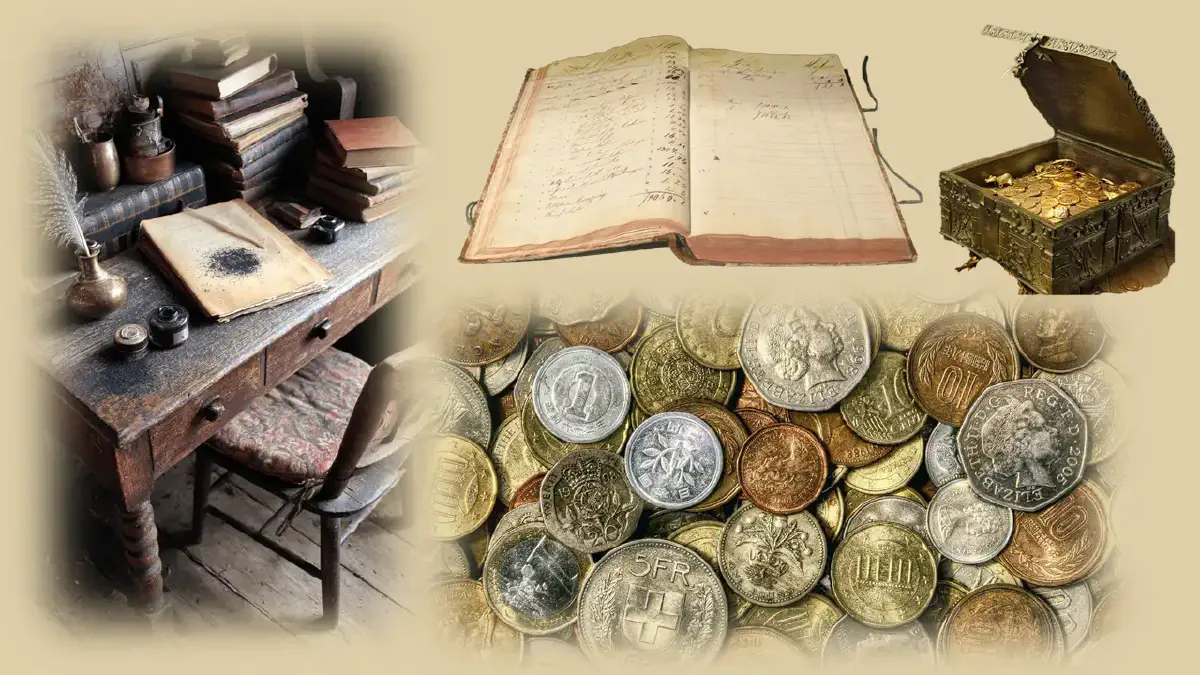
And so, in the garrison that was supposed to be a death sentence, Dom Pedro de Meneses sat at his desk in the governor's palace, a converted Marinid mansion whose walls still bore the geometric patterns of its former owners. Before him lay the ledger books, their pages dense with the meticulous accounting of his enterprises. Ransoms received, loans outstanding, ships captured, horses acquired, interest due. Each entry was a small victory in the long war he was waging against his own history. He had been born the son of traitors. He would die the founder of a noble house.
The aleo, the olive-wood stick that had become his symbol, sat on the desk beside the ledgers. It was a reminder of the gamble he had taken, the promise he had made, the life he had wagered. But it was also, now, something more. It was a scepter. The Warlord of Ceuta had built an empire from nothing, and the game he was playing had only just begun.
Outside the window, the muezzin's call that had once sounded from the minaret was gone, replaced by the tolling of the garrison bell. The city was still a ghost town, still a fortress under siege, still a posting that no sane man would envy. But Pedro de Meneses had long ago ceased to think in terms of sanity. He thought in terms of profit, of power, of legacy. The boy who had learned betrayal in the ashes of a civil war had become a man who trusted nothing but force and gold. And in the crucible of Ceuta, he had found both in abundance.
The ledgers closed. The candle burned low. The governor rose from his desk and walked to the window, looking out over the dark, silent city that was his domain. The sea glittered in the moonlight, the hills of Africa loomed black against the stars, and somewhere out in the darkness, the enemy was waiting. But the enemy could wait a little longer. Tomorrow, there would be another raid to plan, another ransom to negotiate, another ship to tax. The business of war never stopped.
And Dom Pedro de Meneses, the landless knight who had become a warlord, would be there to collect his fifth.