
When battlefields become killing fields for wildlife, the planet's biodiversity pays a price that no peace treaty can refund
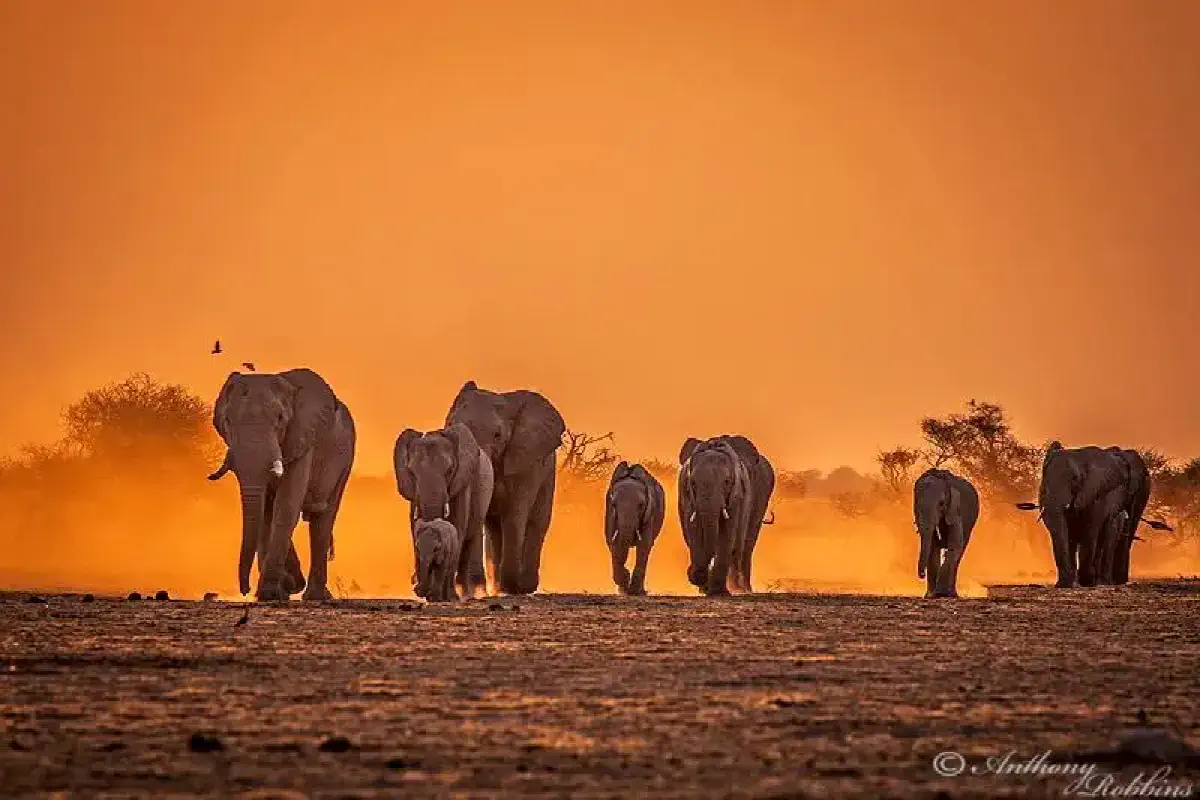
In September 2023, a wildlife survey team in the Okapi Faunal Reserve in the Democratic Republic of Congo completed a transect that would have been unremarkable before 1995. The forest was intact. Rainfall had been normal. The habitat, by every ecological measure, was suitable for elephants. Yet the dung counts and camera traps told a starkly different story: the elephant population had collapsed by nearly half since the end of the civil war a decade earlier. The proximate cause was ivory poaching, which had surged during the conflict as armed groups competed to finance their operations through the extraction of easily transportable, high-value natural resources. The ultimate cause was not habitat loss, not climate change, but war.
This is the ecological shadow of conflict: the vast, poorly documented, and often generational toll that human warfare exacts on the non-human world. It unfolds in forms that range from the deliberate—herbicides sprayed to strip an insurgency of its forest cover—to the opportunistic—militias slaughtering elephants to buy weapons—to the accidental—minefields that become, against all logic, some of the planet's most effective wildlife sanctuaries. Across continents and decades, the pattern is consistent: when humans go to war, biodiversity retreats, adapts, or vanishes. And the accounting, such as it exists, rarely makes it into the post-conflict settlement.
The Poaching Economy#
The relationship between armed conflict and wildlife poaching is now sufficiently well established that conservation biologists treat it as a predictive variable. A 2022 review of the ecological effects of warfare, published by researchers at Princeton, catalogued evidence from Colombia to Mozambique demonstrating that conflict zones consistently experience elevated levels of illegal hunting, with bushmeat offtake rising sharply during periods of institutional collapse and declining only when governance structures are rebuilt. In Virunga National Park, Africa's oldest protected area and a front line in multiple Congolese civil wars, bushmeat hunting increased fivefold during active hostilities.
The mechanism is straightforward. War dissolves the enforcement capacity of park authorities. Rangers are redeployed, killed, or simply stop receiving salaries. Weapons flood into the region. Displaced populations, cut off from agricultural livelihoods, turn to wildlife for protein. And armed groups, facing the same funding pressures as any conventional army, discover that ivory, rhino horn, and pangolin scales are compact, valuable, and easily smuggled across the porous borders that conflict creates. The Lord's Resistance Army, operating in Garamba National Park, became a case study in this dynamic: though the narrative of a direct ivory-terrorism nexus has been contested, the broader pattern of conflict-facilitated poaching is beyond dispute.
The Okapi Faunal Reserve study quantified the damage. Elephant abundance declined by approximately 50% during the 1995-2006 civil war, with losses concentrated near park boundaries and in areas of intense human activity. Post-war, elephant densities were higher in the central zones of the park, where residual protection existed, suggesting that these areas functioned as refuges. But the broader conclusion was grimmer: in areas of eastern DRC where no protection was provided at all, elephants were "even more decimated". The researchers noted that post-war dynamics—weakened institutions, the continued availability of weapons, and growing human populations—continued to threaten the surviving populations long after the peace agreement was signed.
The Deforestation Cascade#
Poaching kills individual animals. Habitat destruction kills entire ecosystems, and modern warfare excels at it. The tools of habitat destruction range from the industrial—the US military sprayed approximately 72 million litres of herbicides over Vietnam between 1961 and 1971, destroying roughly 2.6 million hectares of forest and cropland—to the artisanal—the axe and the cooking fire, wielded by refugees with no other fuel source.
The Syrian civil war provides the most comprehensively documented recent example. A 2025 study using Landsat and PALSAR satellite imagery found that between 2010 and 2019, forest cover in Syria declined by 19.3%, with losses concentrated in the north-western region of the country. The drivers were multiple: illegal logging by both local populations and refugees living in nearby forest areas, the use of wood for heating and cooking as fuel supplies were disrupted, and forest fires caused by explosive events such as shelling and bombing near forested areas. The study identified proximity to refugee camps, roads, and settlements as the strongest predictors of forest loss—a geography of desperation written onto the landscape in satellite-visible scars.
In Tigray, Ethiopia, researchers used open-source satellite data to identify woody vegetation loss across approximately 930 square kilometres during the 2020-2022 conflict, representing around 4% of the region's total forest and woody vegetation area. The losses were concentrated along major roads, consistent with conflict-driven fuelwood harvesting by both military forces and displaced civilians. Notably, the study also found that vegetation recovery continued across a larger area—approximately 2,600 square kilometres—during the same period, suggesting that the war's ecological impact was highly localised and that recovery is possible even amid violence.
The long-term trajectories are not encouraging. Vietnam's mangrove forests, 36% of which were sprayed with herbicides during the war, experienced not only direct tree mortality but also chemical changes to soil composition, coastal erosion from the loss of protective vegetation, and the local extinction of species including crocodiles and tigers. A reforestation programme launched in 1978 has rehabilitated roughly half of the original mangrove area in Can Gio, but the recovery required decades of sustained investment and has been threatened repeatedly by shrimp farming, fuelwood collection, and industrial pollution. The forest that was destroyed in a matter of months took two generations to partially rebuild.
The Oil Spill as Weapon#
If deforestation is the terrestrial hallmark of war's ecological damage, the deliberate release of oil is its marine equivalent. The most consequential example remains the 1991 Gulf War, when retreating Iraqi forces sabotaged Kuwait's oil infrastructure, releasing between 700,000 and 900,000 tonnes of crude oil into the Persian Gulf—the largest oil spill in human history. The immediate casualties were staggering: approximately 30,000 seabirds killed directly by oil exposure, nearly 50% of the Gulf's coral affected, and hundreds of square kilometres of seagrass beds flooded with slicks. Turtles returning to breed on offshore islands became coated in oil. Fish populations experienced mass mortality, triggering a temporary explosion in zooplankton that rippled unpredictably through the food web.
The recovery was slower than scientists anticipated. Coral showed symptoms of severe stress, with bleaching and high mortality resulting from temperature fluctuations in the winter following the war, compounding the direct toxic effects of the oil. Many environmental parameters "took longer to return to normal than was expected," according to post-war monitoring conducted by France's Centre of Documentation, Research and Experimentation on Accidental Water Pollution. The United Nations Compensation Commission received approximately 170 environmental claims seeking roughly $80 billion; it awarded just over $5 billion, or 6.2% of the claimed amount.
The Persian Gulf's geography magnifies the damage. It is a semi-enclosed, shallow sea averaging 50 metres in depth, connected to the Indian Ocean only through the Strait of Hormuz. Its water renewal cycle—two to five years—means that pollutants persist far longer than in open-ocean environments. The region hosts the world's second-largest population of dugongs, an estimated 5,000 to 7,500 individuals, along with more than 500 fish species, five species of sea turtle including the critically endangered hawksbill, and approximately 100 species of coral. It is, in ecological terms, precisely the wrong place to fight a war involving oil infrastructure.
The Accidental Sanctuaries#
And yet, the ecological shadow of war is not uniformly dark. In a handful of the world's most heavily fortified and dangerous places, conflict has produced an outcome that conservationists could only dream of engineering: the complete removal of human beings from the landscape for decades at a stretch.
The Korean Demilitarised Zone is the archetype. Created by the armistice that halted the Korean War in 1953, the DMZ is a strip of land 250 kilometres long and roughly 4 kilometres wide, running across the peninsula along the 38th parallel. It remains one of the world's most heavily fortified borders, laced with landmines and flanked by military installations on both sides. But in the 72 years since the war ended—technically, it has never formally ended, only been suspended—this forbidden strip has become what ecologists call an "involuntary park": a place rendered off-limits to human habitation not by conservation planning but by the lethal legacies of human violence.
The biodiversity that has accumulated in the human vacuum is extraordinary. South Korea's National Institute of Ecology has documented nearly 6,000 species within the DMZ, including more than 100 endangered species, representing more than a third of South Korea's threatened wildlife. The zone's varied terrain creates distinct habitats: the wetlands of the western sector shelter migrating cranes, while the rugged eastern mountains provide sanctuary for Siberian musk deer and Asiatic black bears. The DMZ, while covering less than 10% of South Korea's total land area, harbours 38% of the country's endangered species and more than 30% of its flora and fauna. Kim Seung-ho, director of the DMZ Ecology Research Institute, has spent two decades documenting this accidental paradise. His assessment carries the weight of bitter paradox: "I used to think I was the best environmentalist, but I realised the landmines are doing more for conservation than anyone. It's ironic, no? Weapons meant for killing have become the greatest protectors of life".
The Chernobyl Exclusion Zone tells a similar story with a different villain. Following the 1986 nuclear disaster, 116,000 people were permanently evacuated from a 4,200-square-kilometre area. A long-term census study published in Current Biology found that relative abundances of elk, roe deer, red deer, and wild boar within the exclusion zone were similar to those in four uncontaminated nature reserves in the region, and that wolf abundance was more than seven times higher. The authors concluded that "regardless of potential radiation effects on individual animals, the Chernobyl exclusion zone supports an abundant mammal community after nearly three decades of chronic radiation exposures". The human evacuation, in this analysis, proved more consequential for wildlife abundance than the radiation itself.
The concept of the "involuntary park" extends well beyond these famous cases. Abandoned military zones, disaster sites, and border regions scarred by conflict have all transformed into accidental sanctuaries. Former nuclear facilities, minefields in Cambodia and Bosnia, the Zone Rouge in France where unexploded First World War shells still render 17,000 hectares uninhabitable—all have become, in the absence of human beings, de facto nature reserves. Some have been formalised: Hanford Reach National Monument in Washington State, established on land surrounding a Cold War nuclear site, now protects hundreds of species. The southern Kuril Islands, disputed between Russia and Japan since the Second World War, have been designated as nature reserves by both claimants, creating an accidental conservation zone maintained by geopolitical paralysis rather than ecological intent.
Scientists caution against romanticising this "passive rewilding". David Havlick, a professor at the University of Colorado Colorado Springs, warns that the narrative can "imply that nature simply fixes itself, or that in the absence of human intervention, a favourable recovery inevitably occurs at sites that may still be seriously degraded or hazardous". The landmines that protect the DMZ's cranes also prevent any possibility of active ecological management. The radiation that deters human settlement at Chernobyl continues to cause physiological damage to individual animals, whatever the population-level trends may show. And involuntary parks are, by definition, involuntary: they can be re-militarised, re-contaminated, or re-opened to development at any moment, as the Russian army's incursion into the Chernobyl zone in February 2022 grimly demonstrated.
The Marine Acoustic War#
Not all of war's ecological impacts are visible from a satellite. Beneath the surface of the world's oceans, naval operations generate acoustic pollution on a scale that terrestrial combat does not. Military sonar, underwater explosions, and the shock waves from naval mines create an auditory environment that marine mammals—which rely on sound for communication, navigation, and foraging—are poorly equipped to withstand.
The US Navy has acknowledged that its training exercises alone were projected to kill over 340 dolphins and whales between 2014 and 2019 through bomb testing and heavy sonar use. The mechanism is well documented: mid-frequency active sonar can cause whales and dolphins to beach, surface too quickly, or suffer physical trauma including ruptured eardrums and lung haemorrhage. In 2000, 14 beaked whales and several other marine mammals stranded themselves in the Bahamas following a US Navy sonar exercise, one of the most thoroughly investigated mass-stranding events linked to military activity.
In the Strait of Hormuz, the narrow chokepoint through which a significant fraction of the world's oil passes, the convergence of naval traffic, mine warfare, and marine biodiversity creates a uniquely dangerous environment. Underwater explosions generate high-pressure shock waves that can rupture the internal organs of fish and damage the auditory systems of cetaceans. Aaron Bartholomew, professor of biology at the American University of Sharjah, notes that "while whales and dolphins may temporarily move out of areas where there is significant naval sonar activity," the intensity of modern maritime conflict poses lethal risks, and even temporary displacement can interfere with feeding patterns and habitat use, turning short-term disruption into longer-term ecological stress.
The Black Sea, now a theatre of active naval warfare between Russia and Ukraine, has become an uncontrolled experiment in the effects of sustained military sonar on cetacean populations. Reports from Ukrainian researchers have documented unusual dolphin stranding events along the Black Sea coast since the full-scale invasion began, though the difficulties of systematic data collection in a war zone make definitive attribution challenging.
The Legal Void#
The patchwork of international law that governs armed conflict is largely silent on the protection of wildlife and ecosystems. The 1977 Environmental Modification Convention (ENMOD) prohibits the "military or any other hostile use of environmental modification techniques having widespread, long-lasting or severe effects," but its thresholds—"widespread, long-lasting, or severe"—are defined so restrictively that no state has ever been found in violation. The Geneva Conventions and their Additional Protocols contain limited provisions on environmental protection, primarily through the prohibition of attacks on objects "indispensable to the survival of the civilian population," which could be interpreted to include agricultural land and water sources but has rarely been applied to ecosystems as such.
The result is a legal void in which the deliberate destruction of an entire mangrove forest—as occurred in Vietnam—or the release of the largest oil spill in human history—as occurred in the Gulf War—produces, at most, a fraction of the claimed damages awarded through a compensation commission years after the fact. The 1991 Gulf War oil spill generated environmental claims totalling approximately $80 billion; the UN Compensation Commission awarded $5 billion, or 6.2% of the claimed amount.
Recent years have seen a push to close this gap through the concept of "ecocide"—the mass destruction of ecosystems, whether in peacetime or war—as a potential fifth crime under the jurisdiction of the International Criminal Court. The campaign, led by a panel of international lawyers convened by the Stop Ecocide Foundation, has gained traction in several European parliaments and was incorporated into the European Union's revised environmental crime directive in 2024. But ecocide remains outside the Rome Statute, and its application to armed conflict would require navigating the complex interplay between environmental law and the law of armed conflict, which has traditionally privileged military necessity over ecological protection.
The Permanent Scar#
In July 2024, the Ukrainian government's operational headquarters for environmental security estimated the total environmental damage from the Russian invasion at $65 billion and rising, a figure encompassing soil contamination, water pollution, forest fires, and the destruction of protected areas including the flooding of 2,500 hectares of the Irpin River wetlands after a dam was destroyed during the defence of Kyiv. The Kakhovka Dam's destruction on June 6, 2023, was described by researchers at Ukraine's Institute of Marine Biology as "the greatest ecological catastrophe" of the war to date, causing extensive downstream flooding that destroyed populations and habitats, though the researchers also noted that the Black Sea ecosystem's native species, having evolved under conditions of broad salinity and temperature tolerance, appeared to possess a degree of ecological resilience.
The tension between destruction and resilience is the defining characteristic of war's ecological shadow. The forest recovers, but it takes decades. The elephant population stabilises, but at half its pre-war level. The coral bleaches and, in some places, regenerates. The dolphins are displaced, and some fraction of them return. The involuntary park flourishes until the war resumes.
What remains, always, is the knowledge that the damage was not accidental but structural: that war reorders ecosystems as thoroughly as it reorders borders, and that the reordering is almost never reversed. The manatees that vanished from the Irpin wetlands, the tigers that disappeared from the Vietnamese mangroves, the elephants that were shot for their ivory in the Okapi reserve—they are not coming back. The ecological shadow is long, and in most places, it is permanent.
References#
Beyers, R. L., Hart, J. A., Sinclair, A. R. E., Grossmann, F., Klinkenberg, B., & Dino, S. (2011). Resource wars and conflict ivory: The impact of civil conflict on elephants in the Democratic Republic of Congo—The case of the Okapi Reserve. PLoS ONE, 6(11), e27129. https://doi.org/10.1371/journal.pone.0027129
Daiyoub, A., Gelabert, P., Saura-Mas, S., & Vega-Garcia, C. (2025). War and deforestation: Using remote sensing and machine learning to identify the war-induced deforestation in Syria 2010–2019. Land, 14(1), 150. https://doi.org/10.3390/land14010150
Schulte to Bühne, H., Darbyshire, E., Weldemichel, T. G., Nyssen, J., & Weir, D. (2024). Conflict-related environmental degradation threatens the success of landscape recovery in some areas in Tigray (Ethiopia). Ecology and Society, 29(3), 20. https://doi.org/10.5751/ES-15080-290320
Hong, P. N. (2001). Reforestation of mangroves after severe impacts of herbicides during the Viet Nam war: The case of Can Gio. In Proceedings of the FAO Regional Workshop on the Rehabilitation of Mangrove Ecosystems. Food and Agriculture Organization of the United Nations.
CEDRE. (1991). Gulf War oil spill: Incident information sheet. Centre of Documentation, Research and Experimentation on Accidental Water Pollution. https://cedre.fr/en/resources/incident-information-sheets/guerre-du-golfe
Kim, S.-H. (2025). Interview: 'Landmines have become the greatest protectors.' The Guardian. https://www.theguardian.com/environment/2025/aug/21/north-south-korea-war-demilitarised-zone-dmz-ecology-endangered-wildlife-aoe
Deryabina, T. G., Kuchmel, S. V., Nagorskaya, L. L., Hinton, T. G., Beasley, J. C., Lerebours, A., & Smith, J. T. (2015). Long-term census data reveal abundant wildlife populations at Chernobyl. Current Biology, 25(19), R824–R826. https://doi.org/10.1016/j.cub.2015.08.017
Beresford, N. A., Scott, E. M., & Copplestone, D. (2020). Dose reconstruction supports the interpretation of decreased abundance of mammals in the Chernobyl Exclusion Zone. Scientific Reports, 10, 14083. https://doi.org/10.1038/s41598-020-70699-3
EnviroLink Network. (2026). When war and disaster create unexpected wildlife sanctuaries: The rise of "involuntary parks." https://www.envirolink.org/2026/01/16/when-war-and-disaster-create-unexpected-wildlife-sanctuaries-the-rise-of-involuntary-parks/
Giseburt, A. (2026). Involuntary parks: Human conflict is creating unintended refuges for wildlife. Mongabay. https://news.mongabay.com/2026/01/involuntary-parks-human-conflict-is-creating-unintended-refuges-for-wildlife/
Havlick, D. G. (2018). Bombs away: Militarization, conservation, and ecological restoration. University of Chicago Press.
CBS News. (2013, September 3). Navy: Hundreds of dolphins, whales to die from bomb tests, sonar use. https://www.cbsnews.com/news/navy-hundreds-of-dolphins-whales-to-die-from-bomb-tests-sonar-use/
Kvach, Y., Stepien, C. A., Minicheva, G. G., & Tkachenko, P. (2025). Biodiversity effects of the Russia–Ukraine War and the Kakhovka Dam destruction: Ecological consequences and predictions for marine, estuarine, and freshwater communities in the northern Black Sea. Ecological Processes, 14(1). https://doi.org/10.1186/s13717-025-00589-3
Prychepa, M., & Kutsokon, Y. (2025). Biodiversity changes in the Irpin River wetlands following dam destruction during defensive operations in Kyiv, Ukraine. Polish Journal of Natural Sciences, 40(1). https://czasopisma.uwm.edu.pl/index.php/pjns/article/view/11387
Węgrzyn, E., Leniowski, K., Rusev, I., Miedviedieva, I., Tańska, N., & Kagalo, A. A. (2025). Wings of war: How open-source intelligence reveals the impact of warfare in Ukraine amid global avian biodiversity decline. European Journal of Ecology, 11(2), 835–845. https://doi.org/10.1080/24750263.2025.2531125
Channelstv.com. (2026, March 18). War threatens Gulf's dugongs, turtles and birds. https://www.channelstv.com/2026/03/18/war-threatens-gulfs-dugongs-turtles-and-birds/
Tech News Vision. (2026, April 13). Marine animals in the Strait of Hormuz don't get a ceasefire. https://technewsvision.co.uk/marine-animals-in-the-strait-of-hormuz-dont-get-a-ceasefire/
de Merode, E., Smith, K. H., Homewood, K., Pettifor, R., Rowcliffe, M., & Cowlishaw, G. (2007). The impact of armed conflict on protected-area efficacy in Central Africa. Biology Letters, 3(3), 299–301. https://doi.org/10.1098/rsbl.2007.0033
United Nations Compensation Commission. (2005). Report and recommendations made by the Panel of Commissioners concerning the third instalment of "F4" claims. United Nations.
Stop Ecocide Foundation. (2021). Independent expert panel for the legal definition of ecocide: Commentary and core text. https://www.stopecocide.earth
This is the third article in a six-part series, "The Animal Proxies," examining the role of animals in modern warfare. The next instalment will examine the long tail of abandonment: the populations of companion and street animals left behind in war zones, and the informal humanitarian networks that mobilise to save them.