Bones on the Nile - Part 4: Rewriting the History of War
·2112 words·10 mins
If this was not the oldest war, what was it? And why the distinction matters.
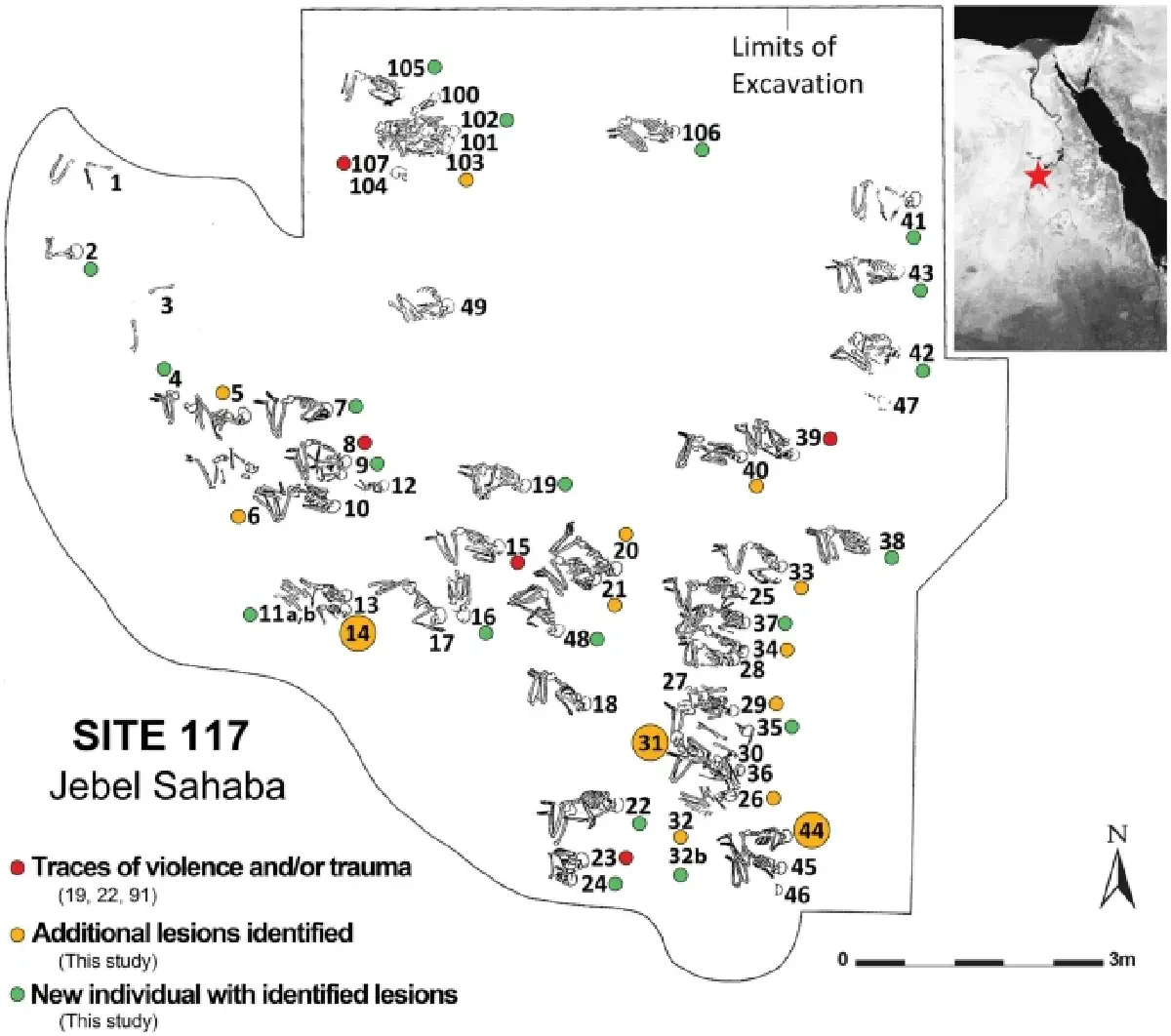
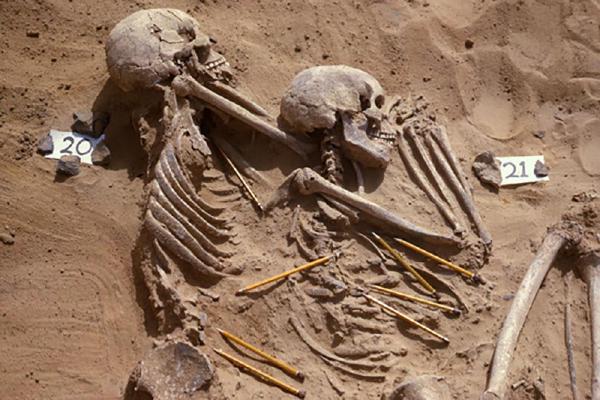
For half a century, a single cemetery near the Nile's Second Cataract carried a label it did not deserve: the world's oldest battlefield. Jebel Sahaba, dated to roughly 13,000 years ago, was discovered in the 1960s by archaeologist Fred Wendorf during a frantic international salvage operation before the Aswan High Dam flooded the region. The skeletons he found, riddled with stone fragments, seemed to confirm a dark thesis: that organized war was humanity's oldest habit.
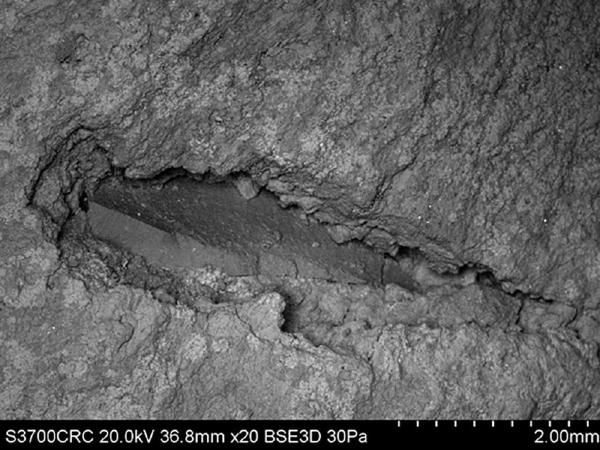
The 2021 reanalysis by paleoanthropologist Isabelle Crevecoeur's team changed all of that. Using CT scanning, 3D microscopy, and experimental archaeology, the team identified 106 previously unseen lesions across 61 individuals. The pattern was not a single battle. It was something more disturbing: a community living under the sustained, grinding threat of ambush across generations, its bones recording a lifetime of fear rather than a single terrible day.
This four-part series follows that forensic investigation from discovery to global context, treating the cemetery as a cold case and the bones as the only witnesses who cannot lie.
| Part | Title | Core Question |
|---|---|---|
| 1 | The Killing Field That Wasn't | Why did the "oldest battlefield" label survive for 60 years, and what overturned it? |
| 2 | The Weapons That Speak | What do the wounds reveal about the technology and tactics of the attackers? |
| 3 | A Lifetime of Fear | What do healed injuries tell us about survival, community, and endemic violence? |
| 4 | Rewriting the History of War | If this was not a war, what was it? And why does the distinction matter? |
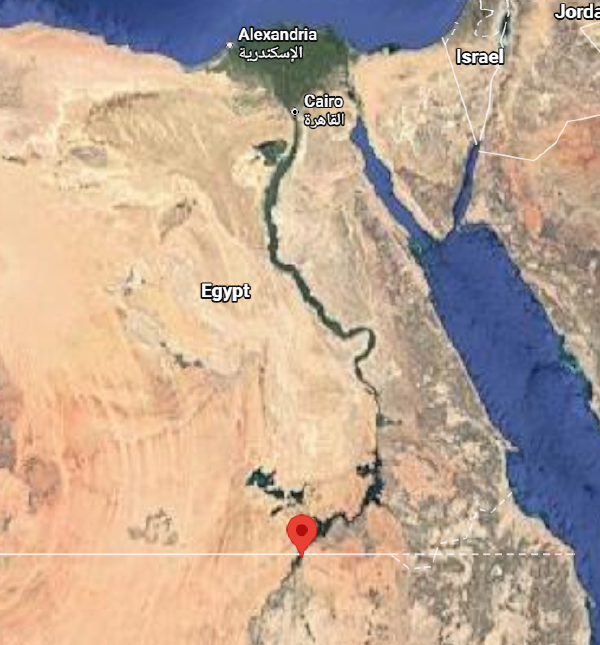
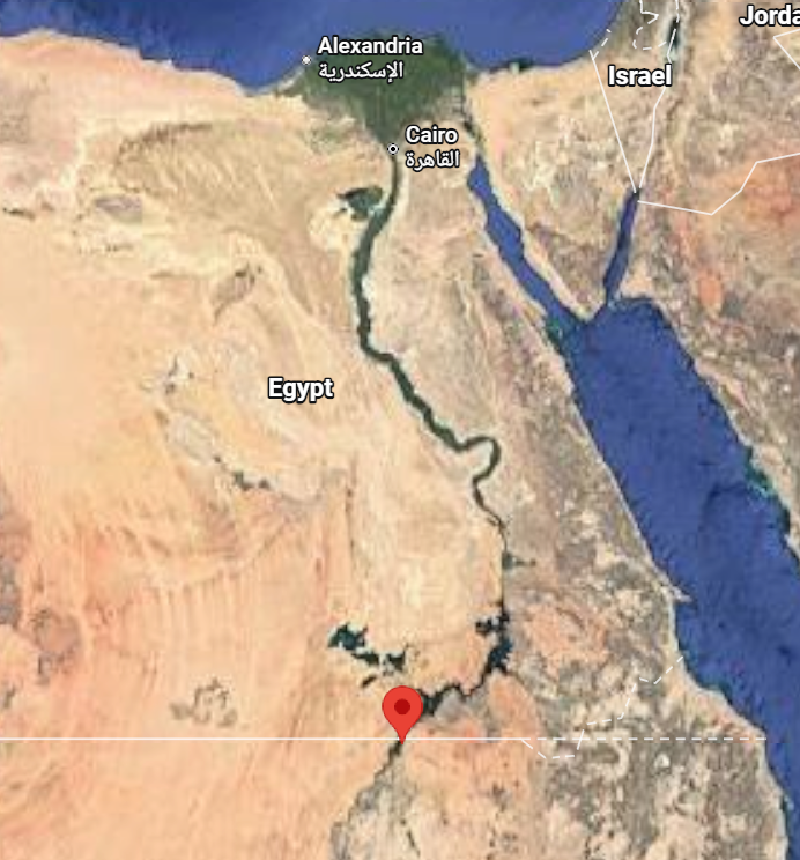
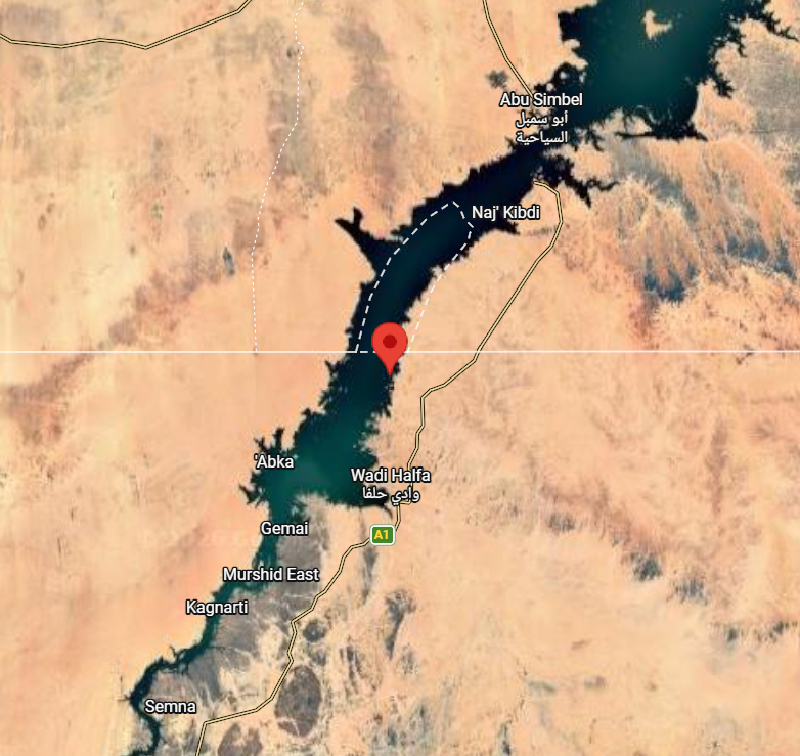
Jebel Sahaba sits near the Nile's Second Cataract, at the modern border between Egypt and Sudan. Today it lies beneath the waters of Lake Nubia, the Sudanese portion of Lake Nasser, submerged when the Aswan High Dam was completed in 1970. The salvage excavation that uncovered it was part of a UNESCO-sponsored campaign to document sites before the flooding.
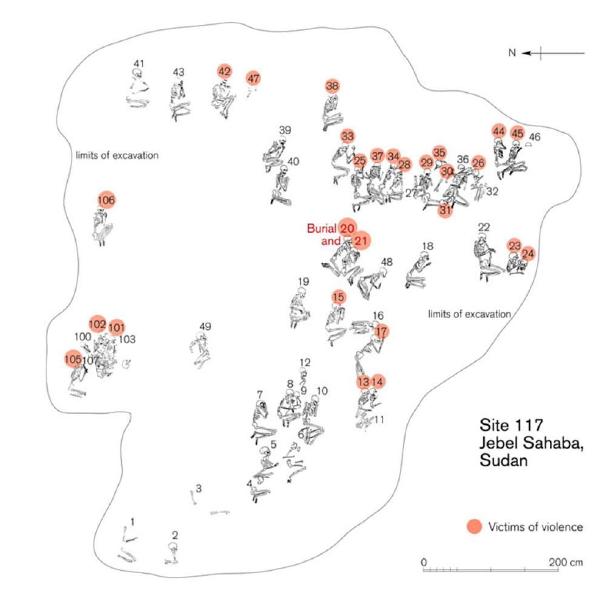
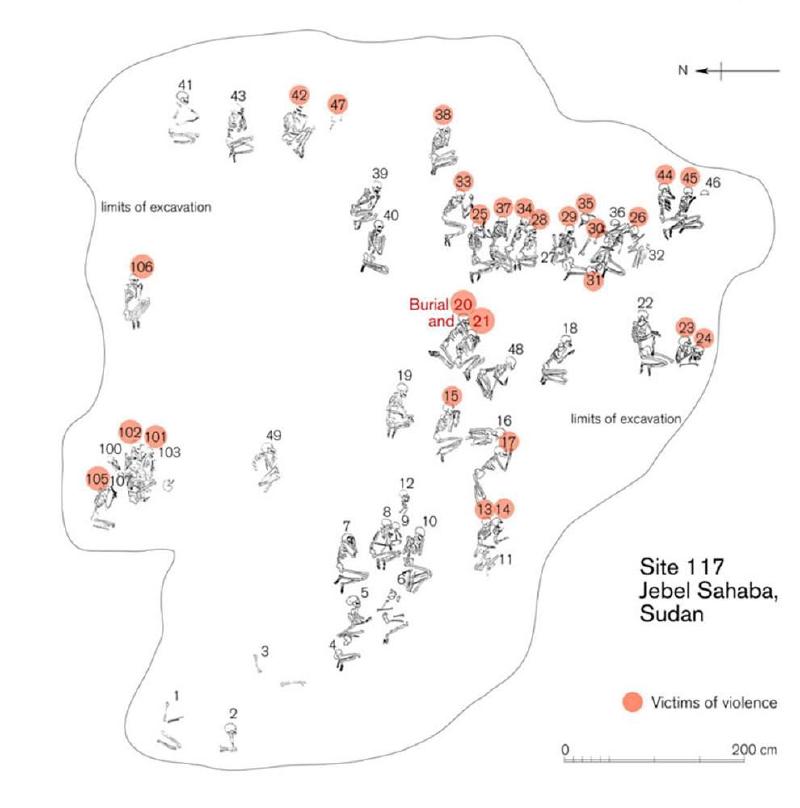
Cemetery 117 at Jebel Sahaba contained at least 61 individuals buried over multiple generations. Wendorf's original report in the 1960s identified 26 individuals with embedded weapon fragments or cut marks. The 2021 reanalysis by Crevecoeur et al. found 106 additional lesions and extended the evidence of violence to 61 of the 64 individuals examined. The critical finding: roughly 25 percent of those with trauma showed both healed and unhealed injuries, proof that the violence was not a single event but a recurring pattern across lifetimes.
Here are the key references that informed the series, formatted in APA 7th edition and numbered for your convenience.
Crevecoeur, I., Dias‑Meirinho, M.‑H., Zazzo, A., Antoine, D., & Bon, F. (2021). New insights on interpersonal violence in the Late Pleistocene based on the Nile valley cemetery of Jebel Sahaba. Scientific Reports, 11, Article 9991. https://doi.org/10.1038/s41598-021-89386-y
Wendorf, F. (1968). Site 117: A Nubian Final Paleolithic graveyard near Jebel Sahaba, Sudan. In F. Wendorf (Ed.), The prehistory of Nubia (Vol. 2, pp. 954–1040). Southern Methodist University Press.
Mirazón Lahr, M., Rivera, F., Power, R. K., Mounier, A., Copsey, B., Crivellaro, F., Edung, J. E., Maillo Fernandez, J. M., Kiarie, C., Lawrence, J., Leakey, A., Mbua, E., Miller, H., Muigai, A., Mukhongo, D. M., Van Baelen, A., Wood, R., Schwenninger, J.‑L., Grün, R., … Foley, R. A. (2016). Inter‑group violence among early Holocene hunter‑gatherers of West Turkana, Kenya. Nature, 529(7586), 394–398. https://doi.org/10.1038/nature16477
Taçon, P. S. C., & Chippindale, C. (1994). Australia’s ancient warriors: Changing depictions of fighting in the rock art of Arnhem Land, N.T. Cambridge Archaeological Journal, 4(2), 211–248. https://doi.org/10.1017/S0959774300001086
Jantzen, D., Brinker, U., Orschiedt, J., Heinemeier, J., Piek, J., Hauenstein, K., Krüger, J., Lidke, G., Lübke, H., Lampe, R., Lorenz, S., Schult, M., & Terberger, T. (2011). A Bronze Age battlefield? Weapons and trauma in the Tollense Valley, north‑eastern Germany. Antiquity, 85(328), 417–433. https://doi.org/10.1017/S0003598X00067843
Keeley, L. H. (1996). War before civilization: The myth of the peaceful savage. Oxford University Press.