
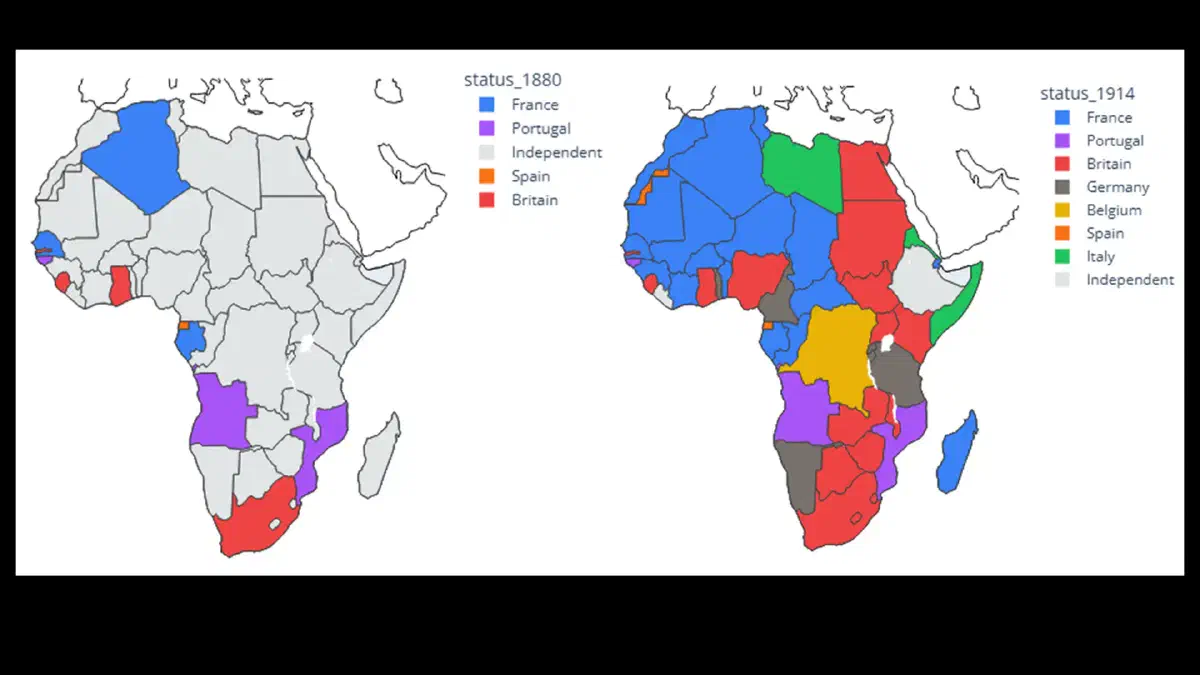
The Catalyst of Monopoly Capitalism#
Classic economic theories of imperialism emphasize that the partition of Africa was an inevitable consequence of European capitalism transitioning from a phase of free competition to a stage of monopoly and finance capitalism. Writers such as V. I. Lenin and J. A. Hobson argued that this new monopoly capitalism thrived on the export of capital, which was derived from the super-profits amassed by banking and industrial cartels. Lenin further posited that the capitalists, functioning as rentiers living off their investments, would inevitably drive their nations to war to secure or expand these captive markets.
While some sociologists and diplomatic historians later attempted to explain the new imperialism as a psychological "atavistic" thirst for domination or a purely political quest for national prestige, serious historical investigations of the period underscore the danger of trivializing the economic dimension. Even scholars who championed the "national prestige" theory conceded that the economic push into the African continent was driven by an under-supply of raw materials in Europe. To prevent the world's resources from being monopolized by protectionist powers like France or Germany, nations like Great Britain moved aggressively to gather the lion's share of the continent into their own empires.
The Transition of Trade and the Crises of Commerce#
The shift from informal commercial influence to formal territorial annexation was deeply intertwined with crises in African commerce. In West Africa, for example, the nineteenth century was marked by a transition from the transatlantic slave trade to "legitimate" commerce. In areas where this transition was made successfully and indigenous incomes were maintained, the subsequent European partition was largely driven by external pressures, such as mercantile demands and Anglo-French imperial rivalries.
At the other extreme, where indigenous rulers adopted predatory means to maintain their wealth and where internal conflicts were pronounced, disintegrative forces on the African side of the frontier provided the pretext for European intervention. A severe decline in both export and import trades during the last quarter of the nineteenth century further undermined the era of informal free trade. This specific economic deterioration, combined with increasing African resistance to expanding European commercial influence, precipitated the shift toward outright military conquest.
Capital Investment and the Architecture of Extraction#
The primary goal of this conquest was the integration of Africa into the global capitalist economy, a process highlighted by the massive but highly uneven influx of European capital. Between 1870 and 1936, the total accumulated foreign capital investment in Black Africa reached £944 million. However, this capital was strictly concentrated in areas offering the greatest extractive returns. By 1936, 77 per cent of this total investment was heavily concentrated in British territories, compared to a mere 5.7 per cent in French Black Africa and 2.8 per cent in the Portuguese colonies. This stark financial disparity reflected the monopoly-driven nature of capitalist expansion, which prioritized lucrative mining and settler agricultural zones while neglecting regions relegated to mere peasant cash-crop extraction.
The Military Imbalance and the End of Sovereignty#
The economic partition of the continent could not have been finalized without the application of overwhelming and destructive military force. While African rulers were fiercely determined to defend their sovereignty and way of life, they faced a devastating technological disadvantage. African armies, often equipped with outmoded flintlock Dane guns, spears, and shields, were forced to confront European colonial armies armed with repeater rifles, Gatling guns, heavy naval artillery, and the devastating rapid-fire Maxim guns.
The sheer demographic and logistical scale of the European assaults was staggering. In the Djabal Saghrū region of North Africa, for instance, 7,000 African resistance fighters were assailed by 34,000 men equipped with the latest weaponry. Because of this massive economic and military superiority, the European conquest of Africa was concluded with relative ease by 1902, fundamentally altering the trajectory of African history and laying the foundations for a deeply exploitative colonial economy.
Next in the series: “The Sweat of the Subject: Coercion, Taxation, and the Labour Dilemma”—how colonial regimes secured cheap labour from self-sufficient populations.