
Land Alienation and the Settler Bourgeoisie#
In regions endowed with fertile soil, temperate climates, or rich mineral deposits, the colonial state intervened directly to dispossess Africans of their land. This policy was most starkly implemented in Southern and North Africa, where the systematic expropriation of indigenous territory was designed to eliminate African agricultural competition and force a self-sufficient peasantry into the wage-labour market.
In South Africa, the devastating Natives' Land Act of 1913 became the cornerstone of this settler economy. The Act reserved 88 per cent of the country's land for the exclusive use of whites, who constituted only 20 per cent of the population. Africans were legally barred from purchasing land outside designated, overcrowded "native reserves," a measure that struck at the very basis of African society and transformed millions of independent farmers into a "landless and exploitable proletariat". The resulting spatial and economic inequality was staggering: by 1931, 1.8 million Europeans occupied 1,140,000 square kilometres of land, while 6 million Africans were squeezed into a mere 88,000 square kilometres.
A similar structural expropriation occurred in Southern Rhodesia through the Land Apportionment Act of 1930. This legislation allocated 50.8 per cent of the territory to Europeans and only 22.4 per cent to Native Reserves. Because urban areas were exclusively located within the European zone, African participation in commercial markets was severely restricted, deliberately preserving the semi-monopolistic position of the inefficient white farmer.
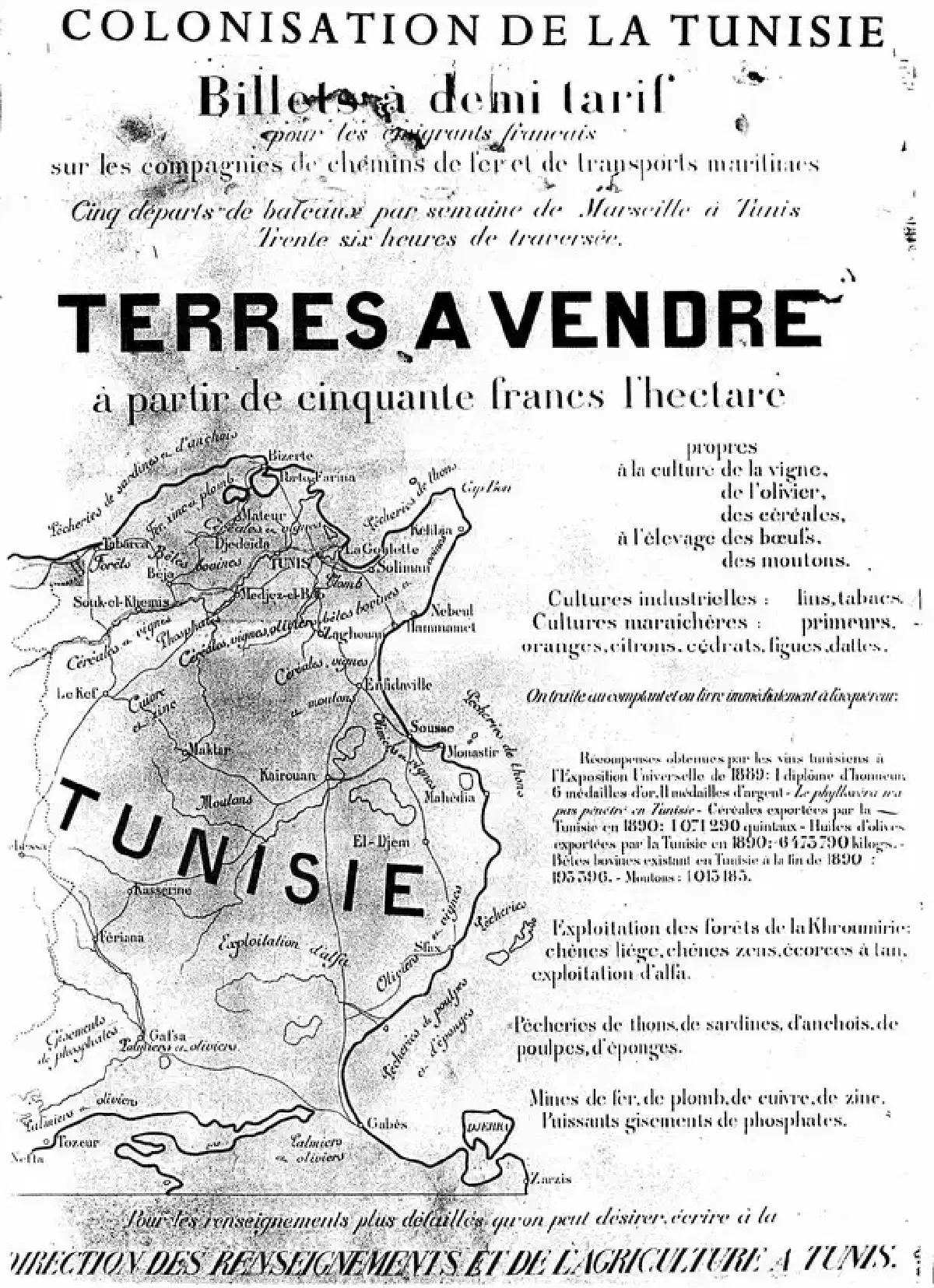
In the Maghrib, particularly Algeria, the colonial state pursued a policy of "official colonization," confiscating prime communal lands to allocate to European immigrants. By 1930, 25,795 settler estates covered an enormous 2,334,000 hectares of the most fertile, well-watered plains. This relentless spread of settler estates pushed the indigenous pastoral and agricultural populations into arid, marginalized lands, initiating a tragic process of forced sedentarization, flight from the land, and profound impoverishment.
The Peasant and the Économie de Traite#
In West Africa, where climatic conditions discouraged massive white settlement, colonial regimes relied on a different mechanism of extraction: the économie de traite, or trade economy. Rather than expropriating land for white-run plantations, the colonial state harnessed the labor of millions of African smallholders to produce cash crops for export.
The profitability of this system rested on a short-sighted commercial policy that "milked" the African producer. Massive expatriate oligopolies manipulated the terms of trade, exploiting the profit margins between the cheap purchase of African-grown agricultural yields and the high-priced sale of imported European consumer goods. To compel self-sufficient African farmers to enter this exploitative monetary economy, colonial states utilized the blunt instrument of taxation; in Senegal, for example, the relentless demand for groundnut exports was propelled largely by the state's fiscal squeeze on the peasantry.
When permitted some degree of initiative, African peasants responded with remarkable, though ultimately vulnerable, dynamism. In the Gold Coast, for instance, indigenous farmers rapidly expanded cocoa cultivation to the point where, by 1915, cocoa exceeded 50 per cent of the colony's total domestic exports. Yet, because of their contractual inferiority and the monopolization of credit, purchase, and imported goods by foreign middlemen, the surpluses generated by African peasants were routinely transferred to Europe rather than reinvested locally to develop the African economy.
The Peril of Monoculture and the Specter of Famine#
Whether driven by white settlers or African peasants, the colonial agricultural architecture forced the continent into a dangerous reliance on export monocultures. Egypt's economy was drastically reoriented toward specialization in one crop—cotton—to supply British textile mills and pay off the country's crushing public debt. In Algeria, settler agriculture became obsessed with the production of soft wheat and wine for the market, with wine output surging from an annual average of 6.8 million hectolitres in 1916–1920 to 18.3 million hectolitres by 1931–1935.
This relentless prioritization of export commodities fundamentally disrupted the traditional subsistence economy. Because land and labor were entirely diverted to satisfy the demands of the global capitalist market, the internal production of food was disastrously neglected. The fragility of this system had catastrophic human consequences. When commodity prices collapsed, African cultivators were left destitute, unable to fall back on traditional food cropping, which "no longer even ensured survival".
The result was an era punctuated by acute food shortages, severe famines, and subsequent epidemics. In French Equatorial Africa, where the state forcibly requisitioned food to provision railway construction camps, a devastating famine spread through the Woleu-Ntem region between 1922 and 1925, reducing the local Fang population by half. Ultimately, the colonial agricultural system succeeded in integrating Africa into the world market, but it did so by ensuring that the continent was structurally starved of its own wealth, leaving its populations physically destitute and economically paralyzed.
Next in the series: “The Architecture of Extraction: Infrastructure, Monopolies, and Finance”—how rail networks, European trade cartels, and banking monopolies systematically transferred African wealth to Europe.