
The Structural Logic of Pre-Colonial Africa#
To understand the mechanics of the European conquest of Africa between 1880 and 1914, it is necessary to dismantle the Eurocentric concept of the "collaborator". The term is analytically useless in the context of nineteenth-century Africa because it implies the betrayal of a unified national or continental cause that simply did not exist. On the eve of the European partition in 1880, approximately 80 per cent of the continent was ruled by its own kings, queens, and lineage heads, operating within a highly fragmented and diverse ethno-cultural landscape. Africa was a complex network of empires, kingdoms, and stateless societies, each possessing its own discrete economic interests, territorial ambitions, and historic enmities.
When African rulers were confronted with the advancing European powers, they were faced fundamentally with the question of retaining, regaining, or expanding their own sovereignty. For many of these leaders, the encroaching Europeans were not perceived as the vanguard of a monolithic imperial system, but rather as useful tactical allies in a volatile regional power struggle. The decision to ally with a European power was a strict diplomatic and military calculation. Those who threw in their lot with the Europeans did so to pursue their own specific objectives, viewing short-term collaboration as the most effective strategy to secure their borders or crush internal dissent. The system rewarded localized self-interest, trapping African polities in a cycle of short-term optimization that blinded them to the long-term structural threat of colonial rule.
The Geopolitics of Local Advantage#
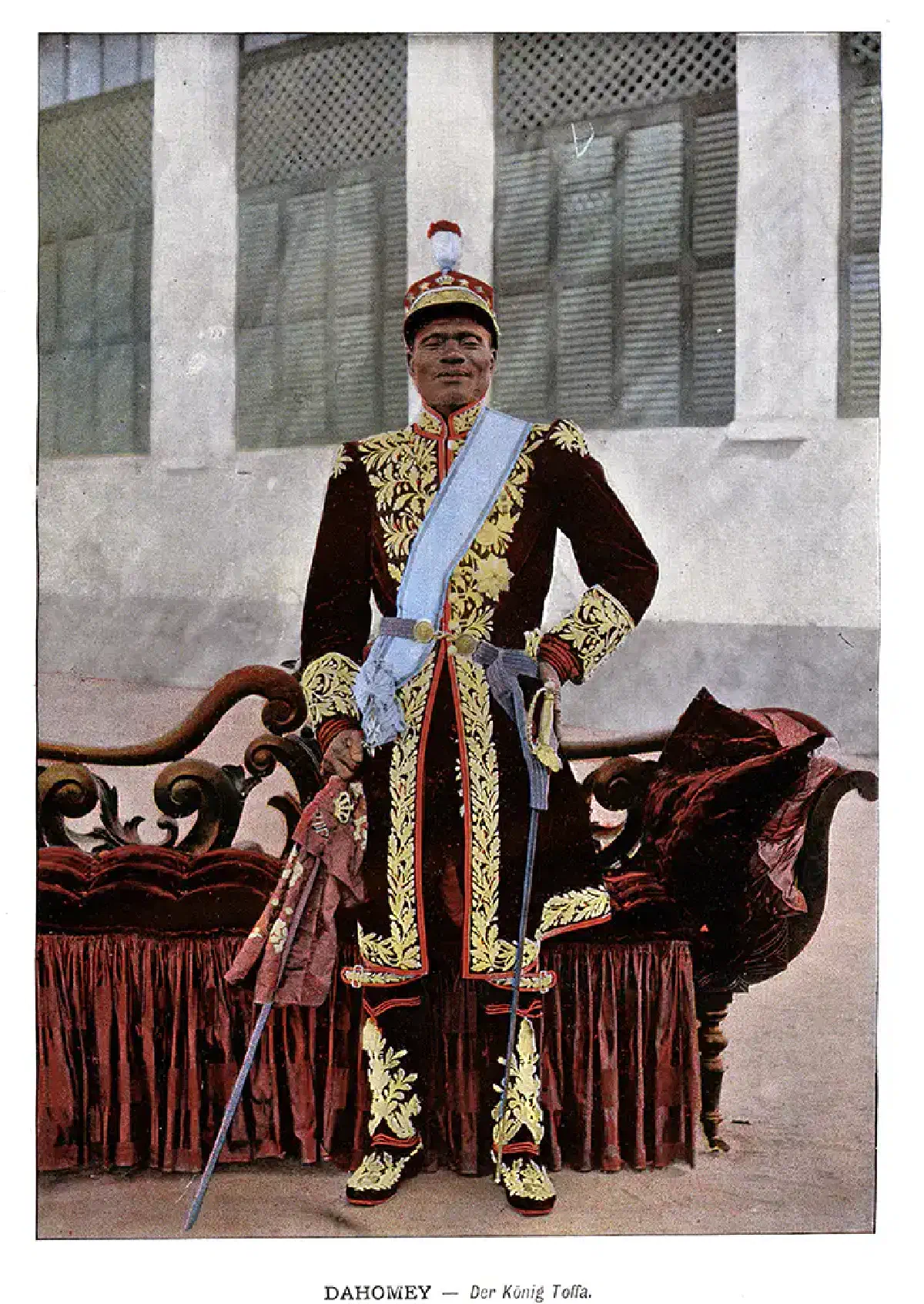
The operational mechanics of this diplomatic calculus are clearly visible in the major theatres of European expansion. The Porto Novo precedent established a pattern that was replicated repeatedly across the continent. African rulers, operating within fragmented regional power systems, allied with the encroaching Europeans to eliminate immediate local rivals.
In East Africa, the Baganda utilized the same strategic logic. Facing a historic and formidable enemy in the neighbouring Banyoro, the Baganda deliberately enlisted British backing to decisively defeat their traditional rivals and secure regional hegemony. The British, lacking the manpower to conquer the Lake Victoria basin independently, were perfectly willing to leverage the Baganda military apparatus to achieve their own imperial objectives. In Southern Africa, the Barotse sought and secured an alliance with the British specifically to defend themselves against the military threat posed by the Ndebele.
This tactical maneuvering was not limited to centralized states seeking to expand their borders; it was also employed by subjugated populations seeking liberation from indigenous imperialists. In Central Africa, subject peoples in the Congo willingly cooperated with the Belgians specifically to overthrow their existing overlords, the Yeke and the Arab slave-raiders. To these subject groups, the Europeans arrived not as conquerors, but as opportunistic liberators who possessed the firepower necessary to dismantle the oppressive regimes of rulers like Msiri, the Yeke king. In every instance, the African actors optimized for immediate local advantage, evaluating the Europeans through the lens of traditional African diplomacy rather than recognizing them as agents of a new, global imperial order.
The Illusion of Sovereign Parity#
The primary diplomatic instrument of this feedback loop was the political treaty. Prior to the phase of actual military conquest, European powers engaged in years of negotiation and treaty-making with African rulers. These treaties were fundamentally asymmetrical, resting on a profound divergence in interpretation. African sovereigns entered into these arrangements assuming a posture of parity, believing they were negotiating cooperative agreements that would preserve their autonomy while providing them with geopolitical leverage, prestige, or access to European firearms.
Kabaka Mwanga of Buganda explicitly articulated this understanding of sovereign parity when he invited European traders into his territory. He instructed his ambassadors to inform the British, French, and German consuls that he wanted Europeans of all nations to come to Uganda to build and trade, but explicitly clarified that he had no intention of surrendering his land. Yet, the colonial reality was vastly different from the African expectation. Treaties of "protection" were frequently imposed by force or obtained through fraud. Even Captain F. D. Lugard, the architect of the British treaties in Buganda, privately admitted in his diaries that his treaties were essentially fraudulent, noting that no African ruler would willingly cede all rights to a European company for nothing, and that promises of military protection were lies told by a company that lacked the force to intervene.
Despite the dubious legality of these documents, European powers used them to execute the paper partition of the continent. Empowered by the doctrine of "spheres of influence" and the requirement of "effective occupation" established at the Berlin West Africa Conference of 1884-5, European governments systematically transformed these treaties of friendship into instruments of absolute sovereignty. By 1894, the British had imposed a final treaty on Kabaka Mwanga that stripped him of the control of his foreign affairs, revenue, and taxes, transferring supreme judicial authority to the British government and reducing the monarch to an administrative subordinate.
The Asymmetry of Industrial Warfare#
The systemic failure of the African diplomatic calculus was rooted in a critical misapprehension of European capabilities and intentions. African leaders, accustomed to three centuries of free trade and informal political relationships with Europeans, did not realize that the industrial revolution had fundamentally and permanently altered the global balance of power. They were unaware that the old era of informal influence had been superseded by an era of rival capitalist monopolies demanding direct political control and territorial annexation.
This conceptual failure was compounded by a fatal technological asymmetry. Many African rulers possessed considerable confidence in their ability to defend their sovereignty, having recently built or revived large empires and successfully defended them with traditional weapons and tactics. However, the military hardware they had stockpiled over the decades was overwhelmingly obsolete. The muzzle-loading muskets that formed the backbone of African arsenals—such as the 21,365 muskets captured by the French from the Baule of Ivory Coast after their final revolt in 1911—were no match for the new European weaponry. The introduction of breech-loading rifles, which possessed roughly ten times the rate of fire at six times the charge of a musket, combined with the devastating rapid-fire capability of the Maxim gun, stripped African armies of the tactical advantages they had historically enjoyed. The logic of allying with Europeans to acquire firearms collapsed when the firearms provided to African allies were deliberately kept technologically inferior to those wielded by the European vanguard.
The Cartel of Imperialism and the Failure of Solidarity#
The final and most decisive factor in the collapse of African sovereignty was the total absence of continental solidarity. The fragmented nature of African polities allowed European powers to engage them one by one, ensuring they never faced a unified, continent-wide opposition.
While African diplomacy remained localized and competitive, European diplomacy during the Scramble operated as a highly effective cartel. Following the Russo-Turkish war of 1877-8, the nations of Europe removed power politics from their own continent and projected them onto Africa, carving up the territory to preserve their own diplomatic balance. Through mechanisms like the Berlin Conference and a network of bilateral partition treaties, the imperial powers resolved their conflicting territorial claims without ever resorting to armed conflict against one another in Africa prior to 1914.
This remarkable European solidarity neutralized the traditional African diplomatic strategy of playing one foreign power against another. When Yambio, the chief of the Azande, attempted to maintain his independence by inviting the British to establish a post in his territory—hoping to use their presence as a deterrent against an imminent Belgian invasion—he discovered that European bilateral agreements had already rendered his strategy obsolete. Similarly, Somali chiefs along the Horn of Africa signed treaties with various European nations in a bid to counter the growing menace to their independence, only to find that the European powers and Ethiopia peacefully settled their mutual colonial disputes at the Somalis' expense.
Meanwhile, African states continued to exhaust their resources fighting each other. While the European net closed, the Mandingo fought the Tukulor, the Asante fought the Fante, the Baganda fought the Banyoro, and the Mashona fought the Ndebele. Because the African response lacked any overarching unity, the European powers were able to isolate each polity, deploying professional armies and African mercenaries to secure a numerical and technological supremacy that proved impossible to defeat.
Ultimately, the calculus of alliance was an exercise in geopolitical myopia. African leaders engineered their diplomacy based on the historical realities of the eighteenth and early nineteenth centuries, unaware that the industrial machinery of the late nineteenth century had rendered their traditional strategies obsolete. They optimized their alliances for the survival of their specific dynasties and the defeat of their immediate neighbours. In doing so, they provided the European empires with the exact leverage required to dismantle African sovereignty entirely, proving that structural fragmentation, rather than moral failure, was the true architect of the continent's fall.
Next in the series: “The Manpower Multiplier: The Military Architecture of Conquest”—how European powers co-opted conquered African populations to overcome their demographic deficits.