
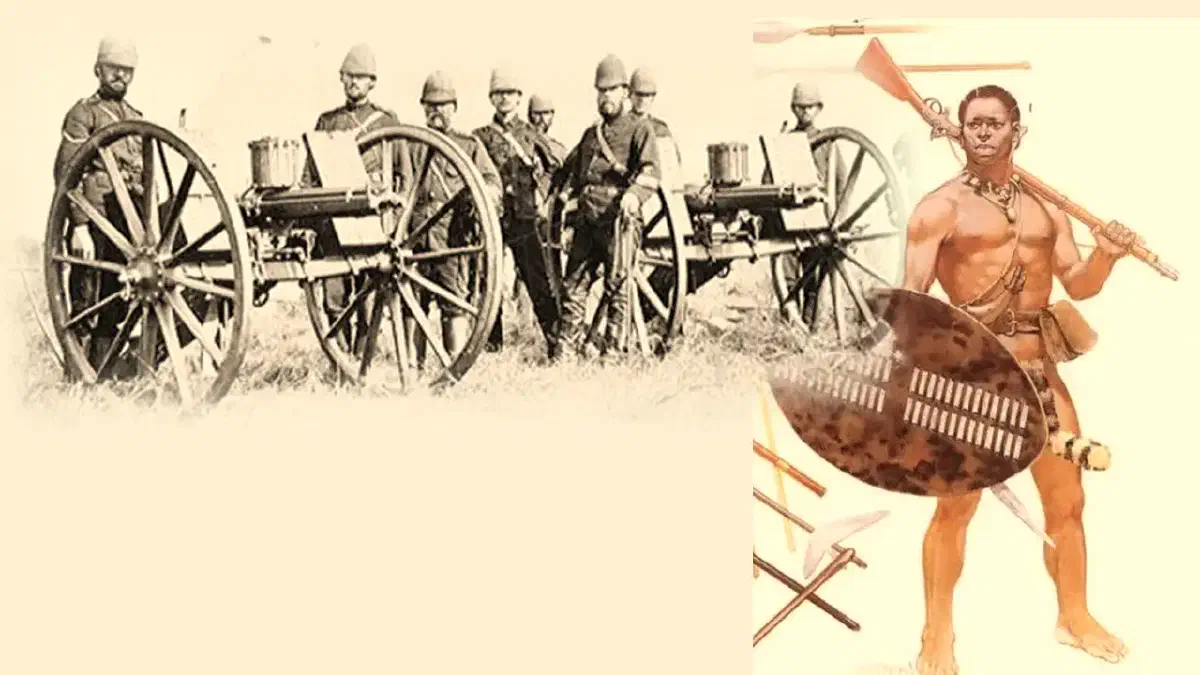
The Structural Demographics of Imperial Control#
The geopolitical partition of Africa between 1880 and 1914 was driven by a fundamental structural contradiction: Europe possessed the industrial capacity to project global power, but it critically lacked the demographic surplus necessary to occupy the African interior effectively. European armies could not field the massive infantry deployments required to secure a landmass of such staggering dimensions. The solution was to construct a military matrix that relied on indigenous co-optation. By turning the conquered into the conquerors, colonial administrators bypassed their own demographic deficits and outsourced the human cost of empire-building to the Africans themselves.
This systemic co-optation allowed European powers to isolate each African polity. They deployed small nuclei of professional European officers who commanded vast armies of African mercenaries and levies. In doing so, the European powers secured a numerical supremacy that, when paired with an absolute technological advantage, proved impossible for traditional African states to defeat. The structural incentives were clear: localized African forces were cheaper to maintain, inherently immune to the tropical diseases that decimated white infantrymen, and motivated by immediate tactical or financial rewards offered by the colonial state. The system was self-sustaining. Each fallen kingdom yielded a fresh harvest of recruits, who were promptly armed, organized, and deployed against the next independent territory.
The Asymmetry of Industrial Violence#
The co-optation of African manpower would not have been decisive without a strict monopoly on advanced violence. The feedback loop of conquest functioned because the African auxiliaries in European service were equipped with weapons that traditional African armies could not match, and more importantly, could not manufacture. The late nineteenth century witnessed a revolution in military technology that permanently altered the tactical landscape. The introduction of breech-loading rifles, which possessed approximately ten times the rate of fire at six times the charge of standard muskets, combined with the devastating rapid-fire capability of the Maxim and Gatling guns, stripped traditional African infantries of any numerical or tactical advantages they had historically enjoyed.
The technological chasm is evident in the arsenals of the opposing forces. While European-led columns advanced with rapid-fire weaponry and heavy artillery, African rulers relied on stockpiles of overwhelmingly obsolete hardware. When the French finally suppressed the revolt of the Baule of Ivory Coast in 1911, they captured 21,365 muzzle-loading muskets—weapons entirely incapable of repelling an industrialized assault. The English poet Hilaire Belloc captured the brutal mechanics of this asymmetry with precise cynicism: "Whatever happens we have got / The maxim-gun and they have not".
This disparity allowed European commanders to breach formidable African defenses with mathematical certainty. When Major Louis Archinard moved against the Tukulor empire in 1889, he targeted the solidly built masonry fortress of Kundian. The Tukulor garrison fought fiercely, utilizing house-to-house combat and sustained musket fire, but they were methodically reduced by an eight-hour bombardment from Archinard’s 80-mm mountain guns. In subsequent campaigns against the Bambara loyalists at Ouessebougou, Archinard deployed 95-mm field guns loaded with the latest melinite shells, obliterating the defenders despite their tactical discipline. The application of heavy artillery and naval power, and in later campaigns the introduction of motor vehicles and aeroplanes, meant that the tactical courage of African armies was rendered structurally irrelevant.
The Logistics of Continental Penetration#
An army’s capacity to project violence is strictly limited by its logistical supply chain. In the African interior, European industrial weaponry was useless without a massive, sustained application of human energy to transport it. Across much of tropical Africa, the presence of the tsetse fly prevented the use of draught animals, and the total absence of roads or railways precluded the use of wheeled vehicles. Consequently, the military architecture of colonial conquest relied absolutely on human porterage.
The manpower multiplier thus extended beyond the battlefield into the realm of logistics. To move the Maxim guns, the artillery shells, and the necessary provisions, European armies impressed legions of African carriers. The mathematics of this supply system were relentless: it required approximately three carriers to keep a single fighting soldier operational in the field. The burden of empire was quite literally carried on African shoulders. The demand for porters was so vast that it disrupted local economies, triggering food shortages and famine as village labour was forcibly diverted from agricultural production to military transport. When colonial forces advanced, they did not merely defeat the enemy; they consumed the demographic and economic resources of the territories they passed through, utilizing forced labour to build the roads and bridges necessary to extend the colonial frontier further inland.
The Legislative Cartel of Disarmament#
To ensure that the manpower multiplier continued to function, European powers had to guarantee that the technological gap was never closed. While they actively armed the African mercenaries within their own ranks, they operated as a highly effective legislative cartel to disarm the rest of the continent. This policy of systemic deprivation had long roots—the British and Afrikaners had previously used the Sand River Convention of 1852 to completely ban the sale of firearms to Africans in Southern Africa, actively depriving them of the means for self-defence.
This regional embargo was elevated to international law through the Brussels General Act of 1890, which strictly forbade the sale of modern firearms to Africans. The European powers, despite their intense imperial rivalries, recognized a shared class interest in maintaining the vulnerability of the colonized. They uniformly refrained from providing advanced weaponry to independent African states, ensuring that any armed resistance would be met with overwhelming, asymmetrical force.
The structural nature of Europe's military supremacy is most clearly proved by the single instance where the cartel failed. In the Horn of Africa, Emperor Menelik II of Ethiopia successfully exploited diplomatic rivalries between Italy, France, and Russia to bypass the arms embargo. By the time he formally denounced the ambiguous Wuchale treaty in 1893, Menelik had amassed an arsenal of 82,000 modern rifles and twenty-eight cannon. When the Italian army invaded from Eritrea in 1895, they did not encounter an army equipped with obsolete muskets, but a heavily armed, centralized military force. The resulting Battle of Adowa in 1896 ended in the absolute destruction of the Italian forces. Ethiopia’s victory falsifies the premise of innate European military superiority; it demonstrates that when the technological asymmetry was neutralized, the European capacity for conquest instantly collapsed.
The Institutionalization of the Feedback Loop#
Following the initial phase of military conquest, the ad-hoc recruitment of African mercenaries evolved into highly bureaucratized systems of colonial conscription. Having utilized African manpower to secure the continent, the colonial state apparatus institutionalized the extraction of that manpower to defend the metropole itself. In French Black Africa, the transition from auxiliary to conscript was formalized by a 1912 decree, which made military service compulsory for all African males between the ages of 20 and 28. The explicit strategic objective was to create a permanent black army that could replace garrison troops in Algeria, thereby freeing French soldiers for service in Europe.
The outbreak of the First World War represented the ultimate, globalized expression of the manpower multiplier. The colonial feedback loop was thrown into overdrive. In West Africa alone, an initial force of 14,785 African troops was rapidly expanded through a ruthless recruitment drive aimed at raising an additional 50,000 men. Colonial administrators imposed quotas on local chiefs, who forcibly rounded up former slaves and marginalized individuals to meet the demands of the state. In total, over 2.5 million Africans—more than one percent of the continent's entire population—were mobilized for war work, serving as combatants on European and Middle Eastern fronts, or as the indispensable carriers who sustained the grinding campaigns in German East Africa and Cameroon.
The conquest of Africa was not an exercise in European demographic supremacy, but a masterpiece of systemic co-optation. By monopolizing advanced industrial weaponry while systematically exploiting the manpower and logistical labor of the indigenous populations, European powers engineered a self-financing, self-sustaining mechanism of subjugation. The continent was conquered by its own numbers, orchestrated by a foreign tactical doctrine, and bound by a cartel of disarmament that ensured the African auxiliary remained the instrument, rather than the master, of the modern military machine.
Next in the series: “The Administrative Matrix: Indirect Rule and Bureaucratic Extraction”—how colonial regimes co-opted traditional elites to operate "empire on the cheap".