
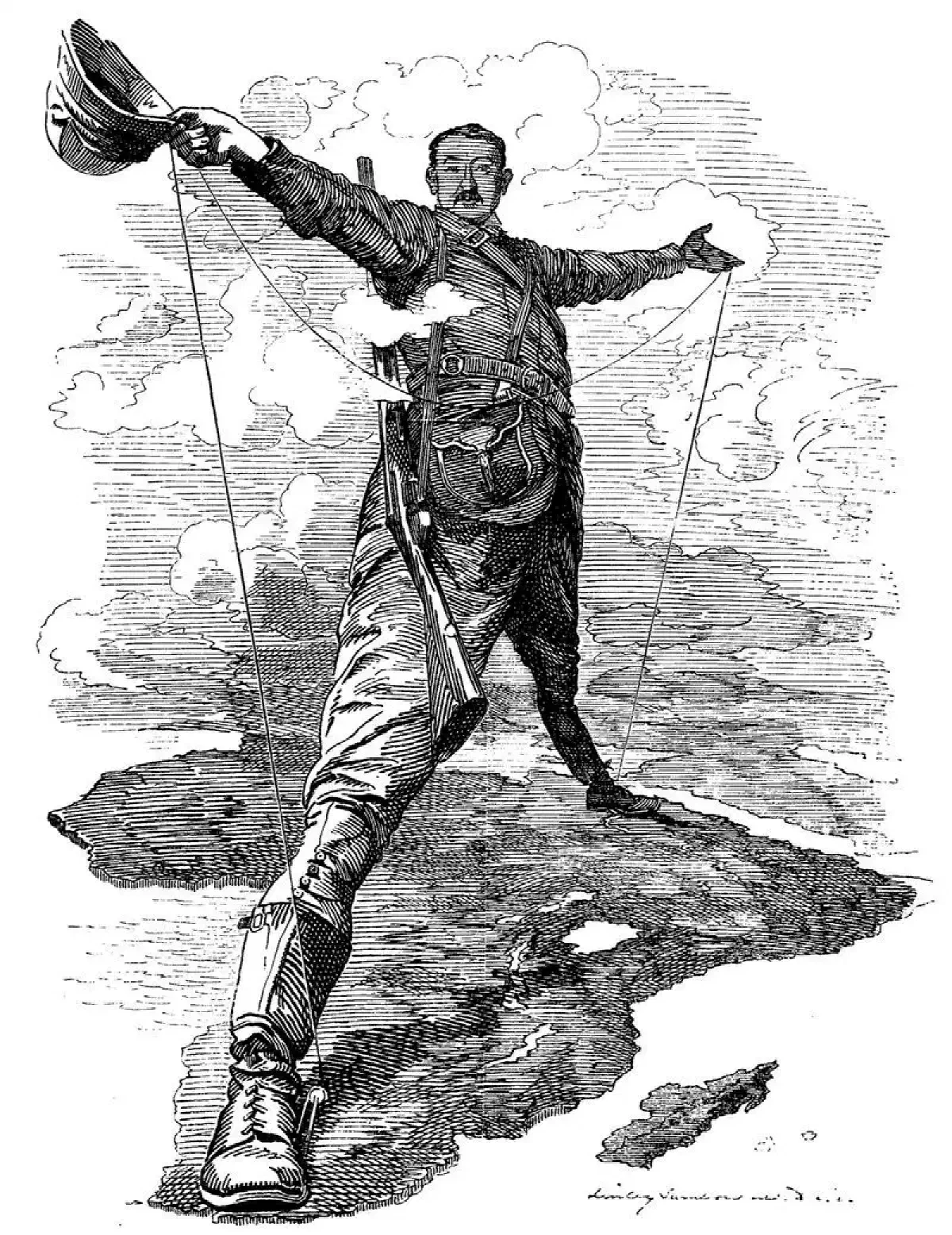
Empire on the Cheap#
The ultimate purposes of colonial rule were starkly limited: the maintenance of order, the avoidance of heavy financial expenditure, and the establishment of a compliant labour force. The fundamental law of nineteenth-century imperialism was that the colonies had to be entirely self-supporting; colonized peoples were forced to raise the revenue for their own general administration and for whatever limited infrastructure projects were undertaken. To achieve this without exhausting the metropolitan treasury, the colonial state relied on the "native authority" as its indispensable structural component.
At the pinnacle of the administrative system stood the governor or resident-general, who frequently enjoyed the powers of a sovereign. Beneath him, the crucial institution of all colonial organization was the district or provincial unit, overseen by a European administrator. However, the actual friction of governance was delegated to the African chief. Lugard’s system in Northern Nigeria operated on the principle of a single government where the African chief acted alongside the British official, who served ostensibly in an advisory rather than an executive capacity. The genius of the system lay in its self-financing mechanism. Direct taxation was the bedrock of this administrative matrix. Through the institution of the "native treasury," local chiefs collected taxes, retaining a percentage to pay themselves and their subordinates, while the remainder funded public services and the colonial state.
The French articulated a conceptually similar doctrine known as the politique d'association. Promoted by theorists like Jules Harmand, association theoretically implied the preservation and improved governance of conquered institutions. In practice, however, the French model was highly centralized and authoritarian. The reality of the French system in West Africa was brutally clarified in 1917 by Governor-General Joost Van Vollenhoven, who stated that there were not two authorities in the administrative cercle, but only one. The French commandant du cercle held absolute power, while the native chief was reduced to a mere instrument and auxiliary of the colonial state. Despite the differing rhetorical justifications of British "indirect rule" and French "association," both systems functioned to minimize metropolitan expenditure by outsourcing the daily mechanics of governance to indigenous intermediaries. The colonial economy was essentially an économie de traite—a milking economy—that lived off customs duties and heavy taxation extracted by these local agents.
The Fabrication of Authority#
The integration of African elites into the colonial matrix was a strictly asymmetrical arrangement, dictated entirely by European administrative convenience. Where traditional political structures were highly centralized and easily adaptable—such as the Muslim emirates of Northern Nigeria or the Sherifian state in Morocco—colonial powers simply co-opted the existing hierarchies. In Morocco, the French Resident-General, Louis-Hubert Lyautey, preserved the forms of the state, utilizing the Muslim cadi as a magistrate under the advisory eye of a French contrôleur civil.
However, where pre-colonial institutions did not fit the bureaucratic requirements of the colonial state, European administrators systematically dismantled or fabricated them. Chiefs were treated as interchangeable administrative personnel, removed or installed to satisfy colonial imperatives. In the Belgian Congo, colonial authorities executed a drastic consolidation of power, reducing the number of recognized chefferies from 6,095 in 1917 to 1,212 by 1938. They created an entirely new administrative unit, the secteur, to artificially group populations for easier management and extraction.
The French in West Africa similarly engineered a new unit, the canton, placing it under the authority of an "indigenous administrative agent" who was granted the fabricated title of canton chief. The British, confronted with the decentralized societies of south-eastern Nigeria, simply invented the "warrant chief." These artificial rulers were granted authority over tens of thousands of people, deriving their power not from ancestral legitimacy or popular consensus, but directly from the paper warrants issued by the colonial government. In the Portuguese, Belgian, and French zones, these chefs de paille (straw chiefs) served as the lowest, most indispensable cogs in the imperial machine. They were required to deliver the revenue and manpower necessary for the survival of the colonial state, transforming them into bureaucrats of exploitation. To enforce their mandates, the British utilized "native courts" presided over by Africans to instill colonial discipline, whereas the French system ultimately made the European administrator the sole judicial official.
The Mechanics of Extraction#
The primary utility of the co-opted chieftaincy was the mobilization of capital and human energy. The African continent was overwhelmingly agricultural and pastoral, possessing no internal social mechanisms that naturally transformed labour into a commodity. Because foreign capital was inadequate to attract labour through competitive wages, European powers relied on the massive intervention of force, either naked or clothed in the legalisms of the colonial regime. The introduction of modern currencies and the strict insistence on receiving taxes in cash rather than in kind was a deliberate strategy to draw Africans into the European commercial orbit.
Direct taxation was the primary engine designed to force Africans into the colonial capitalist economy. In 1913, the governor of Kenya explicitly outlined this strategy, declaring that taxation was the only possible method to compel the African to leave his reserve and seek wage labour. By artificially increasing the cost of living, the colonial state ensured a steady supply of cheap workers for European farms and mines. This policy of fiscal coercion was continent-wide. In French West Africa, the head tax generated immense revenues; despite the devastating economic depression of the 1930s, the head tax yielded 153 million francs in 1935. For millions of peasants, cultivating compulsory cash crops or migrating to European enterprises became the only means of acquiring the cash required by the state.
When taxation failed to produce sufficient labour, the administrative matrix resorted to outright impressment. Forced labour was an integral element of colonial domination until the Second World War. In French West Africa, the prestation system demanded up to twelve days of unpaid labour per year from Africans for projects of local or colonial interest. In Madagascar, the administration established the SMOTIG in 1926, which required conscripts to work for up to three years on construction sites—a system deeply resented by the Malagasy as "slavery in disguise". This was supplemented by the conscription of workers for railway construction, such as the Congo-Océan line, where 127,250 men were forcibly recruited between 1921 and 1932, resulting in an estimated 20,000 deaths. In Mozambique, the brutal system of chibalo forced peasants and nominally free agricultural workers to toil on European estates from sunrise to sunset for meager wages.
The colonial authorities also instituted the compulsory cultivation of crops to extract agricultural tribute. In the Belgian Congo, the state imposed cotton and rice cultivation, bringing more than a million hectares under "state fields" by 1930. In Mozambique, peasants were compelled after 1926 to cultivate cotton and sell it at deflated prices to European concessionaire companies; failure to comply was tantamount to a crime. The colonial legal apparatus was meticulously designed to enforce these extractions. The French indigénat, regularized in 1924, granted any French administrator the summary power to impose fines and up to fifteen days of imprisonment for infractions as minor as delaying tax payments or showing disrespect to officials. In Kenya and South Africa, the implementation of pass laws, such as the kipande system, and legislation like the Native Administration Act of 1927 regulated the movement of Africans, making the withholding of labour a criminal offence and subjecting workers to prosecution for "desertion."
The Destruction of Legitimacy#
The incorporation of the African elite into the colonial administrative matrix ultimately destroyed their historic and spiritual legitimacy. Pre-colonial African society was based heavily on obligation and communal interrelationships, with traditional authorities acting as custodians of the social and moral order. By transforming traditional leaders into tax collectors and labour recruiters, the colonial state severed the organic link between the rulers and the ruled. The chiefs became the most visible symbols of an oppressive system, forced to implement policies that violated the values and economic survival of their own people. Military conquest and the establishment of the colonial administration did not only challenge the old political lords, but also the monopolists of traditional religious powers, forcing the old elites to embrace new, subordinate professions.
This fatal contradiction generated immense rural discontent and triggered localized resistance against the co-opted elites. In the Belgian Congo and the Portuguese colonies, the colonial authorities frequently overestimated the ability of these puppet rulers to enforce demands. The Quitanghona rebellion of 1904 in Mozambique was directed equally against the Portuguese and their puppet ruler, Said bin Amissi, who was subsequently overthrown. In the Makanga region, the council of elders presented an ultimatum to their "colonial" chief, Chinsinga, demanding he renounce Portuguese rule or face deposition.
In the Gold Coast, the inter-war period witnessed a surge of popular movements aimed at curbing the unprecedented powers granted to chiefs by the colonial administration. Between 1910 and 1944, commoners utilized traditional organizations, such as the asafo companies, to depose at least thirty-three divisional chiefs in Akyem Abuakwa alone. These chiefs were charged with abuses directly related to their colonial functions: extortionate fines, improper land sales, and the enforcement of compulsory labour. In 1915, the Kwahu asafo company forced their paramount chief to sign a "Magna Carta" that strictly curtailed his jurisdictional and financial powers. The most dramatic confrontation occurred in 1932, when the asafo companies of Akyem Abuakwa mobilized to depose their paramount chief, Nana Sir Ofori Atta, after his council approved a colonial measure granting them the power to impose new levies. The action demonstrated a clear understanding among the peasantry that their traditional rulers had been integrated into the machinery of colonial government, thereby escaping popular control.
The bureaucratic co-optation of the elite produced a profound psychological and social alienation. The traditional rulers were equally resented by the newly emerging educated African elites, who viewed them as the lackeys of imperialism. Because their continued survival depended entirely on the colonial power, the traditional rulers could not join the new elites in open opposition. A 1917 French report noted the deep disillusionment and bitterness among this newly engineered administrative class, who found themselves driven out of indigenous society yet refused admission into the European world. Colonialism required intermediaries, but by transforming traditional sovereigns into salaried enforcers, it shattered the social contract of pre-colonial Africa. The administrative matrix optimized short-term extraction, but in doing so, it dismantled the very foundations of indigenous authority, leaving behind a legacy of institutional dependency and a permanent breach between the African elite and the masses they were appointed to control.
This concludes the series “Empire on the Cheap”. Previous articles: “The Calculus of Alliance: Deconstructing the Myth of African Treason”, “The Manpower Multiplier: The Military Architecture of Conquest”.