
The Atlantic Ocean, to a fifteenth-century European mind, was not a highway. It was a wall. Beyond the Pillars of Hercules, beyond the known soundings of the Mediterranean, the world simply stopped. Mapmakers inscribed the void with warnings: Hic sunt dracones. Here are dragons. The sea boiled, they said. The sun grew so hot it turned men black. The water thickened to a sludge that no oar could cut. The cape that jutted from the African coast at latitude twenty-seven north — Cape Bojador — marked the boundary of the sane world. No ship that rounded it had ever returned.
This fear was structural, not superstitious. The winds off Bojador howled from the northeast all year, whipping the sea into a chaos of cross-currents and blind reefs. The coastline below it vanished into the Sahara, a desert without harbours, without fresh water, without a single landmark to guide a homeward course. To sail beyond Bojador was to sail into a trap. The wind that pushed you south would block your return. The sensible navigator turned back. The dead kept going.
And yet, by the 1430s, a generation of Portuguese seamen had begun to dismantle that fear, one degree of latitude at a time. The engine of this dismantling was not a king, not an army, not a treasury. It was a celibate prince living on a wind-scoured headland at the southwestern tip of Europe, surrounded by maps, astrolabes, and men who had looked into the unknown and decided to push further.
The Workshop at Sagres#
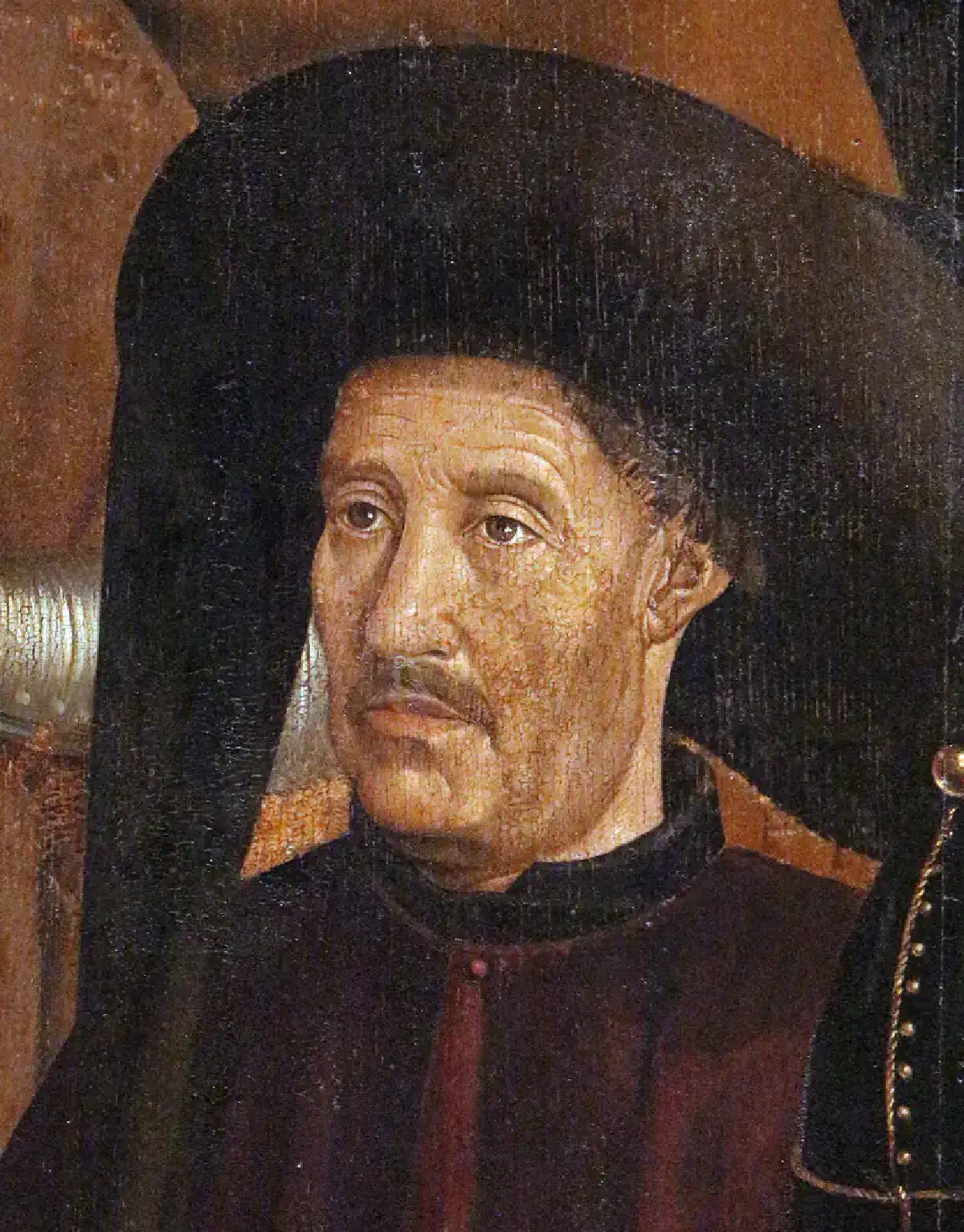
He was Infante Dom Henrique, known to posterity as the Navigator, though he himself never captained a ship beyond the sight of land. He was the third son of King John I, the man who had taken Ceuta. At Ceuta, the twenty-one-year-old prince had heard things. From captive merchants, from Jewish traders, from caravan masters who had walked the camel routes across the Sahara, he learned of the gold fields of the Niger, the pepper forests of the Guinea coast, the great Christian kingdom of Prester John that supposedly lay somewhere beyond the sand seas, waiting to join a crusade against Islam. The information was fragmentary, half-mythic, but it was enough. The conquest of Ceuta had been a triumph; now it was a dead end. The Marinid sultans had simply rerouted the caravans to other ports. The gold flowed away. The only way to reach the source of the wealth was to go and find it.
Henry returned to Portugal and set up his base at the end of the world. On the promontory of Sagres, where the Atlantic swells shattered against cliffs of black schist, he gathered a community of cosmographers, cartographers, shipwrights, and pilots. He was the governor of the Order of Christ, the successor to the Templars in Portugal, and the order's vast revenues — from estates, mills, fisheries, and salt pans — funded the enterprise. Sagres was not a school in any formal sense. It was a workshop, a laboratory, a place where the medieval world was slowly, painfully unstitched. The men there compiled portolan charts, tested compasses, and argued about the zones of the earth. They read Ptolemy and the Arab geographers. They stared at the ocean and debated what lay beyond the horizon.
The Caravel#
The prince's problem was simple. He needed a ship that could outsmart the winds.
The vessels that had taken Ceuta were heavy, square-rigged roundships, built to carry soldiers and withstand the short, violent seas of the strait. They were useless for exploration. They could not sail close to the wind. They could not manoeuvre in unknown shallows. They could not beat back north against the relentless trades that funnelled down the African coast.
The answer, when it came, was an act of technological piracy. Somewhere in the shipyards of the Algarve, Portuguese shipwrights took the hull of a Mediterranean fishing boat and married it to the lateen sail of the Arab dhow. The result was the caravel. It was small — fifty tons, sixty feet long, a crew of twenty. Its shallow draft let it slip over sandbars and nuzzle into estuaries. Its two or three triangular sails, rigged on raked masts, allowed it to sail at thirty degrees into the wind. The caravel could go south and it could come back. It was, in the words of the chronicler Gomes Eanes de Zurara, "very swift and manageable, and could go anywhere."
The caravel changed everything.
Rounding Cape Bojador#
In 1433, Henry sent a squire of his household, Gil Eanes, to round Cape Bojador. Eanes was a typical product of the prince's entourage: young, landless, hungry for the rewards that successful exploration could bring — knighthood, a grant of land, a place in the chronicles. He sailed south in a single caravel, the name of which has been lost. He saw the breakers boiling at the foot of the cape, the red cliffs burning in the haze, the wind screaming from the east. He turned back. He told the prince the passage was impossible.
Henry received him coldly. "You found nothing to report," he said, according to Zurara, "and met with no other danger than that which has been overcome by men of far less quality than yourself." He sent Eanes out again the following year, 1434, with a direct command: do not return without news of the land beyond.
This time, Eanes did something simple and revolutionary. Instead of hugging the coast, where the winds and currents were fiercest, he swung wide into the open Atlantic, describing a great arc that carried him west and only then south. When he turned back east, he found himself below the cape. The coast here was empty, featureless, terrifying. But the sea was calmer. The wind had shifted. He had slipped through the trap. He landed on a beach, found no inhabitants, but gathered some plants — rosemary, a species unknown to European botany — as proof. The plants were not gold. They were not slaves. They were enough. The psychological barrier had been breached. The way south was open.
The Slave Trade Opens#
The trickle of expeditions that followed became a steady stream, each caravel pushing a little further, each captain returning with charts, reports, and a growing inventory of the African coast. The pattern was always the same: a landing, a skirmish, a captive taken for interrogation, a handful of trade goods, a new name scratched on a chart. Cape of the Masts. Rio do Ouro. Bay of Arguin. In 1441, Antão Gonçalves captured the first African slaves on the coast of the Rio do Ouro, a man and a woman he seized in a night raid. Nuno Tristão reached Cape Blanco the same year, returning with further captives. Henry's captains were now bringing back not just plants and sealskins, but human beings.
The turning point came in 1444. A private consortium from Lagos, the bustling port town down the coast from Sagres, fitted out six caravels under the command of Lançarote de Freitas, a former tax collector who had reinvented himself as a sea captain. The fleet landed on the islands of the Bay of Arguin, where they found a fishing village of the Sanhaja Berbers. The attack came at dawn. The Portuguese surrounded the village, cut down the men who resisted, and herded the women and children into pens on the beach. The haul was 235 captives.
The fleet returned to Lagos on the eighth of August. The prince was there, mounted on a horse, to receive his share — the royal fifth of all plunder. The captives were disembarked and assembled in a field outside the town. Zurara, the prince's chronicler, watched the scene and wrote what he saw. He described the captives, "some with their heads bowed low, and their faces bathed in tears, looking at each other." Families were separated. Fathers were loaded onto one ship, wives onto another, children onto a third. "What heart, however hard," Zurara wrote, "could be not pierced with piteous feeling to see that company? For some kept their heads low and their faces bathed in tears, looking upon one another; others stood groaning very dolorously, looking up to the height of heaven, fixing their eyes upon it, crying out loudly, as if asking help of the Father of Nature." Zurara was moved, but he moved on. He consoled himself with the thought that the captives would be saved through baptism, their souls rescued from damnation. The slave market of Europe had been opened.
Gold and the Myth of Prester John#
The gold came more slowly, but it came. In the 1450s, the caravels reached the mouths of the Senegal and Gambia rivers, where the arid coast gave way to green. The trade here was different — not raiding, but barter. The Portuguese exchanged cloth, brass bracelets, and wheat for gold dust, malagueta pepper, and ivory. The fort at Arguin, built in 1448 on a desolate island off the Mauritanian coast, became the first permanent European trading post in sub-Saharan Africa. It was a speck of stone and lime, manned by a garrison of thirty, surrounded by a sea of sand and the bones of wrecked ships. But it worked. The gold began to flow north, and the merchants of Lisbon began to pay attention.
The myth of Prester John, the Christian priest-king who ruled a vast empire somewhere beyond the reach of Islam, never materialised on the African coast. But Henry and his captains never stopped looking. They interrogated every captive. They followed every river upstream. They sent expeditions up the Gambia, the Senegal, the Congo. The maps of the time showed Prester John's kingdom just beyond the next bend. It was always the next bend.
Henry himself never sailed beyond the Tagus. He died in 1460, at the age of sixty-six, on his estate at Sagres, the wind still rattling the shutters, the sea still stretching south into the unknown. By then, his caravels had mapped over two thousand miles of African coastline. They had reached the latitude of Sierra Leone. They had seeded islands — the Azores, Madeira, the Cape Verdes — with settlers, sugar cane, and slaves. They had turned a trickle of gold into a torrent. They had built a ship that could cross oceans.
The prince left behind a notebook, a mess of charts, and a generation of captains who no longer believed in the Sea of Darkness. The dragons had been exorcised. The way south was charted, and at the end of that chart, though no one yet knew it, lay the Cape of Good Hope and the passage to India.
That was for later. In 1460, what mattered was this: the sea had become a road.