
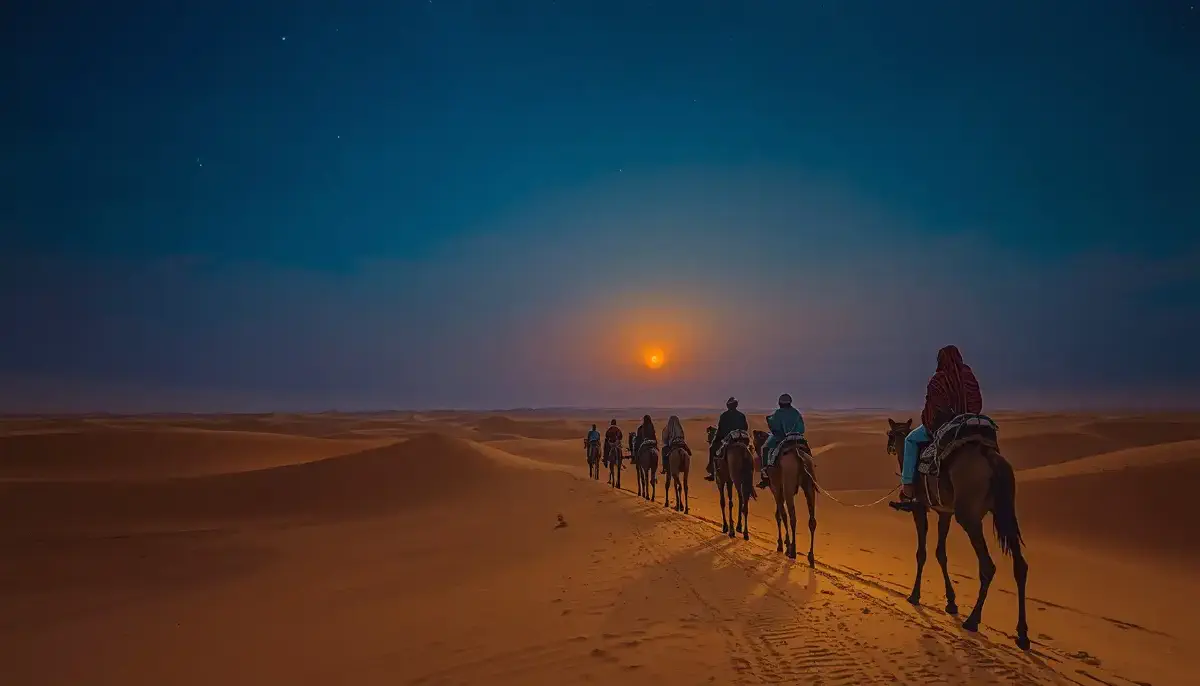
Khalid ibn al-Walid, a man born on the desert's fringe, looked at the same landscape and saw an opportunity that no imperial strategist had ever conceived. In the spring of 634 CE, he proved them all wrong with a manoeuvre that a modern U.S. Army analysis would later describe as "a masterpiece of operational art" (U.S. Army Command and General Staff College, 2012, p. 23). To understand the magnitude of this achievement, we must first understand what operational art means—and why a 7th-century general deserves to be discussed in such terms.
Defining Operational Art#
Military theory distinguishes between three levels of war: tactical (winning battles), strategic (winning wars), and operational (the bridge between them). Operational art is the craft of arranging a series of tactical actions in time, space, and purpose to achieve strategic objectives. It is the domain of the campaign planner, the commander who sees beyond the next hill to the next province. Napoleon's Ulm campaign, the German Blitzkrieg through the Ardennes in 1940, and Operation Desert Storm in 1991 are celebrated examples. The U.S. Army monograph on Khalid argues that his campaign against Sassanid Persia exhibits "the key characteristics of operational art: setting operational objectives that serve strategic aims, maintaining initiative through sequential and simultaneous operations, and using operational manoeuvre to gain positions of advantage" (U.S. Army, 2012, p. 18).
This is not anachronistic flattery. Khalid's actions in 633–634 reveal a mind that grasped the logic of the operational level, even if he would never have used the term.
The Components of Desert Power#
Before examining the campaign, we must understand the tools that made it possible. Khalid's military system rested on four interlocking capabilities that together constituted what might be called "desert power"—the ability to treat arid wilderness as manoeuvre space rather than dead ground.
Table 2: The Components of Khalid’s "Desert Power"
| Capability | How Khalid Exploited It | Operational Impact |
|---|---|---|
| Mobility | Used camels for transport and horses for fighting. Camels could cover 50–60 miles per day on minimal water, far exceeding the range of infantry-based armies. (Kennedy, 2001, p. 32) | Achieved strategic surprise by appearing where enemies considered movement impossible. |
| Self-Sufficiency | Troops carried their own supplies of dates, parched barley, and water skins. Camels provided milk. No supply wagons slowed the column. (Akram, 1970, p. 247) | Freedom from vulnerable supply lines; operational independence from Medina. |
| Intelligence | Extensive network of scouts and local informants. "Intelligence activities conducted under his command were key to rapid advances and the selection of weak points" (Gök & Zeybek, 2023, p. 47). | Superior situational awareness; ability to dictate the tempo of operations. |
| Local Allegiance | Secured the cooperation of border tribes through a combination of military prestige and political persuasion. (Al-Baladhuri, 2022, p. 158) | Turned potential adversaries into allies, providing additional manpower, guides, and water sources. |
The Iraq Campaign: Operational Art in Action#
Khalid's 633 campaign in Iraq illustrates these principles in motion. His strategic objective, assigned by Caliph Abu Bakr, was to secure the western bank of the Euphrates and neutralise Sassanid frontier garrisons. He did not simply advance and fight whatever enemy appeared. Instead, he orchestrated a sequence of four major engagements—Dhat al-Salasil, al-Madhar, Walaja, and Ullais—each of which built upon the last.
At Dhat al-Salasil, he employed a novel formation that the historian al-Tabari records as the "crooked line," a disposition that masked his movements and allowed a portion of his force to strike the Persian rear (Akram, 1970, p. 151). At al-Madhar, he defeated a hastily assembled relief force before it could coordinate with survivors of the first battle. At Walaja, as examined in Article I, he achieved annihilation through double envelopment. At Ullais, he pursued the shattered remnants and destroyed the last organised resistance in lower Mesopotamia.
These were not random victories. They were sequential, each one clearing the path for the next, each one executed before the enemy could recover. "By the time the Sassanid court grasped the scale of the threat," the U.S. Army monograph notes, "Khalid had already achieved his operational objectives and was repositioning his forces for the next campaign" (U.S. Army, 2012, p. 27). This is the essence of maintaining the initiative—the quality that Napoleon called the most important in a general.
The Strategic Crossing: Iraq to Syria (634 CE)#
But the supreme demonstration of Khalid's operational genius came not in Iraq but in the space between two theatres of war. By the spring of 634, the Muslim army in Syria was stalled. Abu Bakr ordered Khalid to transfer part of his force from Iraq to Syria to assume command. The question was how. The obvious route—north along the Euphrates and then west through Palmyra—was predictable and heavily garrisoned. The shorter route—directly across the Syrian Desert—was considered suicidal.
Khalid chose the impossible. He divided his force into multiple columns, each guided by a tribal ally who knew the locations of hidden wells and seasonal water sources. Camels, laden with extra water skins, provided a rolling reserve. The columns converged at prearranged points, then separated again, confusing any scouts who might observe them. The march covered approximately 600 kilometres in five days—an extraordinary rate of movement for a large military force in any era (Akram, 1970, p. 285).
This infographic shows an analytical reconstruction of Khalid ibn al-Walid's lightning march from Iraq (al-Hira) to Syria.
Table 3: The Strategic Crossing — Iraq to Syria (Spring 634 CE)
| Element | Details | Operational Significance |
|---|---|---|
| Distance Covered | ~600 km from al-Hira (Iraq) to the vicinity of Damascus | A direct crossing of the Syrian Desert, a route no imperial army would attempt. |
| Duration | 5 days (Akram, 1970, p. 286) | Speed comparable to cavalry movements in far more favourable terrain. |
| Force Size | Estimated 5,000–9,000 men (Kennedy, 2001, p. 55) | A substantial force moved undetected through enemy territory. |
| Logistical Method | Camels carrying extra water; use of water-sacs made from camel stomachs; guides who knew hidden wells (al-Azdi, 2020, p. 72). | Self-contained logistics; no need for supply lines that could be intercepted. |
| Strategic Effect | Khalid arrived undetected on the Byzantine flank, raided Ghassanid allies at Marj Rahit, and assumed command of the Muslim armies before the Byzantines could adjust. | Total strategic surprise; the operational situation in Syria was transformed overnight. |
The arrival of Khalid's desert-forged army on the Byzantine flank was a thunderbolt. He immediately attacked and destroyed a Ghassanid contingent at Marj Rahit, then joined the main Muslim forces to fight the decisive battle of Ajnadayn. The Byzantine commanders, who had been preparing to crush what they believed to be a scattered Arab insurgency, suddenly faced a unified army under a general whose name was already legend. The strategic crossing did not merely deliver reinforcements; it delivered victory.
Comparison with Guderian's Blitzkrieg#
The temptation to compare Khalid's operational methods with the Blitzkrieg of Heinz Guderian is strong, and not without justification. Guderian's mechanised columns in Poland (1939) and France (1940) similarly relied on speed, surprise, and dislocation rather than attrition. His famous directive, "Klotzen, nicht kleckern" ("Strike concentrated, not dispersed"), echoes Khalid's practice of massing at the decisive point. The German thrust through the Ardennes in May 1940—terrain the French considered impassable for armour—is a direct parallel to Khalid's crossing of the Syrian Desert.
But the comparison also reveals what makes Khalid's achievement more remarkable. Guderian's panzers depended on a continent-spanning industrial base, thousands of litres of fuel trucked forward daily, and a complex system of radio communications. Khalid accomplished the same operational effects—surprise, dislocation, psychological shock—with camels, water skins, and a mental map of the desert that no Byzantine general possessed. The U.S. Army monograph makes this point diplomatically: "While the tools of war have changed dramatically, the fundamental principles of operational art demonstrated by Khalid remain recognisable in modern doctrine" (U.S. Army, 2012, p. 8).
The essential principle in both cases is the same: the side that can move faster, appear where it is not expected, and sustain itself while doing so, controls the tempo of the campaign. Guderian called this Aufragstaktik—mission-type orders that gave subordinates the freedom to exploit opportunities. Khalid, who operated with delegated authority from the caliph and gave his own commanders similar latitude, practised something remarkably similar.
The Desert as a Strategic Weapon#
What emerges from this analysis is a thesis that challenges conventional military history. Khalid did not win despite the desert; he won because of it. A landscape that his enemies saw as a logistical nightmare was, to him, a secure line of communication that needed no garrisoning. While Byzantine armies crawled along the coastal roads, tethered to their supply ships, Khalid's columns moved freely through the interior, threatening multiple points simultaneously. The desert was not his obstacle; it was his ally.
This inversion of conventional military geography has few parallels. Hannibal's crossing of the Alps in 218 BCE is perhaps the closest ancient example—a manoeuvre through terrain considered impossible that achieved strategic surprise and psychological shock. But Hannibal's crossing was a one-time feat of endurance, while Khalid's use of the desert was a sustained operational method, repeated across multiple campaigns.
The Byzantine historian Theophanes, writing a century later, recorded the bewilderment of the imperial commanders: "They came out of the desert like locusts, and no one knew from where they had come or how they had crossed." It was the highest compliment an enemy could pay: Khalid had made the impossible routine, and in doing so, had redefined the geography of war in the Middle East.
Next: Article III — The Sword of Allah: Charisma, Command, and the Psychology of Invincibility.