
The Campion Line: Machine Guns and Flightless Birds#
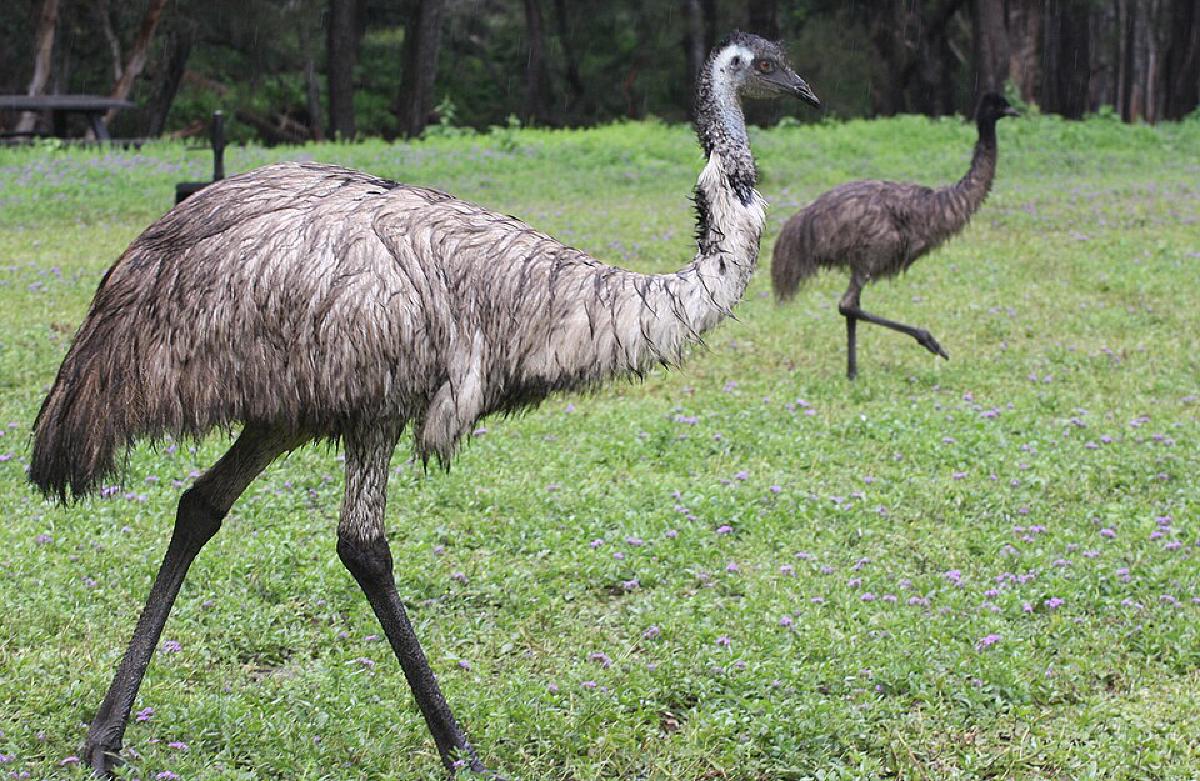
In November 1932, Major G.P.W. Meredith of the Royal Australian Artillery marched into the arid expanses of Campion, Western Australia, commanding a force of two soldiers, two Lewis machine guns, and 10,000 rounds of ammunition. His mission, authorized by the Minister of Defence George Pearce, was to wage war against a highly mobile, non-human adversary: an invading army of 20,000 emus (Dromaius novaehollandiae). The popular internet meme depicts this event as a humiliating military defeat where a sovereign nation was outmaneuvered by giant, flightless birds. Yet, viewing the conflict through this comical lens obscures a far more serious story of ecological ignorance, post-war economic desperation, and political scapegoating during the depth of the Great Depression. The "war" was not a military engagement, but a desperate and deeply flawed attempt to use the technology of industrial slaughter to solve a crisis of systemic agricultural planning.
The Failure of Force: A Systemic Analysis of the 1932 Campaign#
The 1932 campaign failed because it attempted to apply centralized, military force to a highly decentralized, ecological phenomenon.
The Oasis Effect: Ecological Realities of the Wheat Belt#
The emu migration of 1932 was not an invasion, but a natural, biological response to a human-altered landscape. Emus are highly migratory birds that regularly travel from Australia's interior to coastal regions after their breeding season. In Western Australia, this natural migration pattern was radically disrupted by the rapid expansion of the wheat belt. To encourage agricultural self-sufficiency, the government had cleared millions of acres of scrubland, introducing massive, irrigated wheat fields and thousands of newly dug boreholes for sheep and cattle water supply. For a migratory bird traversing an arid landscape, the agricultural frontier was not a barrier, but an artificial oasis of unprecedented scale. The emus did not break into the farms to attack the state; they were drawn there by the systemic abundance of food and water that human engineering had conveniently placed directly in their evolutionary path.
The Solitary Veteran and the Depressed Grain#
The true catalyst of the conflict was not the birds, but the economic collapse of the Australian agricultural sector. Following the First World War, the Australian government established the Soldier Settlement Scheme, placing thousands of traumatized, untrained military veterans on marginal, semi-arid lands in Western Australia. These settlers were heavily subsidized to grow wheat. When the Great Depression struck in 1929, global grain prices collapsed, and the government reneged on its promises of price supports. By 1932, these veteran farmers were facing complete financial ruin. When the migratory emu herds arrived, trampling the fragile crops and tearing down the expensive rabbit-proof fences, the farmers did not see a biological event; they saw the physical destruction of their final hopes of economic survival. Out of options, a delegation of ex-soldier settlers bypassed the agricultural department and petitioned the Minister of Defence directly, requesting machine guns to defend their fields.
The Tactical Dispersal of the Avian Flocks#
When Major Meredith deployed his Lewis guns, he quickly discovered that the tactical principles of the Western Front were utterly useless against flightless birds. In their first major engagement, the soldiers attempted to ambush a flock of 1,000 emus near a local dam. The Lewis gun, designed to fire 500 rounds per minute, jammed almost immediately, allowing the birds to scatter unharmed. In subsequent attempts, Meredith tried mounting the machine guns to the back of a truck, but the vehicle was unable to keep up with the birds on the rugged, uneven terrain, and the intense vibrations made aiming impossible. The emus possessed an natural, evolutionary defense mechanism: they did not assemble in dense, monolithic ranks like human infantry, but operated in small, highly decentralized cellular units led by dominant sentinel birds. This extreme tactical dispersal neutralized the concentrated firepower of the machine guns, rendering the entire military expedition highly inefficient and deeply embarrassing.
The Evolution of Ecological Governance#
The Emu War of 1932 demonstrates that complex ecological challenges cannot be solved by applying brute-force military technology. When the military officially withdrew in December after exhausting thousands of rounds of ammunition with negligible impact on the emu population, the government was forced to abandon its high-profile technological crusade. Instead, it quietly returned to a decentralized, incentivized bounty system, which offered cash rewards for emu beaks and feathers. This low-tech, distributed economic incentive proved far more effective, resulting in the culling of over 57,000 emus in a single six-month period in 1934. Ultimately, the conflict serves as a stark historical warning against the hubris of centralized state planning, showing that long-term agricultural sustainability requires adapting human systems to the local ecological reality, rather than attempting to bomb the ecosystem into submission.