
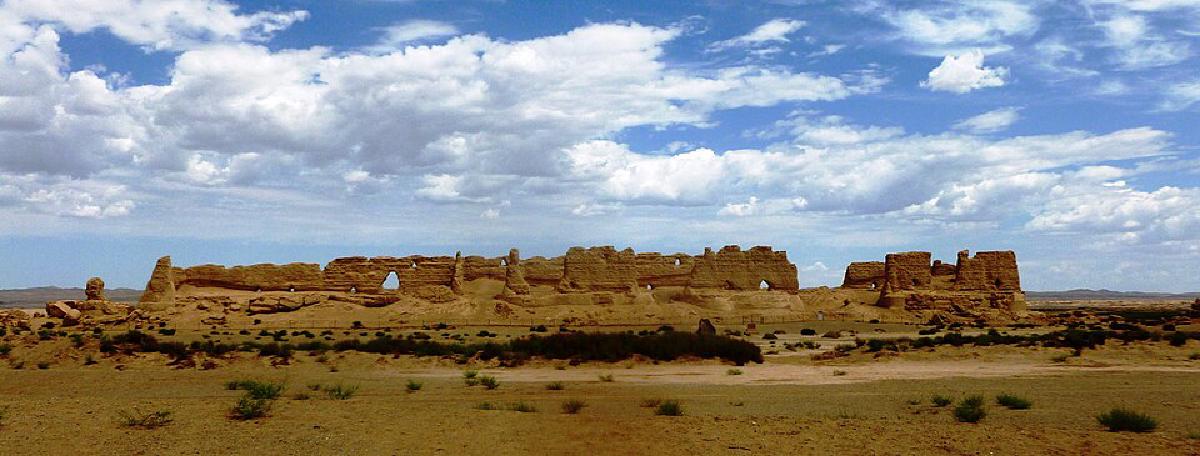
The Gansu Mystery: A Transcontinental Detective Story#
In 1955, the renowned Oxford Sinologist Homer Hasenpflug Dubs delivered a lecture to the China Society in London that ignited a transcontinental historical mystery. Dubs proposed a highly sensational hypothesis: that thousands of Roman legionaries, captured by the Parthians after the disastrous Battle of Carrhae in 53 BC, had marched thousands of miles east as mercenaries, eventually fighting for the Xiongnu against the Han Dynasty at the Battle of Zhizhi in 36 BC. According to Dubs, these veteran soldiers were captured by the victorious Chinese, settled in a remote outpost on the edge of the Gobi Desert, and founded the town of Liqian—a name he argued was a phonetic transliteration of "Alexandria" or "Legion". In recent decades, this theory has exploded into global prominence, fueled by sensationalist media reports of green-eyed, fair-haired Chinese villagers in Gansu Province who claim to be the genetic descendants of Rome's lost soldiers. Yet, rigorous historical and scientific analysis reveals that the "Gobi Legion" is a classic example of confirmation bias, translation errors, and commercial exploitation of a remote community’s genetic diversity.
Decoupling the Myth: Historiographical and Genetic Forensics#
The theory of Roman soldiers in ancient China collapses under the dual scrutiny of historical source analysis and population genetics.
The Fallacy of the Fish-Scale Formation#
The primary historical evidence cited by Dubs is a single passage in the Book of Han describing the Han siege of the Xiongnu fortress of Zhizhi in 36 BC. Scribes noted that more than a hundred infantrymen outside the fortress gate were organized in a "fish-scale formation" (yulin zhen), which Dubs confidently asserted was a reference to the famous Roman testudo (shield wall). This interpretation represents a profound historiographical error. The "fish-scale formation" was a common tactical military term in ancient Chinese manual treatises, dating back centuries before Rome had even expanded beyond Italy. It referred to a standard, overlapping defensive arrangement of shields designed to protect infantry from arrow fire, and had no structural connection to the Roman testudo. To assume that any tactical deployment of overlapping shields must indicate the presence of Roman mercenaries is a Eurocentric bias that ignores the independent, sophisticated development of military science in East Asia.
The Linguistic Distortion of Liqian#
The linguistic foundation of the Roman settlement hypothesis is equally flawed. Dubs argued that the ancient Chinese name of the village, Liqian, was a transliteration of "Legion" or "Alexandria," used to designate a Roman settlement. However, historical linguists have conclusively demonstrated that in the Han Dynasty, the term Liqian was used as a generic, broad geographical label for the vast, western regions beyond China's borders, specifically referring to the Seleucid Empire and the Levant. The establishment of a county named Liqian in Gansu was not a monument to a settled Roman legion, but a standard administrative practice of naming frontier districts after the foreign territories with which they traded or from which their immigrant merchants arrived. It was a administrative mechanism for managing the diverse, multi-ethnic trade flows of the early Silk Road, rather than a specific physical outpost of Rome.
The Pseudoscience of Tourism Genetics#
In the early 2000s, local authorities in Gansu Province, seeking to capitalize on the Roman legion theory to boost tourism, sponsored genetic testing of the villagers of Zhelaizhai (modern Liqian). Media reports claimed that DNA tests showed a 56% European genetic match, seemingly proving the Roman hypothesis. In reality, these studies were highly flawed and deeply misleading. Zhelaizhai is situated directly along the Hexi Corridor—the primary geographic artery of the Silk Road that connected China to Central Asia, Persia, and Europe for over two millennia. A diverse genetic profile containing western Eurasian markers is exactly what one would expect in a region that served as a global commercial melting pot for centuries. To isolate these genetic markers and attribute them exclusively to a single, mythical group of Roman soldiers from 53 BC, while ignoring the continuous, centuries-long migration of Sogdian, Persian, and Central Asian traders, is a profound scientific distortion.
The Commercial Reconstruction of History#
The myth of the Gobi Legion survives because it serves a powerful economic and cultural function. Today, the village of Zhelaizhai has been transformed into a Roman-themed tourist park, complete with faux-Roman pillars, statues of legionaries, and local Chinese villagers dressed in plastic armor for tourists. This commercial spectacle has effectively overwritten the authentic, far more interesting history of the Silk Road as a decentralized network of trade, diplomacy, and cultural exchange. By reducing the complex, multi-ethnic history of the Hexi Corridor to a sensationalist story of "lost Roman soldiers," both academics and commercial operators have demonstrated how easily the desire for a spectacular narrative can obscure the rich, authentic, and diverse reality of global connection.