
The Mythical Foundations of Albion: From Coventry to the Wicker Man#
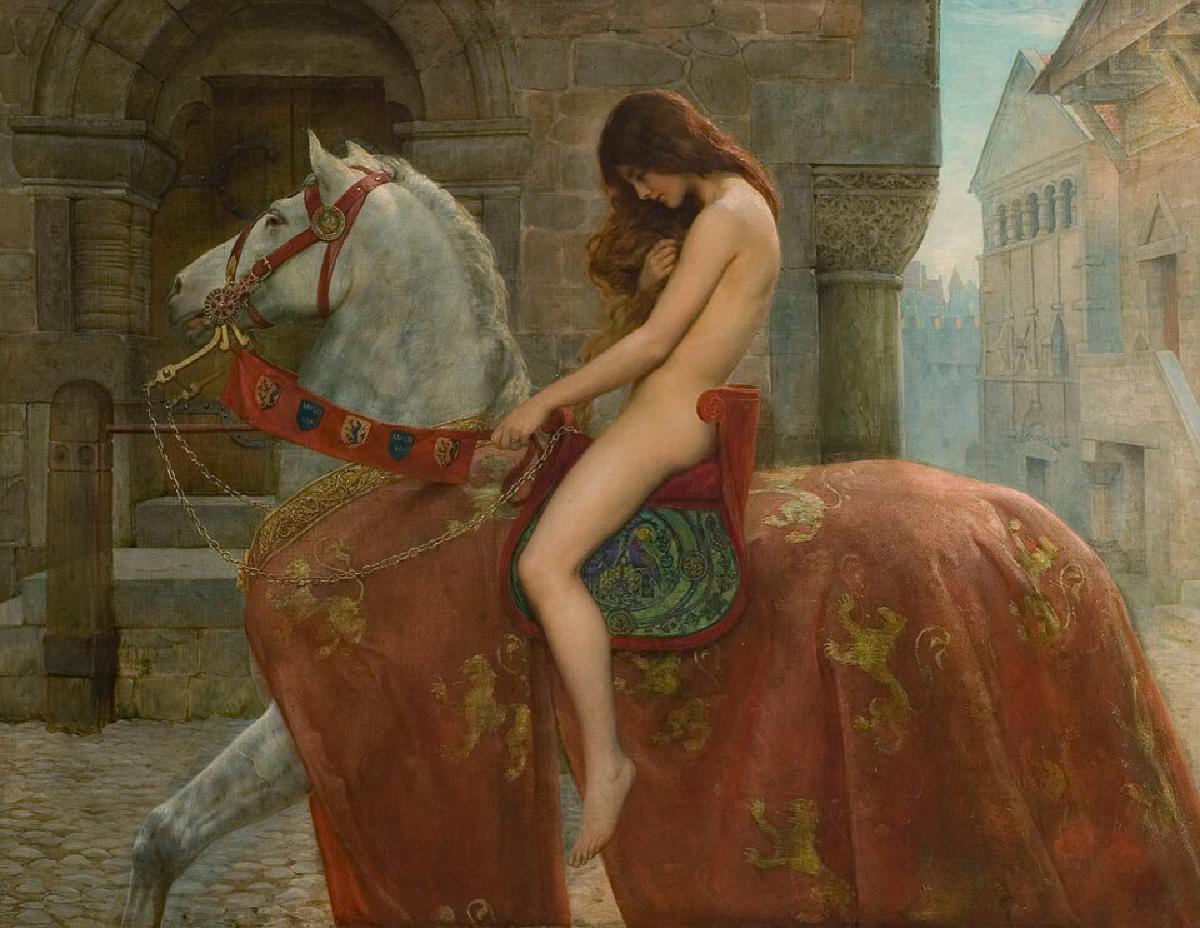
English national identity is built on a foundation of highly dramatic, evocative historical myths . Among the most enduring are the tales of Lady Godiva—the noble 11th-century Anglo-Saxon noblewoman who allegedly rode naked through the streets of Coventry on horseback to force her husband, Earl Leofric, to repeal an oppressive tax on the citizenry—and the ancient Druids, the white-robed Celtic priests who reportedly slaughtered human victims in massive, flaming wicker men to appease bloodthirsty pagan gods . These stories are deeply embedded in the cultural landscape of the English-speaking world, cited as foundational examples of early social protest and primitive, pre-Christian savagery . Yet, critical historical and archaeological analysis reveals that both Lady Godiva’s naked ride and the sensationalized Druidic human sacrifices are complete fabrications . They were constructed centuries after the fact by external conquerors and romantic medieval chroniclers to serve highly specific political agendas of pacification, moral control, and the erasure of authentic cultural systems .
The Politics of Fabrication: Norman Monks and Roman Public Relations#
The construction of these two national myths served to legitimize the domination of conquerors and the imposition of new ideological structures.
The Domestication of Anglo-Saxon Power#
To understand the fabrication of Lady Godiva's naked protest, one must look at the transition from Anglo-Saxon to Norman rule in England. The real historical figure was Godgifu, a highly formidable, wealthy Anglo-Saxon noblewoman of the 11th century who was one of the largest landowners in the kingdom, wielding immense independent political, economic, and religious influence. Contemporary 11th-century Anglo-Saxon chronicles record her as a pious, powerful political negotiator who co-founded the wealthy monastery of Coventry. However, following the Norman Conquest of 1066, Anglo-Saxon women were systematically stripped of their independent legal and property rights under the strict feudal laws of the Normans. Writing in the 13th century—nearly 200 years after Godgifu's death—Norman monk chroniclers, such as Roger of Wendover, invented the sensational story of the naked ride. By transforming a highly powerful, politically sophisticated female ruler into a voyeuristic, vulnerable figure of submissive moral appeal, the Norman chroniclers successfully domesticate Anglo-Saxon history, reducing real female political agency to a passive, moralized spectacle.
The Wartime Propaganda of Julius Caesar#
The blood-soaked myth of the Druids was manufactured not by romantic chroniclers, but by a calculating military conqueror. The primary source for the famous "wicker man" human sacrifice is Julius Caesar’s Commentarii de Bello Gallico, written during his bloody conquest of Gaul in the 50s BC. Caesar had a massive political problem: his military campaigns were incredibly expensive, unauthorized by the Roman Senate, and resulted in the slaughter of hundreds of thousands of Celtic people. To justify this unilateral violence to the Roman public, Caesar had to paint the Celts as sub-human savages who practiced monstrous, bloodthirsty rituals. The Druids were the intellectual, legal, and spiritual leaders of Celtic society, representing the primary force of organized resistance against Roman imperialism. By depicting them as blood-soaked priests who burned innocent civilians in giant wicker men, Caesar successfully constructed a powerful moral justification for their systematic elimination, transforming an imperialistic war of aggression into a civilizing mission.
The Silence of the Earth#
The physical, archaeological record of Great Britain and Gaul provides a stark refutation of these sensationalized narratives. Decades of intensive archaeological excavations at major Celtic and Druidic ritual sites have failed to yield any credible, physical evidence of systematic, mass human sacrifice, let alone the skeletal remains of wicker-man victims. Instead, the Druids are revealed to have been a highly sophisticated, literate, and organized intellectual caste who served as judges, astronomers, philosophers, and political arbiters. They preserved a complex, unwritten legal and philosophical tradition that was highly respected across the ancient world. Similarly, contemporary records from the city of Coventry show that while Earl Leofric did indeed grant certain tax exemptions to the town, there is absolutely no mention of any naked protest or dramatic civil disturbance. The voyeuristic addition of "Peeping Tom" was not appended to the story until the reign of Charles II—nearly 600 years after Godgifu’s death—reflecting the gender anxieties of the Restoration court rather than any historical medieval reality.
The Utility of the Invented Past#
The longevity of Lady Godiva’s ride and the Druidic wicker man demonstrates how easily sensationalist fabrications can displace authentic, complex histories. These myths survive because they serve a powerful psychological and political utility: they provide simple, dramatic, and easily digestible narratives that reinforce existing power dynamics and cultural hierarchies. By exposing the political machinery behind these fabrications, we do not simply debunk entertaining folklore; we perform a vital act of historical reclamation. We rescue the formidable Anglo-Saxon stateswoman Godgifu from the voyeuristic gaze of Norman chroniclers, and we restore the intellectual dignity of the Celtic Druids from the self-serving war propaganda of Roman conquerors, demonstrating that the truest history is often found in the motives of those who sought to rewrite it.