"Our Mothers" in Arms - Part 4: Myth, Memory, and Modern Pop Culture
·2126 words·10 mins
The enduring legacy of the Dahomey Amazons in the modern Republic of Benin and across global popular culture.
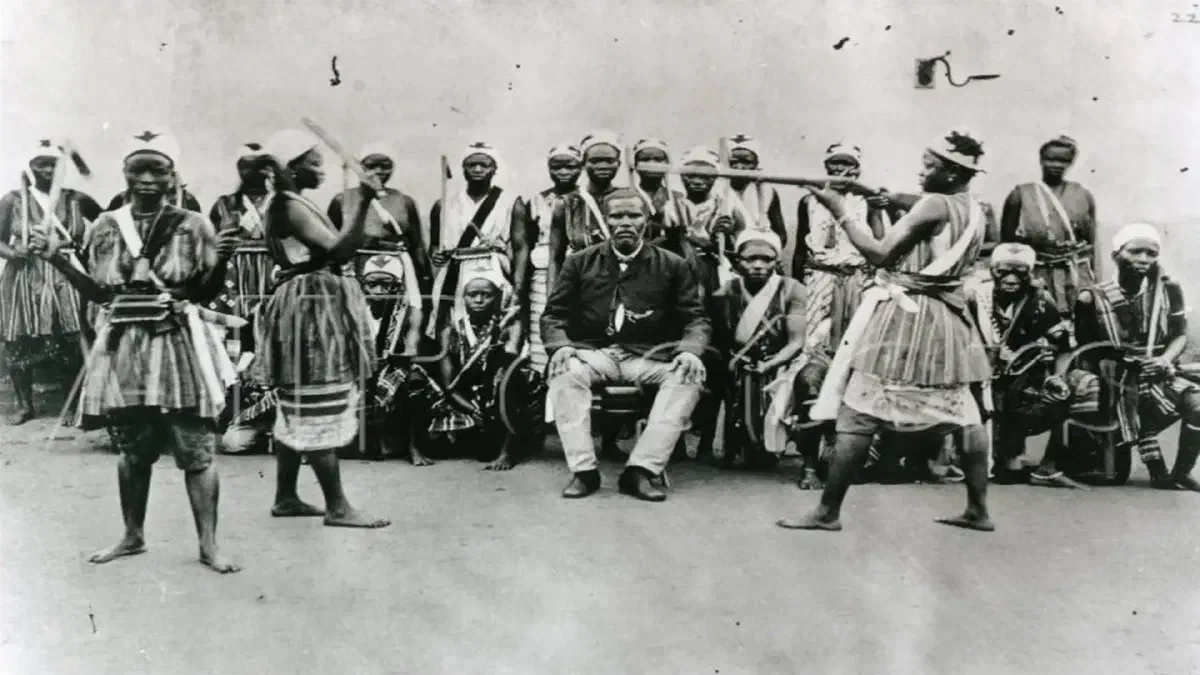
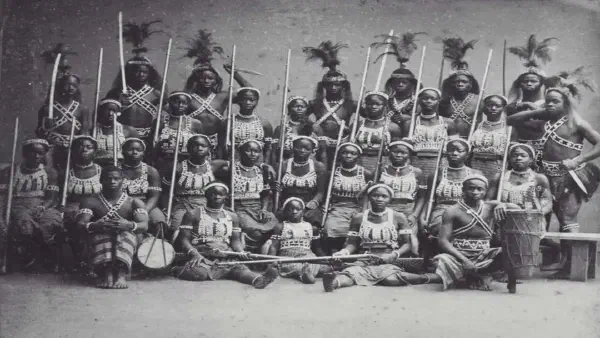
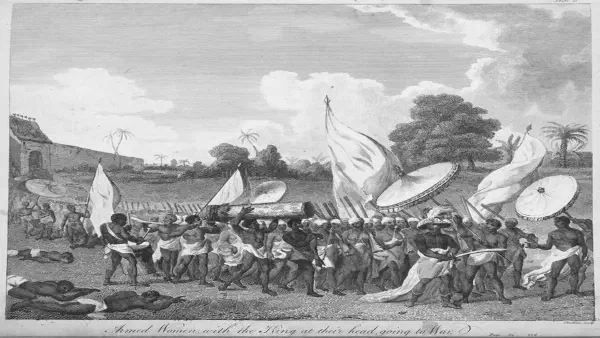
The Dahomey Amazons—known to the Fon as the Agojie, Mino (“Our Mothers”), or Ahosi (“King’s Wives”)—were the only documented all-female military regiment in modern history. They emerged not from progressive ideology but from demographic necessity: a chronic shortage of men caused by endemic regional warfare and the forced annual tribute of male slaves to the Oyo Empire. This series examines the regiment as a system—a set of mechanisms, feedback loops, and structural incentives that transformed a corps of elephant hunters into a professional force of up to 6,000 women, constituting roughly one-third of Dahomey’s army. It traces their evolution from palace bodyguards under Queen Hangbe (c. 1716–1718) to front-line infantry deployed in King Agaja’s conquest of Savi in 1727, and finally to their ultimate defeat by French colonial forces in the Second Franco-Dahomean War (1892–1894).
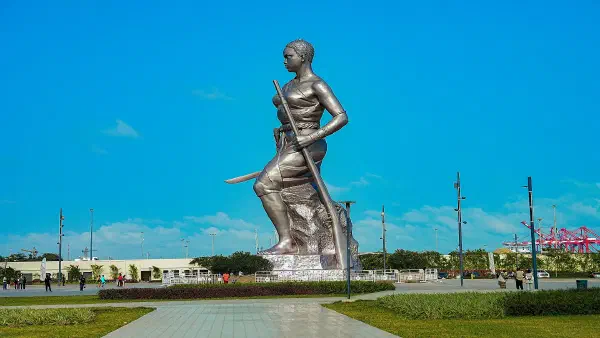
The series is organised into four analytical articles. Article I: Blood and Tribute establishes the systemic origins of the regiment, demonstrating how the slave trade and the Oyo Empire’s tributary demands created a demographic crisis that made female military recruitment a rational state response. Article II: The Architecture of the Regiment dissects the internal mechanics—recruitment, training, celibacy, hierarchy, and ceremonial function—that produced soldiers whom foreign observers consistently judged superior to their male counterparts in both bravery and combat effectiveness. Article III: The Final Stand examines the regiment’s military engagements, from the battles of Abeokuta (1851, 1864) to the Franco-Dahomean Wars, and explains their defeat not as a failure of courage but as a failure of systems: Dahomey’s political economy, built on slave-raiding and royal absolutism, could not generate the industrial logistics required to resist European imperialism. Article IV: Myth, Memory, and Modern Pop Culture traces the regiment’s afterlife—from living memory in Benin (songs, legends, dances, and the 2022 Amazon Monument in Cotonou) to global commodification in Hollywood’s The Woman King (2022), HBO’s Lovecraft Country, and Mortal Kombat 1—and interrogates the unresolved tension between celebrating the Amazons as feminist icons and reckoning with their role as enforcers of a slave-trading monarchy.
| Part | Title | Core Question |
|---|---|---|
| 1 | Blood and Tribute | Why did the geopolitical and demographic crises in West Africa necessitate the creation of an all-female army? |
| 2 | The Architecture of the Regiment | How did the internal mechanics, rigorous training, and social status of the Mino shape them into an elite combat force? |
| 3 | The Final Stand | Why were the Agojie ultimately defeated by French colonial forces despite their tactical proficiency and courage? |
| 4 | Myth, Memory, and Modern Pop Culture | How has the legacy of the Dahomey Amazons been reclaimed by the postcolonial state and commodified by global pop culture? |
The history of the Dahomey Amazons is often framed either as an exotic tale of African exceptionalism or as a progressive precursor to modern gender equality in military force. This series offers a different interpretation. The Agojie were the product of a highly rational, if brutal, system of state survival. Faced with a perpetual shortage of men due to Oyo's tributary demands and the demographic drain of the slave trade, Dahomey's kings converted a portion of their female population into a dedicated, celibacy-bound military elite. Their existence demonstrates that gender roles are not fixed, but can be rapidly re-engineered when state survival hangs in the balance.
Throughout, the series privileges falsifiable claims, named sources, and documented outcomes over moral judgment. It treats the Amazons not as heroes or villains but as products of a system—a system of violence, extraction, and demographic pressure—whose contradictions were ultimately resolved not by the regiment's own valour but by the superior firepower and logistical capacity of the French colonial state.