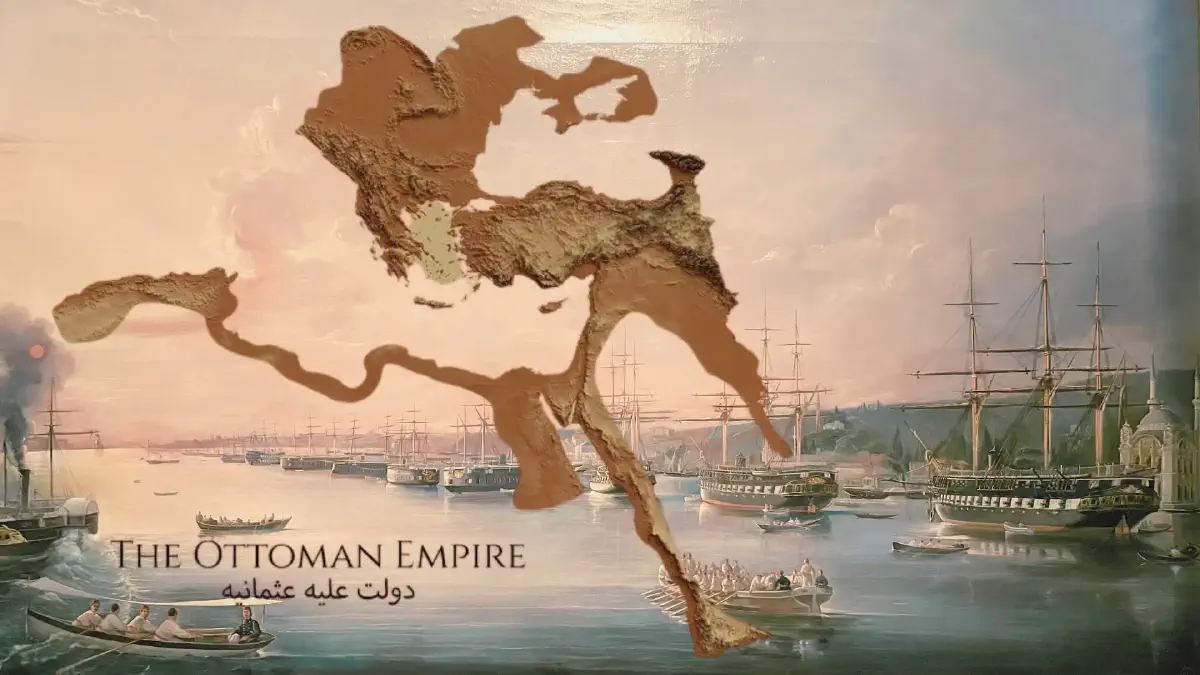
This series re-examines the centuries-long decline of the Ottoman Empire through a maritime lens. It begins with a simple but powerful theory—that a lack of ocean access was a primary cause of collapse—and then complicates that idea by exploring the strategic choices, technological constraints, and painful naval transformations that defined the empire's fate as a "Mediterranean prisoner."
Aksakal, M. (2008). The Ottoman road to war in 1914: The Ottoman Empire and the First World War. Cambridge University Press.
Anderson, R. C. (1952). Naval wars in the Levant, 1559–1853. Princeton University Press.
Bostan, İ. (2011). The Ottoman navy in the time of Sultan Süleyman. In M. S. T. K. (Ed.), The great Ottoman-Turkish civilisation (Vol. 3, pp. 105–116). Yeni Türkiye Publications.
Brummett, P. (1994). Ottoman seapower and Levantine diplomacy in the age of discovery. State University of New York Press.
Casale, G. (2010). The Ottoman age of exploration. Oxford University Press.
Eldem, E., & Goffman, D. (Eds.). (2007). The Ottoman city between East and West: Aleppo, Izmir, and Istanbul. Cambridge University Press.
Faroqhi, S. (2004). The Ottoman Empire and the world around it. I.B. Tauris.
Goffman, D. (2002). The Ottoman Empire and early modern Europe. Cambridge University Press.
Hess, A. C. (1978). The forgotten frontier: A history of the sixteenth-century Ibero-African frontier. University of Chicago Press.
İnalcık, H., & Quataert, D. (Eds.). (1994). An economic and social history of the Ottoman Empire, 1300–1914. Cambridge University Press.
Özbaran, S. (1994). The Ottoman response to European expansion: Studies on Ottoman-Portuguese relations in the Indian Ocean and Ottoman administration in the Arab lands during the sixteenth century. Isis Press.
Pamuk, Ş. (2004). A monetary history of the Ottoman Empire. Cambridge University Press.
Parker, G. (1996). The military revolution: Military innovation and the rise of the West, 1500–1800 (2nd ed.). Cambridge University Press.
Pryor, J. H. (1988). Geography, technology, and war: Studies in the maritime history of the Mediterranean, 649–1571. Cambridge University Press.
Soucek, S. (2008). Studies in Ottoman naval history and maritime geography. Isis Press.
The series concludes by revisiting the original theory: that the Ottoman collapse was caused by being denied access to the oceans. It argues that while geography was a critical factor, it was not the sole cause. The empire's downfall was a systemic failure resulting from a combination of factors: the shift in global trade routes (geography), internal decay, a failure to industrialize, and rising nationalism. It concludes that the Ottoman Empire collapsed due to the tragic interaction of all these forces.
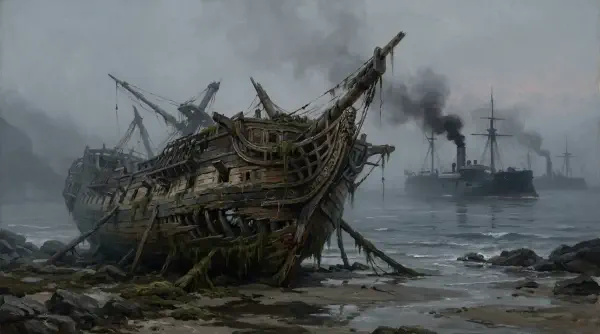
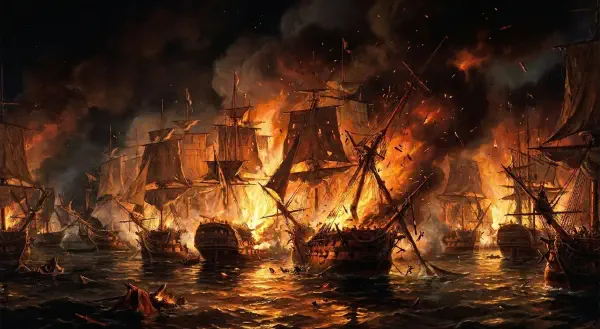
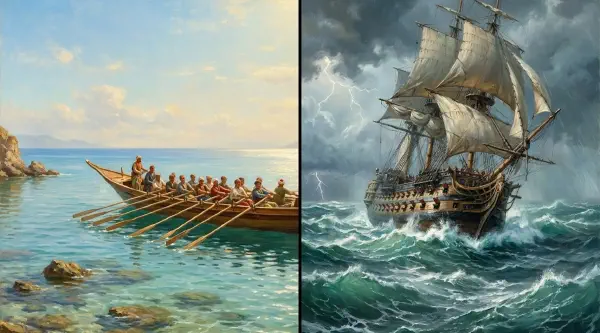
The final historical act. This article traces the slow, violent, and often reluctant shift from oar to sail in the Mediterranean, driven by catastrophic defeats from Lepanto to Chesma. It details how the forests of the Black Sea and the shipyards of Istanbul finally allowed the empire to build a fleet of Western-style ships of the line. Yet it ends on a cautionary note: adopting the technology wasn't enough to cure the deeper systemic, industrial, and doctrinal decay, dooming the empire to be a perpetual naval laggard in the age of steam.
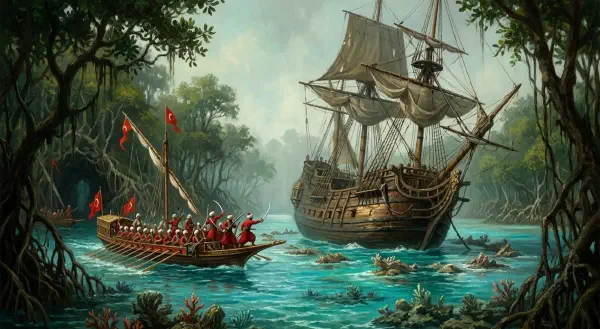
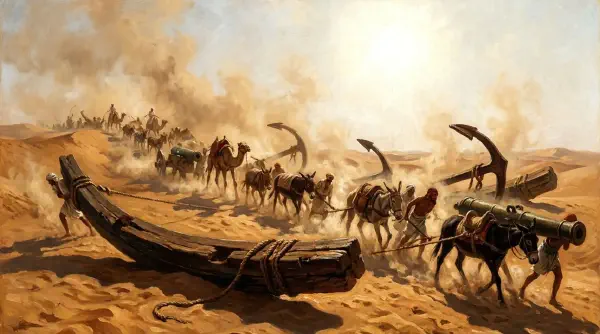
This piece tackles the toughest strategic dilemma head-on. If the Ottomans reached the Indian Ocean, why didn't they build galleons there? It explores the perilous navigation of the Red Sea and the logistical impossibility of creating an Atlantic-style industrial base in a resource-barren desert. It reveals that the Ottoman 'failure' was not technological ignorance, but a pragmatic strategic choice to fight an asymmetric littoral war with oared vessels—the right tool for their geography and goals.
A vivid, explanatory deep-dive into the revolutionary design differences between the Mediterranean galley and the Atlantic galleon. Using clear comparisons—oars versus sails, boarding versus broadside, beaching versus ocean-voyaging—this article makes the abstract concept of technological lock-in tangible. It shows how the Ottoman galley was a perfect machine for its own sea but a death trap on the ocean, setting up the logistical nightmare of trying to build a different kind of navy.
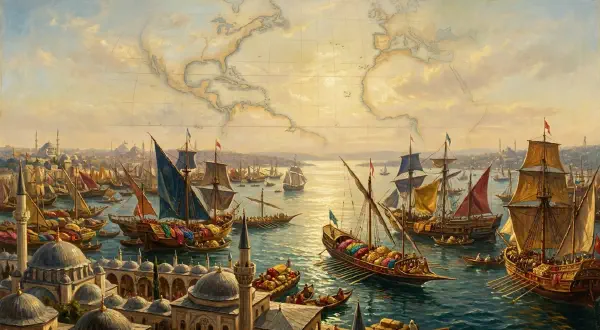
Here, the series pivots to challenge the Eurocentric narrative. The Ottomans didn't ignore the Age of Exploration; they had their own. This piece chronicles their strategic pivot eastward after the conquest of Egypt, their entry into the Red Sea and Indian Ocean, and their century-long naval war against the Portuguese for control of the spice trade. It reveals an empire not standing still, but actively fighting a global war on a different front.
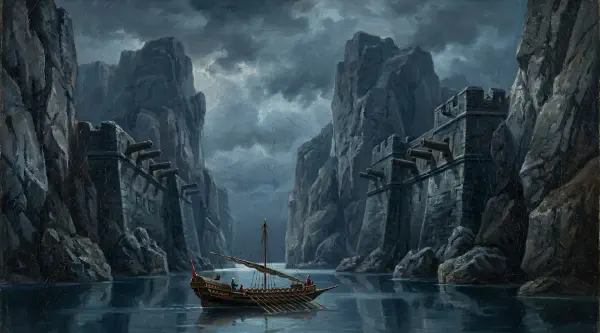
This article examines the brutal geographical reality of the empire's position. It introduces the concept of the Mediterranean as a 'maritime cul-de-sac,' sealed off by the Strait of Gibraltar, a chokepoint controlled by hostile Iberian powers. It details how this geostrategic trap cut the Ottomans out of the new global economy, transforming them from an indispensable trade middleman into a peripheral power, and explains why 'laziness' or 'shortsightedness' had nothing to do with their inability to break into the Atlantic.
This article opens a series that will investigate the theory that the Ottoman Empire was a prisoner of its own sea, journeying from the shipyards of Istanbul to the coral reefs of the Red Sea, from the design of a wooden hull to the fate of a global empire.