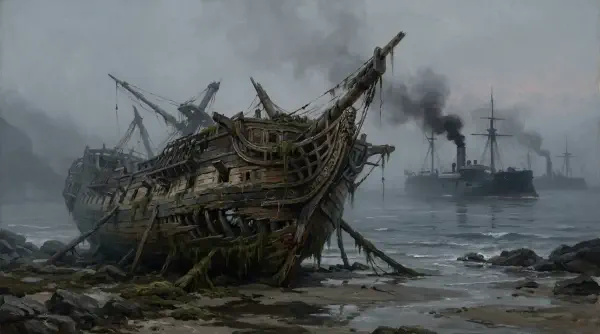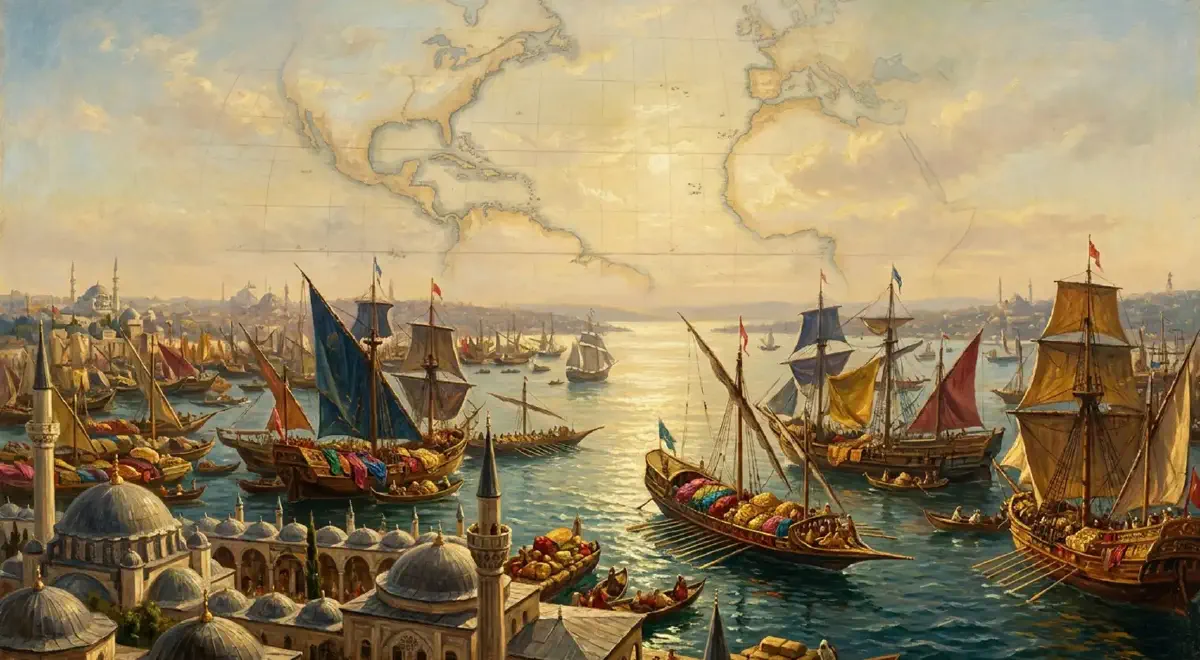
Imagine standing in Istanbul at the dawn of the 16th century. From the Topkapı Palace, the sultan surveys a realm that stretches across three continents, an empire that is the envy of the world. The Bosphorus below him teems with merchant ships bearing spices, silks, and gold. The Ottoman fleet commands the eastern Mediterranean, the Black Sea, and the Red Sea. To any observer, this is the center of the world. Yet, within a few centuries, this mighty empire would be derided as the “Sick Man of Europe,” its power hollowed out, its economy stagnant, and its political independence hanging by a thread until its final collapse in 1922.
What happened? There is a compelling, elegantly simple theory that places geography at the very heart of this catastrophe: the Ottoman Empire was a prisoner of its own sea. While Western European states unlocked the vast wealth of the oceans, the Ottomans were trapped inside the Mediterranean, a magnificent but ultimately suffocating pond, cut off from the new global trade routes that forged the modern world. This article opens a series that will investigate this theory, journeying from the shipyards of Istanbul to the coral reefs of the Red Sea, from the design of a wooden hull to the fate of a global empire.
A Tale of Two Worlds#
The story begins with a profound historical divergence. In the 15th century, Portugal and Spain, perched on the edge of the Atlantic, embarked on a breathtaking gamble. They developed a new kind of ship—the galleon—and a new kind of ambition. Their explorers did not just seek trade; they sought a direct oceanic bypass around the Islamic world that had stood for centuries as a middleman between Europe and Asia.
The rewards were staggering. Vasco da Gama’s voyage to India around Africa in 1498, and Columbus’s accidental collision with the Americas in 1492, cracked open a planetary treasure chest. The Atlantic powers flooded their treasuries with American silver, African gold, and Asian spices, traded directly, violently, and on their own terms. This influx of wealth fueled the transformation of small feudal kingdoms into global maritime empires. It funded the merchant classes, sparked financial revolutions, and ultimately bankrolled the industrialization of Western Europe. In short, the Atlantic became a highway to unimaginable riches, and the states that could sail it freely were the first to industrialize and dominate.
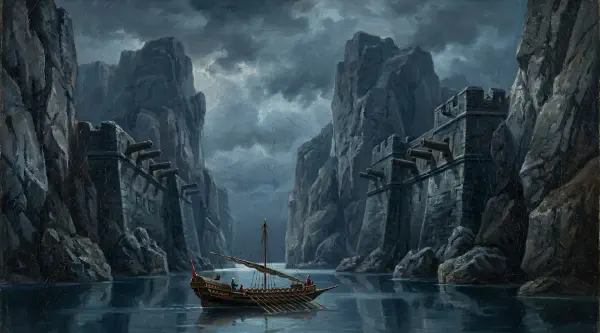
Now, observe the Ottoman Empire during this same period. In 1517, they conquered Egypt, bringing the Red Sea coast under their control. They were acutely aware of the Portuguese threat. But when the empire looked outward, it faced a monumental geographical obstacle. To reach the Atlantic and join the game, an Ottoman fleet had to sail the entire length of the Mediterranean Sea, a body of water it partly controlled, and then pass through a narrow, treacherous bottleneck: the Strait of Gibraltar. This chokepoint was not a neutral waterway; it was a heavily fortified gate, slammed shut by the very powers—first Spain, later Britain—that were the empire’s commercial and military rivals. An Ottoman fleet attempting to break out into the Atlantic would have faced a hostile gauntlet of cannon fire and blockade, a suicide mission far from home. They were, as a modern historian has perfectly captured, “Mediterranean prisoners.”
The Slow Suffocation of a Middleman#
This was not a dramatic defeat in a single battle; it was a slow, structural asphyxiation. For centuries, the Ottoman economy had been built on its role as an indispensable middleman. The Silk Road and the Spice Route all converged on Ottoman lands, enriching the sultan's treasury through taxes and transit fees. It was a position of immense strategic leverage.
The Atlantic voyages made this entire system irrelevant. European merchants no longer needed to negotiate with Ottoman officials or pay their taxes. They could sail directly to India and Indonesia, buying goods at the source at a fraction of the cost. The bustling spice markets of Aleppo and Alexandria began to quiet. The caravans crossing the Silk Road slowed to a trickle. The Atlantic had become the new main street of world commerce, and the Ottoman Empire was now on an increasingly forgotten side street. The vast treasure pouring into Spain and Portugal was not just wealth; it was the fuel for a new kind of state and a new kind of military power, power that the Ottomans could not access.
This is the compelling core of the geostrategic trap theory: a great power, perfectly adapted to an old world order, was made obsolete by a geographic shift it could not control. It wasn't a lack of ambition, money, or intelligence. It was, quite simply, a lack of an ocean-facing coast.
A Main Cause—But the Only Cause?#
The theory is powerful, and there is immense truth in it. But if history teaches us anything, it is that single-cause explanations for the fall of empires are almost always incomplete. The same ocean that enriched England could not save a corrupt and dysfunctional state. The same Mediterranean trap that confined the Ottomans did not prevent the rise of the Italian maritime republics a few centuries earlier.
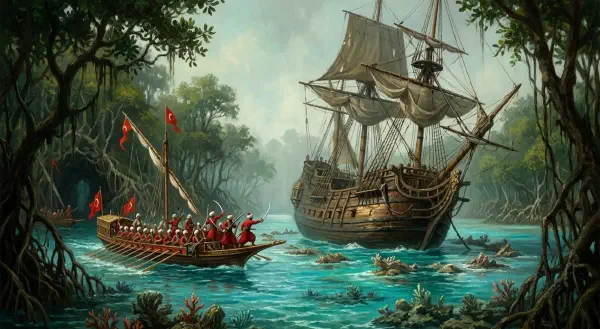
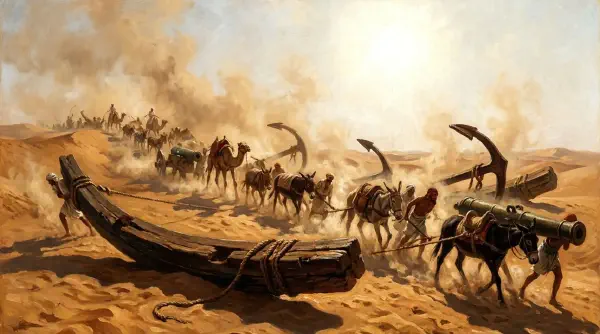
So, before we accept that a map was destiny, we must ask some difficult questions. If geography was the only cause, how do we explain the Ottoman counter-offensive? In response to the Portuguese, the Ottomans did not simply shrug; they conquered Egypt and built shipyards at Suez, projecting a new navy into the Red Sea and Indian Ocean. They fought a century-long war against the Portuguese for the spice trade, and in many ways, they held their own. Why, then, did this eastern oceanic push not save them?
This leads to another set of questions. Was the real issue not geography, but a technological lock-in? The Ottoman navy was built around a galley—a shallow-draft, oar-powered ship perfectly suited for the calm, enclosed Mediterranean. The Atlantic powers used the galleon, a deep-draft, wind-powered fortress of a ship built for ocean swells and broadside cannon fire. Could the Ottomans not build galleons? And if they tried, why did they fail?
And finally, what about the internal fractures that had nothing to do with the sea? The rise of ethnic nationalism that tore the Balkans from the empire; the catastrophic failure to keep pace with the Industrial Revolution, which turned Ottoman workshops into museums of a pre-industrial age; and the sclerotic, corrupt governance that resisted reform at every turn.
This series is a journey into these questions. We will take the theory of the geostrategic trap seriously, but we will test it, complicate it, and ultimately place it within the rich, chaotic tapestry of six centuries of Ottoman history. The empire’s fate was not a simple map-reading exercise. It was a story of bold explorers, brilliant admirals, wooden ships, and a world that changed faster than any empire could adapt.
In the next article, we will dive deeper into the first chapter of this prison. We will examine the exact geographical and political barriers that created the “Mediterranean cul-de-sac” and ask a deceptively simple question: why didn’t the Ottomans just sail west?