
The Sovereign of the Borrowed Ship#
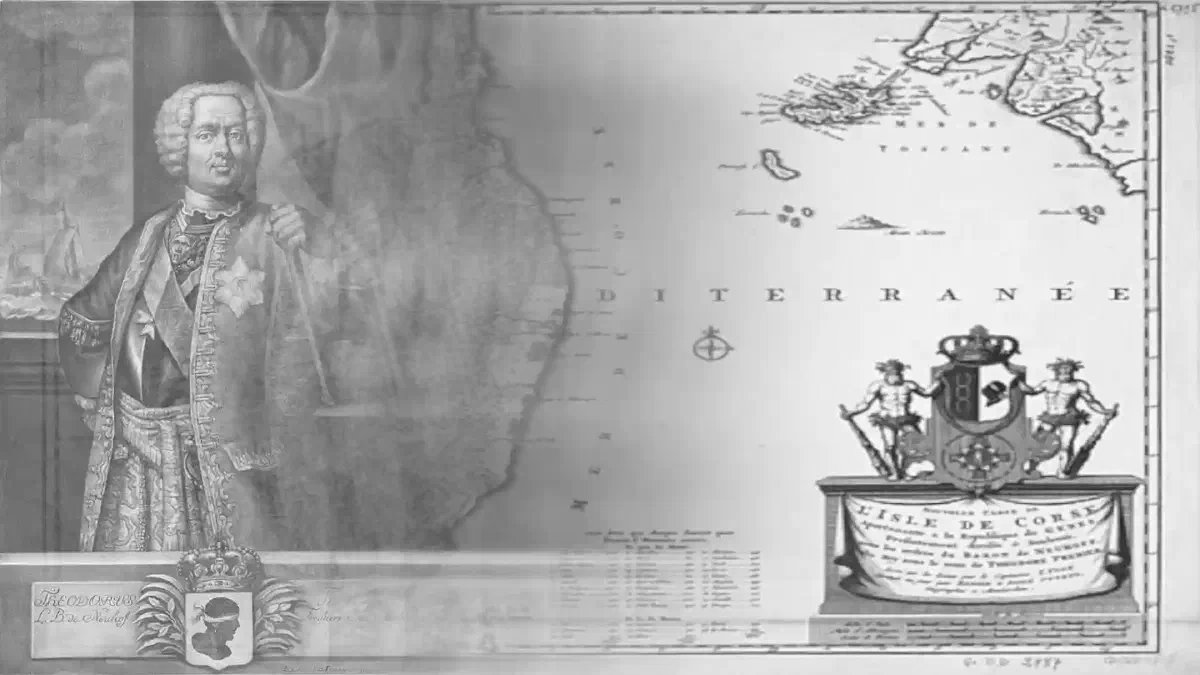
In the spring of March 1736, a heavily armed merchant vessel dropped anchor off the coast of Aléria, a rugged port on the Mediterranean island of Corsica. As a crowd of battle-weary Corsican rebels gathered, a tall, imposing German baron named Theodor von Neuhoff stepped onto the shore. He was dressed in magnificent, exotic Turkish silk robes, carried a long cavalry saber, and was accompanied by a small retinue of servants. Most importantly, he brought with him a massive wooden chest filled with gold and silver coins, alongside crates of modern rifles, gunpowder, and ammunition. Theodor declared that he possessed deep connections to the royal courts of Europe and could secure absolute independence for Corsica, which was then locked in a bloody, decades-long rebellion against the Republic of Genoa.
The bargain he offered was simple yet highly audacious: if the Corsicans crowned him their absolute King, he would use his vast international network to fund their liberation. Astonishingly, the desperate rebel leaders agreed. Within weeks, the penniless German adventurer was crowned King Theodore I of Corsica, establishing the shortest and most thoroughly improvised monarchy in European history.
How did a wandering con man, who possessed neither royal blood nor actual military backing, convince an entire nation of fiercely independent fighters to surrender their sovereignty? The answer lies in the performative nature of political power. Theodor realized that authority is not merely a legal or historical reality, but a theatrical performance that can be successfully staged by anyone with sufficient confidence, aesthetic flair, and an understanding of geopolitical desperation. This essay analyzes the mechanics of Theodor's performative sovereignty, examining how he transformed a collection of bold lies and borrowed resources into a legitimate political regime that briefly destabilized the balance of power in the Mediterranean.
The Performance of Power#
Political legitimacy is rarely a self-evident truth; it is a continuously negotiated narrative constructed through symbols, rituals, and the calculated management of public expectations. Theodor von Neuhoff’s brief reign as King of Corsica provides a perfect laboratory to study this dynamic. By dissecting his administrative and ceremonial strategies, we can understand how political authority can be conjured out of nothing but sheer audacity.
The Mechanics of Performing Royalty#
Once crowned, Theodor did not rely on empty promises; he immediately established the physical and bureaucratic apparatus of a legitimate state. He designed a royal coat of arms, minted copper and silver coins bearing his likeness, and created a highly structured court protocol to enforce social hierarchy. To secure the loyalty of the island’s powerful elite, he established the "Order of Liberation," a prestigious chivalric order that granted aristocratic titles to rebel commanders. He issued grand royal decrees written in elegant, formal Latin and Italian, which were distributed to foreign courts. Through these highly visible actions, Theodor transformed a fragile, improvised rebellion into a formal sovereign state, forcing neighboring empires to treat the Corsican cause with newfound seriousness.
Rebellion Economics and the Theatre of Diplomacy#
Theodor’s regime succeeded because it inserted itself perfectly into the complex, gridlocked geopolitics of the 18th-century Mediterranean. The Corsican rebels were militarily exhausted and bankrupt, unable to break the Genoese blockade without foreign intervention. Genoa, conversely, was a fading power, desperate to retain its colonial grip on the island but lacking the resources to launch a decisive counter-offensive. Theodor exploited this deadlock by projecting an illusion of immense diplomatic leverage. By claiming to have the backing of the Ottoman Empire, Spain, and Great Britain, he created a strategic ambiguity that terrified the Genoese and forced European diplomats to treat him as a serious geopolitical player. This theatrical diplomacy successfully converted international speculation into real, tangible domestic authority.
The Sovereign Farce and Its Geopolitical Fallout#
The consequences of Theodor’s eight-month reign extended far beyond the shores of Corsica, triggering a major diplomatic and military crisis. The Republic of Genoa, panicked by Theodor's success and the threat of British intervention, was forced to appeal to France for military assistance, leading to a massive French occupation of the island. Theodor’s administrative network eventually collapsed when his promised foreign fleets failed to arrive, forcing him to escape the island disguised as a priest to avoid Genoese assassins. He spent the remainder of his life wandering Europe, attempting to sell his "royal rights" to Corsica, before dying in a London debtor's prison. Yet, his performative monarchy had permanently altered history, breaking the myth of Genoese invulnerability and paving the way for the eventual French annexation of Corsica.
The Shifting Sands of Political Legitimacy#
Theodor von Neuhoff’s bizarre career serves as an enduring proof that political legitimacy is fundamentally co-created between the performer and the audience. The Corsican rebels were not fools; they were rational, desperate actors who chose to believe in Theodor’s spectacular lies because the alternative was submission to Genoa. They accepted his performative royalty because it gave them a unified identity, a formal legal structure, and a face to present to the international community. This historical episode demonstrates that when the institutional structures of society break down under the weight of crisis, the public will eagerly embrace any figure who can stage a convincing, comforting illusion of order and power.
In the modern era, the mechanics of performative sovereignty continue to shape the political landscape. From populist politicians who build vast personal brands on unverified promises of national salvation to corporate leaders who secure billions in funding based on pure, speculative charisma, the legacy of Theodor von Neuhoff is alive and well. The "improvised crown" remains a highly effective tool for those who understand that power is often awarded not to the most competent, but to the most convincing actor on the stage. As we analyze contemporary political movements, the story of Corsica’s eight-month king reminds us to constantly look past the robes, the coins, and the grand proclamations to evaluate the actual, material foundations of authority.