
If the actuarial calculus of the 1970s relied on simple balance-sheet tradeoffs, the modern corporate architecture has evolved a far more sophisticated defense mechanism: biological replication and cellular division. When faced with pervasive, multi-billion-dollar liabilities from toxic chemical manufacturing, industrial conglomerates no longer simply rely on stalling regulatory bodies. Instead, they use corporate law to fundamentally alter their own anatomy, systematically partitioning their most profitable segments away from legacy environmental liabilities.
This strategy—the deliberate fragmentation of a parent corporation to shield core assets—redefines the mechanics of cost externalization. It represents an intricate game of regulatory arbitrage where toxic assets are systematically dumped into minor, under-capitalized spin-off entities, leaving the parent organization structurally insulated from civil and state penalties.
                  THE RESTRICTED PIPELINE OF CORPORATE DIVESTMENT

    [ Parent Conglomerate ] ════( Structural Spin-Off )════► [ Shell Subsidiary ]
               │                                                    │
        (Asset Stripping)                                  (Liability Dumping)
               │                                                    │
               ▼                                                    ▼
    Retains Liquid Assets,                               Inherits Decades of Toxic
   Core Intellectual Property,                          PFOA/PFAS Civil Settlements
      & Clean Cash Flows                                      & Environmental Debts
The Legacy of Atmospheric Delay#
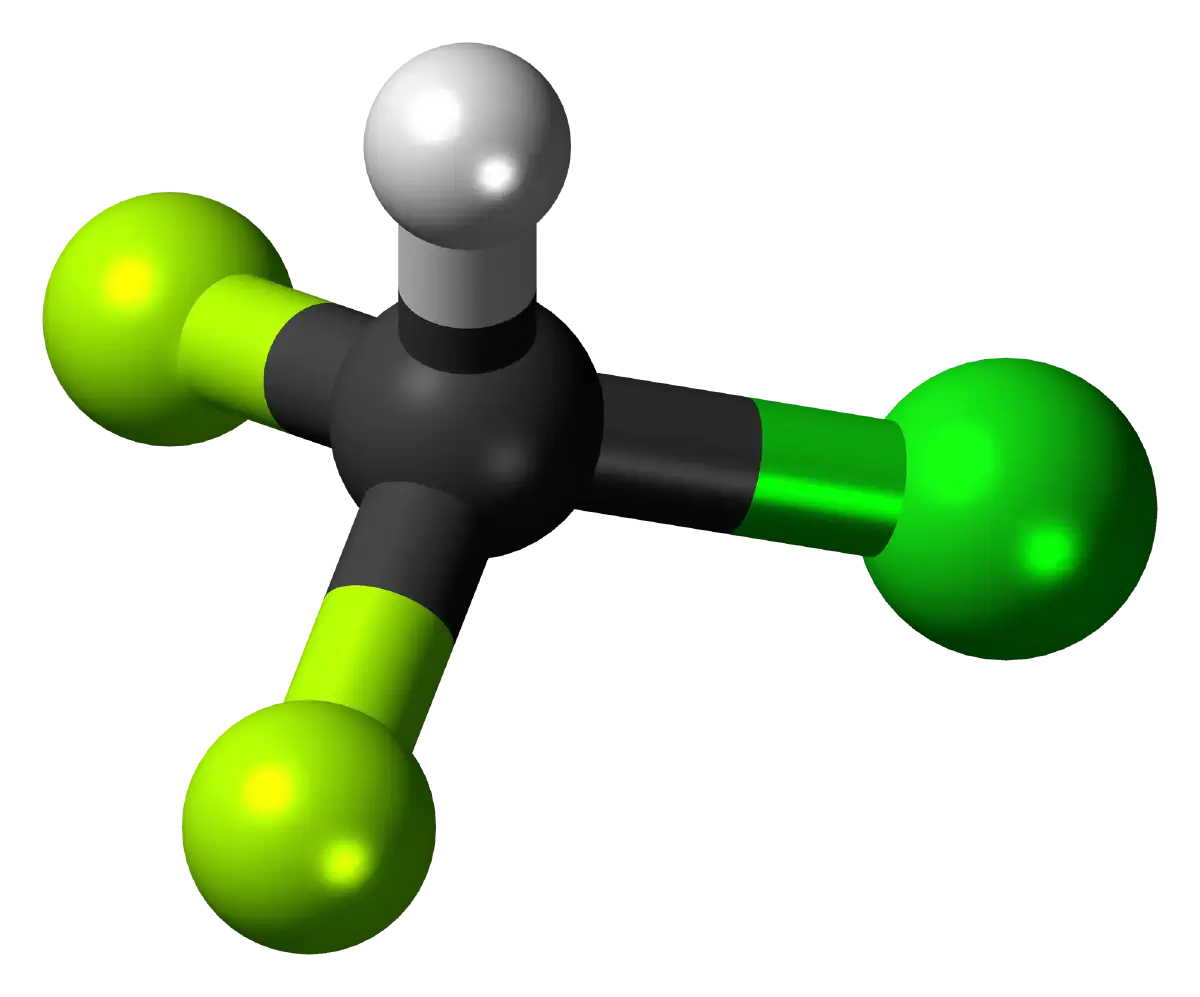
The precursor to this structural insulation was developed by E. I. du Pont de Nemours & Company during the chlorofluorocarbon (CFC) crisis of the 1970s and 1980s. When atmospheric scientists Mario Molina and F. Sherwood Rowland published their seminal 1974 paper demonstrating that CFCs—marketed by DuPont under the brand name Freon—were actively destroying the stratospheric ozone layer, DuPont initially deployed the classic Big Tobacco playbook. Executives publicly dismissed the science as "science fiction" and claimed it was unsupported by empirical evidence.
Yet, behind closed doors, DuPont’s internal toxicologists quickly validated the Rowland-Molina hypothesis. The company did not immediately move to phase out the compound; doing so would mean prematurely dismantling a highly lucrative global infrastructure. Instead, DuPont engaged in a 14-year delaying action (1974–1988).
The strategic value of this timeline was entirely financial. By stalling a domestic and international ban, DuPont bought its research and development teams the exact window required to design, test, and patent proprietary alternatives: hydrofluorocarbons (HFCs).
When DuPont finally reversed its stance in 1988—fully endorsing the Montreal Protocol—it did so not out of civic virtue, but because its technological pivot was complete. By outlawing legacy CFCs, the international treaty effectively eradicated DuPont's low-margin, unpatented competitors, creating a captive global market for DuPont’s newly patented, high-margin HFC replacements.
The Evolution of Forever Chemicals#
While the CFC playbook demonstrated the value of temporal arbitrage, DuPont's subsequent crisis involving perfluorooctanoic acid (PFOA)—a class of carcinogenic "forever chemicals" used in the manufacturing of Teflon—demanded a far more aggressive structural solution.
Internal company documents later forced into the public domain through litigation revealed that by 1961, DuPont's toxicologists knew that PFOA could enlarge rat livers. By 1981, the company confirmed that PFOA crossed the placental barrier, causing developmental defects in pregnant factory workers. For decades, DuPont continued to dump PFOA directly into local water tables near its primary manufacturing hubs, hiding the data from both the Environmental Protection Agency (EPA) and the public.
When class-action litigation and regulatory enforcement actions finally breached this informational firewall in the late 1990s and early 2000s, the scale of the impending clean-up and health-monitoring liabilities threatened the existential survival of the parent firm. The liabilities could not be absorbed as a mere operating expense.
+---------------------------------------------------------------------------------------+
|                         THE EXPERIMENTAL RESTRUCTURING (2015)                         |
+---------------------------------------------------+-----------------------------------+
| E. I. du Pont de Nemours & Co. (Parent)           | Chemours Company (Spin-off)       |
+---------------------------------------------------+-----------------------------------+
| • Retained: Highly profitable, clean business     | • Inherited: Legacy chemical tech,|
|   lines (Agriculture, Electronics, Materials).    |   including Teflon operations.    |
| • Stripped: Extracted a $3.9 billion cash         | • Saddled: Mandated to absorb all |
|   dividend from the new spin-off prior to birth. |   unquantified legacy PFAS liabilities|
+---------------------------------------------------+-----------------------------------+
| Result: Parent stock insulated from toxic debts   | Result: Under-capitalized buffer  |
+---------------------------------------------------+-----------------------------------+
To resolve this, DuPont executed an intricate corporate maneuvers sequence in 2015. It consolidated its performance chemicals division—the exact unit responsible for decades of Teflon production and PFAS pollution—into a brand-new corporate entity called Chemours. DuPont then spun Chemours off as an independent public company.
The separation agreement was meticulously designed to insulate the parent. Chemours was handed all of DuPont’s legacy environmental liabilities, alongside a strict contractual obligation to indemnify DuPont against any future PFAS-related claims. To maximize the extraction, DuPont forced Chemours to pay a $3.9 billion cash dividend directly back to the parent company immediately prior to the spin-off, leaving the new entity heavily debt-burdened from inception.
Corporate Separation as a Legal Shield#
The financial mechanics of the Chemours spin-off represent a structural masterpiece of liability externalization. By isolating its toxic legacy into an under-capitalized corporate buffer, DuPont protected its primary cash flows and valuable agricultural and material science divisions from court-ordered asset seizures.
The strategy was so stark that it triggered a legal civil war within the corporate structure itself. In 2019, Chemours sued its former parent company in the Delaware Court of Chancery (The Chemours Co. v. DowDuPont Inc.), claiming that DuPont had intentionally low-balled projected environmental clean-up costs to trick shareholders and strip Chemours of its assets. Chemours argued that if it were forced to cover the true, unmitigated costs of global PFAS clean-ups, it would face structural insolvency.
Ultimately, this structural ring-fencing forced a compromised legal resolution. In 2023, DuPont, Chemours, and another spin-off, Corteva, jointly agreed to a $1.18 billion settlement to resolve drinking water contamination claims across hundreds of U.S. public water systems. While billed as a major corporate accountability measure, the total settlement amounted to a minor fraction of the trillions in aggregate profits these firms accumulated during a half-century of unmitigated PFAS production.
                   THE FATE OF SYSTEMIC DEBT UNDER CORPORATE SPLITS

  [ Realized Environmental Damages: Trillions in Global Remediation & Health Costs ]
                                        │
                                        ▼
               [ Structural Ring-Fencing & Joint Compromise Agreements ]
                                        │
                                        ▼
             [ Settled Corporate Pay-outs: $1.18 Billion Collective Caps ]
The lesson of the chemical sector is profound: when a product's negative externality is so severe that it threatens the life of the enterprise, the enterprise will simply replicate. By utilizing corporate restructuring to divorce current profits from past liabilities, modern capitalism has engineered a legal paradigm where pollution can be permanently externalized, leaving the public, the state, or bankrupted shell companies to inherit the systemic debts.
References#
- The Chemours Co. v. DowDuPont Inc., C.A. No. 2019-0351-SG (Delaware Court of Chancery, 2019).
- Kearns, C. E., et al. (2016). "Sugar Industry and Coronary Heart Disease Research," JAMA Internal Medicine, 176(11). (Note: Used conceptually here regarding the broader playbook of manufacturing doubt).
- Molina, M. J., and Rowland, F. S. (1974). "Stratospheric sink for chlorofluoromethanes: chlorine atom-catalysed destruction of ozone," Nature, 249(5460).
- U.S. Environmental Protection Agency (EPA). (2023). "PFAS Enforcement Actions and Settlement Agreements: Chemours, DuPont, and Corteva." EPA Enforcement Archives.
- Rich, N. (2016). "The Lawyer Who Became DuPont’s Worst Nightmare," The New York Times Magazine.