
When corporate strategy shifts from managing product risk to actively re-engineering public infrastructure, cost externalization reaches its zenith. In a standard market environment, consumers retain choice: they can opt out of a high-risk or high-cost commercial product if a viable public alternative exists. For a capital-intensive industry seeking absolute market dominance, the presence of an efficient, low-externality public utility is an unacceptable constraint on growth.
The response is structural subversion—the systematic destruction of public options to engineer an artificial, mandatory dependency on a private consumer ecosystem. By dismantling non-corporate alternatives, industrial conglomerates do not merely protect their margins; they force entire municipal architectures to absorb their product's long-term environmental and social liabilities.
                      THE SUBVERSION OF PUBLIC UTILITIES

  [ Viable Public Transit Alternative ] ──► ( Covert Corporate Acquisition )
                  │
                  ▼
  [ Intentional Network Dismantling ]    ──► Pave Over Infrastructure / Rail Lines
                  │
                  ▼
  [ Artificial Market Dependency ]       ──► Mandatory Private Automobile Purchases
The Tearing Up of the Tracks#
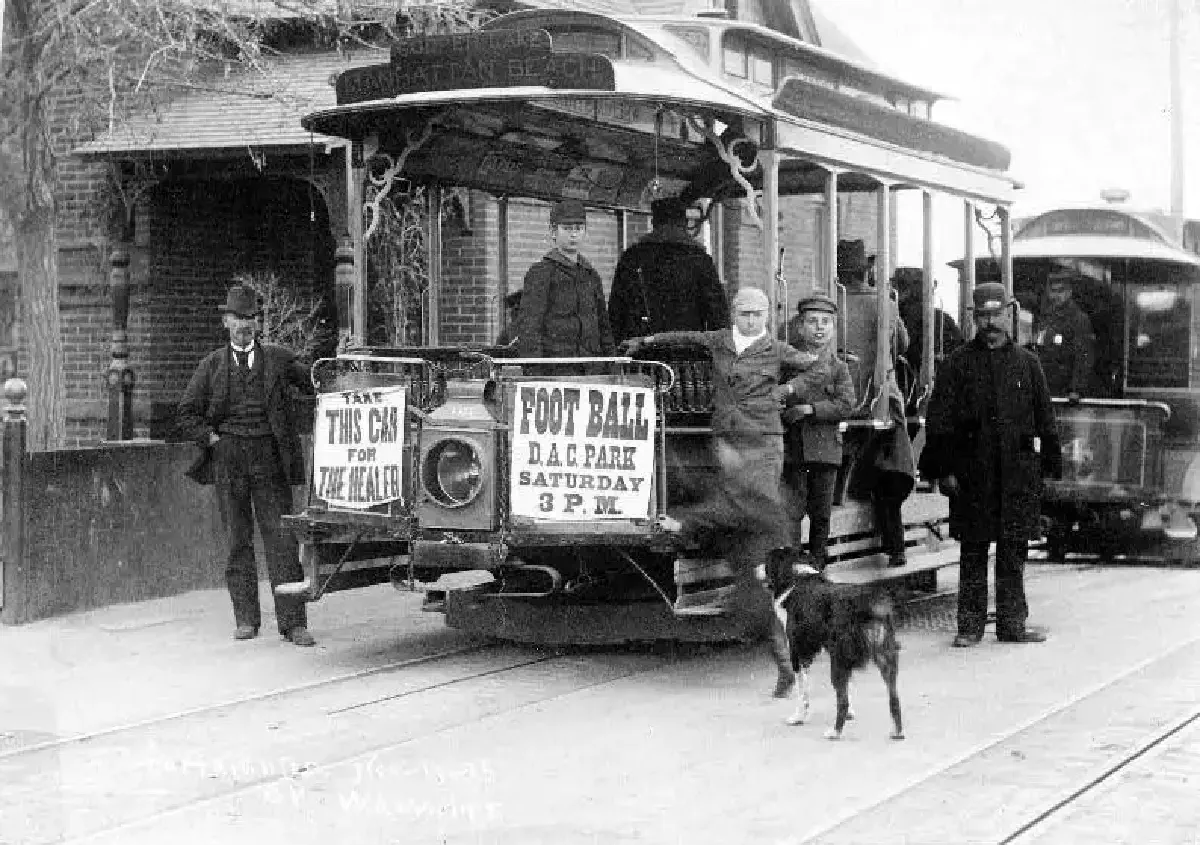
The most profound example of this structural subversion unfolded across American cities during the mid-20th century. In the 1930s, the United States possessed a highly dense, efficient, and largely electric urban transit network. Millions of commuters relied daily on electric streetcar systems, which provided low-cost, low-emissions mobility. To the automotive and petrochemical sectors, this infrastructure represented a massive bottleneck to consumer vehicle adoption.
To break this bottleneck, General Motors, in financial alignment with Firestone Tire & Rubber, Standard Oil of California (Chevron), and Phillips Petroleum, formed a series of corporate front companies. The most prominent of these was National City Lines (NCL), a holding firm incorporated in 1936.
+---------------------------------------------------------------------------------------+
|                            THE ARCHITECTURE OF AN NCL FRONT                           |
+---------------------------------------------------+-----------------------------------+
| Corporate Underwriters                            | Tactical Execution on Municipalities  |
+---------------------------------------------------+-----------------------------------+
| • Capital Injections: GM, Standard Oil,           | • Buyout: Covertly acquire thriving|
|   Firestone, and Phillips Petroleum.              |   municipal streetcar networks.   |
| • Mandate: Source all replacement vehicles, fuel, | • Destruction: Tear up steel rails,|
|   and tires exclusively from the parent investors.|   dismantle electric overhead wires|
+---------------------------------------------------+-----------------------------------+
| Result: Captive supply contracts secured          | Result: Public rail transit ruined|
+---------------------------------------------------+-----------------------------------+
NCL, operating with millions in covert corporate backing, systematically targeted thriving municipal transit operations. Over two decades, the consortium purchased equity control of streetcar networks in 45 major American cities, including Los Angeles, New York, Chicago, Philadelphia, and Oakland.
The strategy upon acquisition was uniform: NCL executives deliberately ran down the streetcar lines, tore up the steel tracks, dismantled the electric overhead infrastructure, and replaced the high-capacity rail cars with flexible, less efficient GM diesel buses. By the late 1940s, the urban streetcar grid had been practically wiped from the American landscape, structurally locking commuters out of zero-emissions electric mass transit.
The Actuarial Value of a Criminal Fine#
The structural transformation was highly lucrative. By replacing electric trolleys with internal combustion engines, GM secured a captive market for its commercial buses, while its oil and tire partners locked in perpetual fuel and rubber supply contracts. More importantly, the destruction of transit alternatives radically shifted consumer behavior, forcing millions of households to purchase private passenger vehicles for basic economic survival.
When federal regulators finally intervened, the legal system demonstrated its systemic inability to penalize structural subversion effectively. In 1949, the Department of Justice successfully prosecuted GM and its co-conspirators in a landmark federal antitrust suit (United States v. National City Lines, Inc.). The corporate cabal was convicted of a criminal conspiracy to monopolize the supply of buses and petroleum products to NCL networks.
The judicial penalty exposed the stark asymmetry of antitrust enforcement:
- The Corporate Penalty: General Motors was fined a symbolic $5,000 by the federal court.
- The Executive Penalty: Individual corporate leadership, including H.C. Grossman, the chief architect of the financial holding fronts, was fined precisely $1 each.
+----------------------------------------------------------------------------------------+
|                               THE ANTITRUST PUNITIVE INVOICE                           |
+-----------------------------------------------------+----------------------------------+
| Calculated Returns on Transit Subversion            | Federal Penalties Imposed (1949) |
+-----------------------------------------------------+----------------------------------+
| • Millions in guaranteed long-term diesel vehicle    | • General Motors Fine: $5,000    |
|   supply contracts.                                 | • Co-conspirator Fines: $5,000   |
| • Structural locks on multi-decade private vehicle  | • Lead Executive Penalty: $1     |
|   consumer demand.                                  |                                  |
+-----------------------------------------------------+----------------------------------+
| Total Financial Windfall: Countless Billions         | Total Legal Cost: Negligible Fee |
+-----------------------------------------------------+----------------------------------+
|                  NET ECONOMIC PREMIUM: EXTREMELY HIGH VALUE                             |
+----------------------------------------------------------------------------------------+
For an enterprise that had successfully re-engineered the spatial and transport economics of a superpower, a $5,000 fine was treated as a completely negligible cost of doing business. The long-term negative externalities—decades of urban air pollution, suburban sprawl, intensive carbon emissions, and traffic gridlock—were entirely borne by public municipalities and the tax base.
Engineering Permanent Externalities#
The National City Lines case clarifies a core feature of the economics of denial: corporations do not always operate within the bounds of existing consumer demand; they actively use their capital reserves to break alternative infrastructure. When a private collective sabotages a public utility, it forces an entire society into a high-externality lifestyle.
Appeals to market freedom or consumer sovereignty in transport are hollow when the underlying infrastructure layout has been deliberately restricted to eliminate low-cost, clean alternatives. In the modern global economy, this approach serves as the blueprint for heavy infrastructure capture. From energy monopolies lobbying against municipal grid modernization to global packaging firms fighting container-deposit infrastructure, the objective remains unyielding: destroy the public alternative, trap the consumer, and leave the state with the long-term systemic debt.
References#
- United States v. National City Lines, Inc., 186 F.2d 562 (7th Cir. 1951).
- Snell, B. C. (1974). "American Ground Transport: A Proposal for Restructuring the Automobile, Truck, Bus, and Rail Industries." Report presented to the U.S. Senate Committee on the Judiciary, Subcommittee on Antitrust and Monopoly.
- Slater, C. (1997). "General Motors and the Demise of Streetcars," Transportation Quarterly, 51(3), 45–66.
- Yago, G. (1984). The Decline of Transit: Urban Transportation in Germany and the U.S., 1900–1970. Cambridge University Press.