
During the damp winter of 1392, King Charles VI of France refused to let his closest advisors approach his person. He wore thick, custom-tailored garments lined with iron ribs, and sat motionless for hours in the center of his chambers. To his terrified court, the King revealed a shocking secret: his entire body had been transformed into delicate, crystalline glass.
He was absolutely convinced that the slightest physical contact would shatter his torso into a thousand glittering shards. If a courtier stumbled near him, the King would scream in pure physical terror. He even had special iron frames installed in his clothing to prevent his limbs from clashing together.
This was not an isolated royal eccentricity. Over the next three centuries, the "glass delusion" became a widespread psychiatric epidemic, sweeping through the wealthy merchant classes and royal courts of Western Europe. Why did some of the most powerful individuals in the early modern world suddenly begin to view themselves as fragile, transparent vessels?
                    THE SOMATIC SHIELD OF ELITE FRAGILITY

  [ Unremitting Public Surveillance ] ──► [ Chronic Executive Traumatic Stress ]
               │                                      │
               ▼                                      ▼
    Subconscious Ego Defense               Symbolic Material Match:
  (Demand for Absolute Distance)           Venetian Cristallo Glass
               │                                      │
               └───────────► [ Somatic Translation ] ──┘
                               ("My Torso is Glass")
                                      │
                                      ▼
                        [ Mandated Physical Isolation ]
                                      │
                                      ▼
                        [ Institutional Paralysis ] ──► State Governance Vacuum
This bizarre psychiatric phenomenon represents a profound psychological mystery. It serves as a striking example of how human minds project internal, invisible anxieties onto the physical material of their bodies. By analyzing this royal epidemic, we can uncover the delicate balance between societal advancement and psychological collapse.
The Materialization of Existential Dread#
The glass delusion was a physicalized, somatic metaphor for the profound psychological vulnerability experienced by elites during the transition to the early modern era. It was a highly specific mental defense mechanism, constructed by minds buckling under the weight of absolute power, dynastic expectation, and the sudden exposure of private lives to the public gaze.
This delusion proves that psychiatric illnesses are never culturally neutral. They actively borrow their symptoms from the cutting-edge material and scientific breakthroughs of their time. By examining the transparent monarchs, we can understand how the human psyche adapts to rapid systemic change by constructing elaborate, physicalized armor.
The Somatic Translation of Elite Fragility#
At its cognitive core, the glass delusion is a highly specialized form of melancholia, classified in modern neurology as a somatic delusion or somatoparaphrenia. In this state, the brain’s body-schema—the internal map of the physical self—becomes profoundly distorted. Under immense emotional distress, the ego constructs a somatic shield.
By convincing the conscious mind that the physical body is fragile, the brain provides a logical justification for an urgent psychological need: absolute isolation. For individuals of high status, the demands of public life were unremitting. Monarchs and high-ranking merchants lived in a state of constant surveillance, their every movement analyzed by rivals and subjects alike.
The glass delusion served as a perfect, subconscious protection mechanism. It allowed the afflicted individual to demand absolute physical distance from their peers. They could reject handshakes, avoid crowded state banquets, and retreat into private chambers without losing their royal authority. The mind translated a chaotic, terrifying political landscape into a tangible, physical law of nature: "I am glass; therefore, you must keep your distance".
The Crucible of Venetian Invention and Royal Guilt#
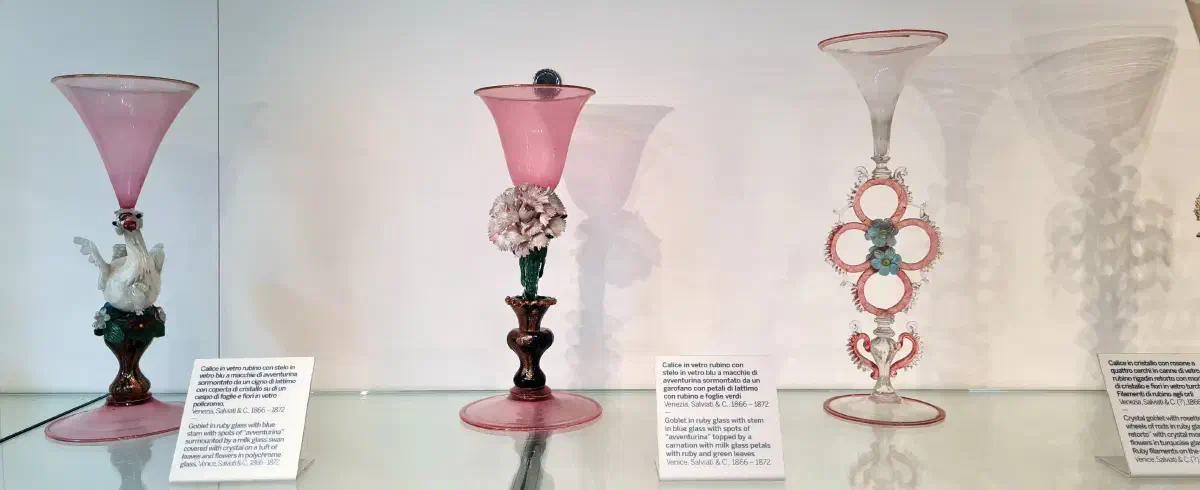
The glass delusion did not exist in antiquity; it emerged precisely alongside a major material revolution in the 14th and 15th centuries. Prior to this period, glass was a thick, cloudy, and highly imperfect material. However, Venetian artisans on the island of Murano successfully engineered cristallo, the first genuinely transparent, colorless glass.
This technological breakthrough transformed glass from a utilitarian substance into a rare, high-status luxury. It was praised by philosophers as a physical miracle—a solid substance that allowed light, the literal essence of God, to pass through it completely unhindered. This material revolution profoundly captured the elite imagination.
+----------------------------------------------------------------------------------------+
|                          THE MATERIAL TO PSYCHOLOGICAL PIPELINE                        |
+------------------------------------+---------------------------------------------------+
| Historical / Material Vector       | Psychodynamic Projection                          |
+------------------------------------+---------------------------------------------------+
| Murano Glass Invention (1400s)     | Unprecedented Clarity Meets Extreme Fragility     |
| Royal Status Symbol                | Translucent Purity Associated with Divine Right   |
| Lethal Political Environment       | Constant Threat of Poison, Assassination, & Coups |
+------------------------------------+---------------------------------------------------+
| RESULT: Psychological Fusion of Royalty with Crystalline Vulnerability                 |
+----------------------------------------------------------------------------------------+
Yet, this high-status material also carried a terrifying physical reality: it was exceptionally fragile. The wealthy classes of Europe quickly adopted clear glass as a status symbol, filling their palaces with transparent vessels. Subconsciously, the elite mind began to draw a parallel between the material of glass and their own social positions.
They were pure, elevated above the common dirt, and filled with divine right—yet they were also deeply vulnerable to sudden, violent destruction. The constant threat of poison, political coups, and plague created a state of permanent, subliminal terror. The human brain resolved this cognitive dissonance by physically merging the self with the status symbol, turning the royal body into the very glass they collected.
The Shattered State and the Cost of Isolation#
The political and social consequences of the glass delusion were catastrophic for the states that endured them. A monarch who believed he was made of glass was fundamentally incapable of performing the basic duties of statecraft. King Charles VI of France, paralyzed by his fear of shattering, spent months locked in his private apartments.
During these periods of psychological retreat, he could not sign state decrees, receive foreign ambassadors, or lead military forces. This administrative vacuum directly crippled France during the height of the Hundred Years' War. It allowed English forces to achieve decisive victories, culminating in the disastrous Treaty of Troyes.
The royal court was forced to invest massive resources into maintaining the King's delusion. Blacksmiths were paid to install iron supports in his clothing, and carpenters spent thousands of gold coins replacing heavy wooden furniture with soft, straw-filled cushions to minimize the risk of accidental impacts. The state's administrative apparatus was effectively held hostage by a single, physicalized metaphor, proving that the psychological health of a leader is a critical point of systemic failure.
The Modern Glass Bubbles of Power#
The glass delusion gradually faded from the historical record in the late 17th century, replaced by new psychological trends as material science advanced and clear glass became a commonplace household commodity. As glass lost its status as a rare, miraculous luxury, the human mind abandoned it as a metaphor for elite fragility.
Yet, the core psychological drive behind the delusion remains entirely active. Power and high status continue to generate intense, isolating anxieties that the human mind must resolve. The glass delusion demonstrates that the human brain will always construct somatic and behavioral armor to protect a fragile ego under immense pressure.
In the 21st century, modern leaders do not wear iron-reinforced clothing or fear physical shattering. Instead, they construct digital and social glass bubbles. They isolate themselves within highly curated algorithmic echo chambers, surround themselves with sycophants, and view the public as a hostile, destabilizing force.
These modern bubbles serve the exact same psychological function as Charles VI's padded armor: they provide a barrier against a complex, threatening reality. However, just like the transparent monarchs of the Renaissance, today's isolated leaders remain profoundly vulnerable. The glass may have changed its form, but it remains just as easy to shatter.