
The tyrant’s dilemma
Why even the most paranoid autocrats sometimes tolerate brilliance—and why that tolerance always expires
Berlin, 1945. Field Marshal Walter Model, the man who had salvaged the Eastern Front with his elastic defences and blunt refusal to obey every foolhardy order from the Führer, walked into a forest near Duisburg. He dissolved his army group, told his men they were released from their oath, and put a pistol to his head. He was one of the last truly competent commanders Nazi Germany had. And he was, in the end, as disposable as the yes-men who had clapped until the ceiling fell in.
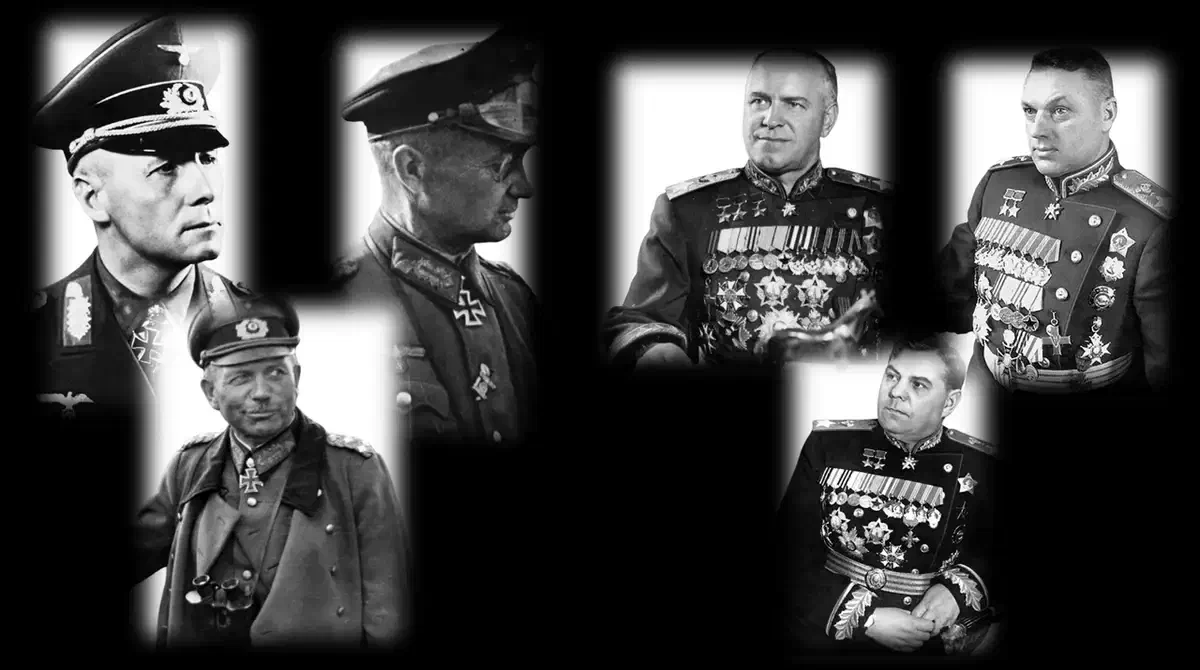
Model’s career poses a puzzle that haunts the study of autocracies. The cliché of the dictator’s court is a collection of spineless sycophants, a human echo chamber that amplifies the leader’s delusions until the roof collapses. Yet Adolf Hitler, a man who demanded unconditional obedience, was served by a remarkably talented and often insubordinate coterie: Model, Rommel, Guderian, Albert Speer. They argued, they manoeuvred, they sometimes actively sabotaged his orders. And for a disturbingly long time, Hitler let them. Was he simply lucky, as our reader suggests, to have inherited such a deep bench of Prussian military talent? Or was he, in some perverse way, a more discerning manager of human capital than other tyrants?
The uncomfortable truth is that Hitler’s relationship with talent was neither a sign of hidden wisdom nor a mere lottery win. It was a temporary, highly conditional bargain—a pragmatic loophole in a totalitarian system that eventually closed, killing both the bargain and the bargainer.
The borrowed talent pool#
Begin with the luck. The German officer corps that produced Model, Rommel and Guderian was not a Nazi creation. It was the product of a centuries-old military tradition, a rigorous staff-college system, and a culture that selected for initiative as much as obedience. Hitler nationalised this asset, but he did not build it. When the war began, he could rely on a generation of commanders who had been trained to think independently under the old Prussian motto: “The greater the grey matter, the greater the latitude.” This was a reservoir of competence that existed in spite of the regime, not because of it. In that narrow sense, every dictator who topples an ancient state—think of the Bolsheviks inheriting tsarist engineers—gets a grace period of borrowed brilliance.
The instrumental loophole#
But inheritance alone does not explain why so many strong-willed talents survived the murderous internal logic of the Nazi state for so long. The key is that Hitler distinguished—ruthlessly—between two kinds of dissent. Technical dissent, which helped win battles, was tolerated. Strategic or political dissent, which questioned his infallibility or ultimate goals, was not.
Model could retreat against orders because he then mounted a counter-stroke that stabilised the front. Guderian could scream about tank production because he delivered blitzkriegs. Speer could admit, years later, that he deliberately undermined the Nero Decree to destroy Germany’s infrastructure—but while the war was on, he kept the factories humming. Hitler’s tolerance was a valve, opened not by principle but by necessity. The moment a general’s pessimism touched the untouchable—the belief in final victory, the Führer’s myth—the valve snapped shut. Rommel was given the choice of suicide. Guderian was fired, twice. By 1944, the brilliant ones were either dead, sidelined, or working around the clock to outmanoeuvre the yes-men who were already colonising the high command.
This pattern reveals a dictator who was not “smarter” than others in any enlightened sense. He was simply an opportunist who knew that total ideological purity could not be afforded in the middle of a total war. His concessions to competence were a form of deferred self-destruction.
The magnet was always at work#
Our reader’s metaphor—the dictator as a magnet that collects phonies—is precisely right, but it needs a timeline. Early on, the magnet is weak; the sheer gravitational pull of real-world achievement temporarily allows iron filings of actual talent to cling on alongside the dross. But as the regime matures and paranoia intensifies, the field strengthens. The Keitels, the Bormanns, the men whose only trade is their willingness to applaud, gradually out-compete the talented because their currency—loyalty displays, not battlefield results—is what the leader increasingly values.
Comparative history is instructive. Joseph Stalin’s purges of the Red Army officer corps in 1937-38 were an act of almost suicidal self-harm, eliminating tens of thousands of experienced commanders. Yet when the German invasion came, necessity forced a partial loosening: men like Georgy Zhukov were given operational freedom precisely because the alternative was extinction. Mao’s Cultural Revolution, by contrast, occurred largely after the revolution had been won, allowing him to indulge an ideological mania that devoured China’s intellectuals and set back development by decades. Hitler’s trajectory sits between these poles: he allowed competence to persist through the early and middle phases of the war, then progressively junked it as the end approached. The sycophantic Bormann clique that surrounded him in the bunker was the logical endpoint, not an aberration.
The modern echo#
The dynamic has not retired to the history books. Today’s strongmen—whether in Moscow, Pyongyang or elsewhere—face the same structural trap. A system that eliminates all internal challenge eventually eliminates all internal correction. The leader who cannot tolerate bad news becomes a leader who cannot receive good information. The circle shrinks until the only people left are those willing to trade their dignity and their “soles”, as our reader vividly puts it, for a salary and a seat at the table. The result is a brittle regime, one that looks strong right up to the moment it shatters.
Hitler was not the exception that proves the rule; he was the rule in slow motion. He was lucky to have brilliant people around him for as long as he did. He was not wise enough to know why they were valuable, only that they could temporarily do things his cheerleaders could not. When they had done all they could, he discarded them, or they discarded themselves. Model’s suicide in the forest is not a testament to a dictator’s enlightened tolerance. It is a monument to the iron law of autocracy: in the end, the magnet leaves you with nothing but filings, and the filings cannot hold the line.