
How a wartime welding shortcut created a fracture mechanics revolution#
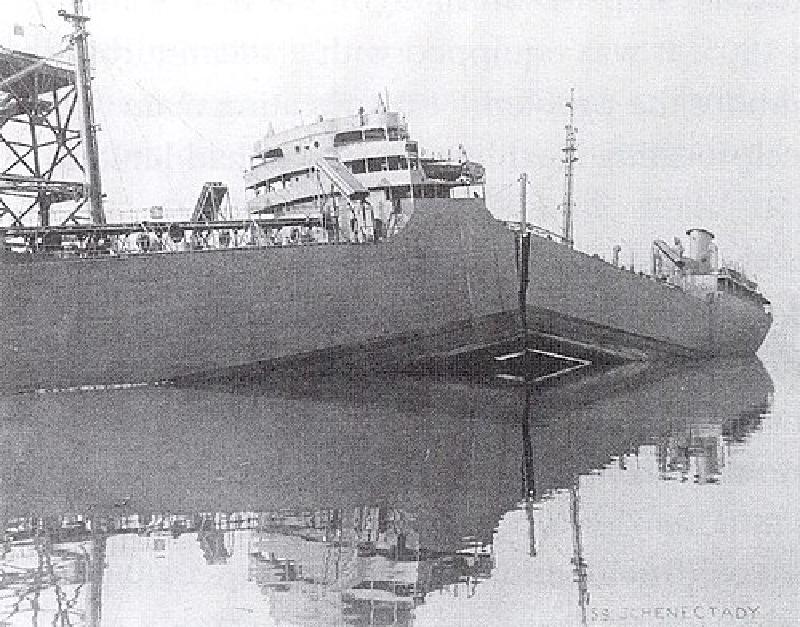
On a calm January night in 1943, the T‑2 tanker Schenectady lay moored at a Portland, Oregon, dock. No storm. No enemy action. No unusual cargo. At 11:30 pm, witnesses half a mile away heard a sound like a cannon shot. The ship had broken in two. Its back split open from deck to keel while sitting in flat water.
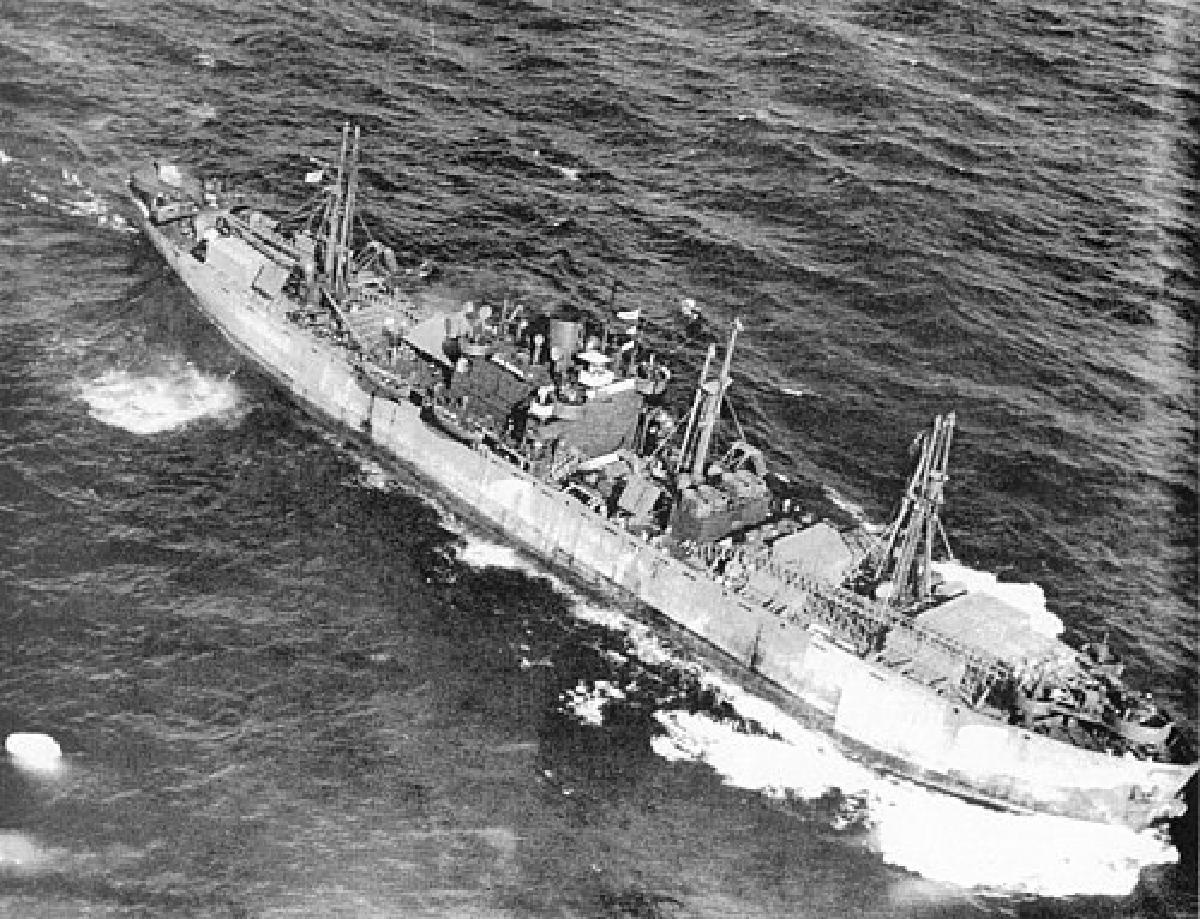
The Schenectady was not alone. Over the next three years, dozens of all‑welded merchant ships would crack open without warning. Some broke while underway in heavy North Atlantic seas. Others, like the Schenectady, failed at anchor. A few simply sank. The American wartime shipbuilding program—the largest industrial mobilization in history—had produced a fleet of steel vessels that could not survive the ocean they were built to cross.
The cause was not sabotage. It was not enemy torpedoes. It was the weld.#
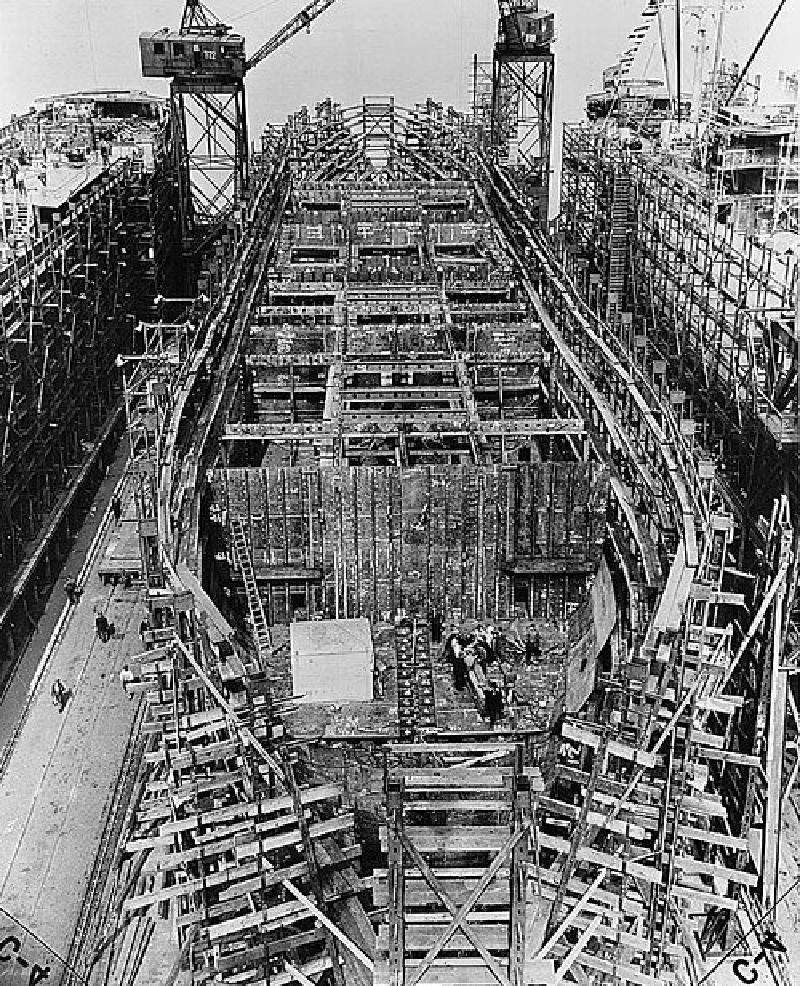
Between 1941 and 1945, the United States built 2,710 Liberty ships and nearly 2,300 additional welded cargo vessels, including T‑2 tankers and Victory ships. That is roughly 5,000 all‑welded hulls produced in four years. Before the war, most large ships were riveted. Riveting was slow, required skilled labor, and created a hull made of overlapping plates joined by thousands of individual fasteners. Welding promised speed. A welded hull could be assembled by semi‑skilled workers in half the time. The urgent demand for cargo tonnage—German U‑boats were sinking Allied shipping faster than yards could replace it—made welding the obvious choice.
The obvious choice killed people.#
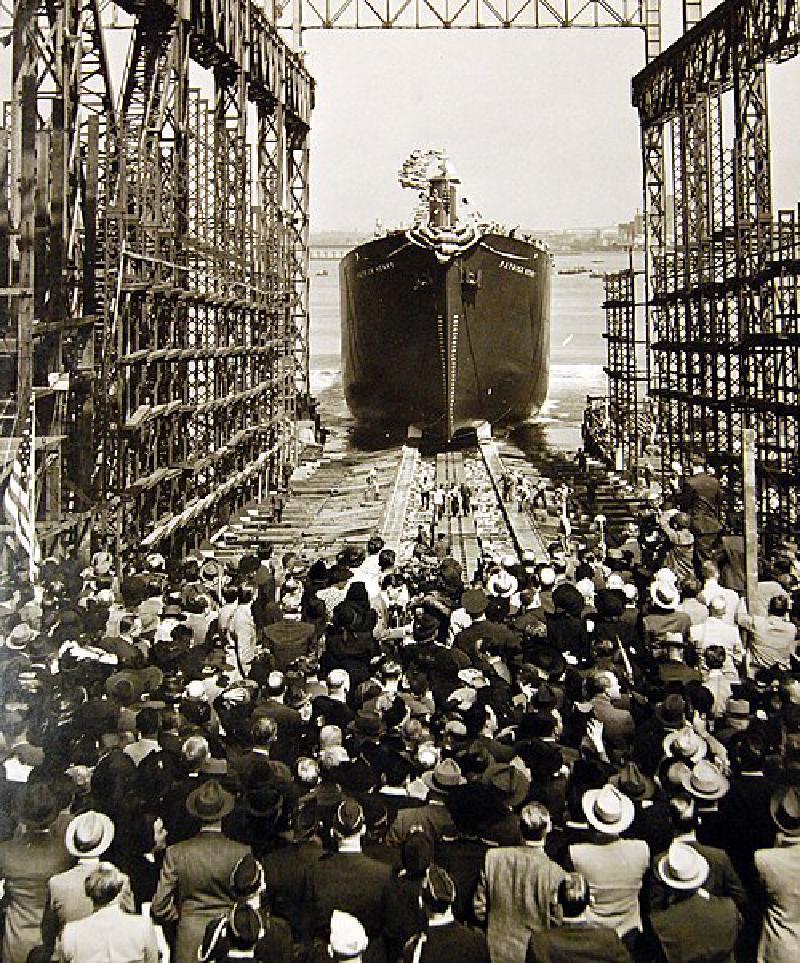
Riveted hulls had a hidden virtue. Every riveted joint acted as a crack arrester. When a crack started in a steel plate, it would run until it hit a row of rivet holes, where the stress field dissipated. The crack stopped. Welded hulls had no such barriers. A single continuous weld seam turned the entire ship into one interconnected steel surface. If a crack initiated anywhere—at a weld toe, at a square hatch corner, at a poorly ground undercut—it could propagate across the hull without interruption. And in the North Atlantic in winter, that is exactly what happened.
The steel made it worse. Not all steel is the same. At high temperatures, steel behaves like putty: it stretches, yields, and gives visible warning before breaking. At low temperatures, the same steel can turn glass‑brittle. The transition temperature—the point where ductile behavior gives way to brittle fracture—depends on the steel’s chemistry and microstructure. The steel used in Liberty ships had a transition temperature above freezing. Some plates became brittle at 40 °F (4 °C). In the North Atlantic in winter, sea temperatures routinely drop below 32 °F (0 °C). Air temperatures are lower. The steel lost its ability to deform. It simply snapped.
The first major failure occurred in November 1942, before most Liberty ships had even left the builder’s ways. But the disaster did not become undeniable until January 1943, when the Schenectady broke in half at the dock. Photographs of the wreck show the stern and bow still afloat, the midsection submerged, the deck plates peeled back like a sardine can. No combat damage. No explosion. Just brittle steel.
By the end of the war, the U.S. Navy’s Ship Structure Committee had documented roughly 1,500 significant brittle fractures across the welded fleet. Two hundred thirty‑three ships suffered severe fractures between 1942 and 1952. Nineteen broke completely in half. The John P. Gaines, a Liberty ship, snapped in two on November 24, 1943, while steaming in the North Pacific. It sank within minutes. The Henry Wynkoop split at the deck and bottom simultaneously. The George L. Killion cracked from the main deck to the turn of the bilge. These were not isolated metallurgical curiosities. They were an epidemic.
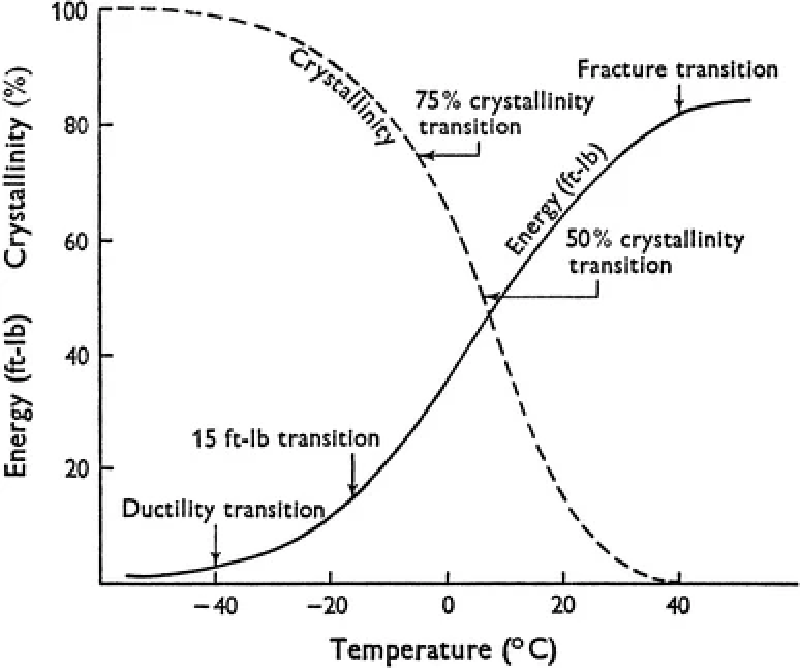
Investigators began looking for answers. They found them in three places: the steel, the weld, and the geometry. The steel problem was chemical. Liberty ship plates had high carbon content and low manganese. That combination raised the ductile‑brittle transition temperature. Metallurgists would later learn that adding manganese and reducing carbon could push the transition temperature below -20 °F (-29 °C), making the steel safe for any ocean. But in 1942, no one had run the tests.
The weld problem was both material and human. Welding introduces residual stresses. It creates heat‑affected zones where the steel’s microstructure changes. It leaves defects—voids, undercuts, slag inclusions—that act as microscopic notches. And wartime welders, many of them trained in weeks, left too many of those defects in place.
The geometry problem was the simplest and the most damning. Liberty ships had square hatch corners. A square corner is a stress concentration. Engineers had known since the nineteenth century that a sharp inside corner concentrates stress by a factor of three or more. But the Liberty ship was designed for speed, not for fracture mechanics. No one had asked what happens when a brittle crack running at 1,000 meters per second meets a square corner. The answer: it keeps running.
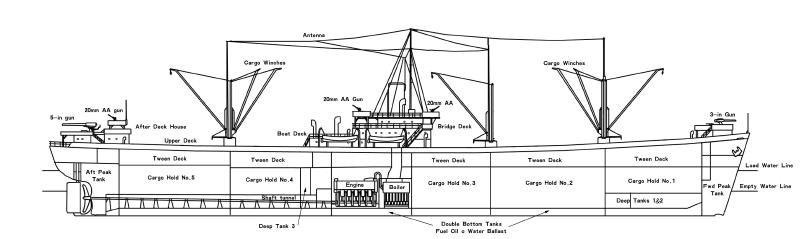
By 1944, the Ship Structure Committee had launched a systematic research program. They tested steel plates from broken ships. They measured crack propagation speeds. They developed new test methods, including the explosion bulge test and the Robertson crack arrest test. They discovered that a crack, once started, could travel the length of a ship in less than a second.
The knowledge came too late for the war. But it did not disappear when the fighting ended.#
The Liberty ship failures gave birth to fracture mechanics as an engineering discipline. Before 1943, the field did not exist. After 1950, it was a required subject for naval architects, pressure vessel designers, and aerospace engineers. The key insight—that a crack of a certain length under a certain stress will propagate catastrophically, and that the relationship between stress, crack length, and material toughness can be calculated—came directly from the wreckage of the welded fleet. The John P. Gaines is not just a sunken ship. It is the first case study in the textbook.
The regulatory response took longer. In the 1950s, classification societies began adding toughness requirements to their rules for ship steel. By the 1960s, minimum design temperatures were specified for vessels operating in cold climates. By the 1980s, fracture mechanics had become the standard tool for assessing structural integrity in nuclear reactors, offshore platforms, and aircraft. Every time an engineer calculates whether a crack will grow or stop, they are working in a discipline shaped by the Liberty ship.
But the deeper lesson is not about steel or welds. It is about the structure of wartime decision‑making. The Liberty ship program was not a failure of engineering knowledge. It was a failure to ask the right questions before the ships were built. The United States Navy knew that welding produced continuous hulls. It knew that square corners concentrated stress. It knew that cold temperatures affected steel behavior. But no one put those facts together until ships started breaking. The pressure to produce tonnage overwhelmed the pressure to understand the consequences of production decisions. The result was 1,500 fractures, 19 ships lost, and an unknown number of sailors killed.
The same pattern repeats. The Tacoma Narrows Bridge collapsed because engineers did not understand aeroelastic flutter. The Hyatt Regency walkway fell because a last‑minute design change doubled the load on a connection. The Deepwater Horizon exploded because a risk assessment ignored negative test results. In each case, the information existed somewhere. It was just not assembled, or not believed, or not acted upon before the failure.
What makes the Liberty ship story different is its scale. Five thousand ships. Four years. One thousand five hundred fractures. The evidence was overwhelming, and it arrived in real time. Yet the program continued. Ships were repaired and sent back to sea. New ships were built with the same steel, the same welds, the same square corners. Only after the war did the systematic research begin.
The transition curve in the figure above shows what the metallurgists discovered. Liberty ship steel lost half its impact resistance at temperatures where modern ship steel remains fully ductile. The difference is not subtle. It is the difference between a plate that bends and a plate that shatters. And that difference was measurable before the war began, if anyone had bothered to measure it.
No one did.#
The birth of fracture mechanics is usually told as a story of scientific progress: brilliant researchers extending Griffith’s theory, developing the stress intensity factor, creating the tools that now keep airplanes from falling apart. That story is true. But it leaves out the bodies. The research was funded by the wreckage. The knowledge was extracted from the failures. And the failures were not random acts of nature. They were the predictable outcome of decisions made by people who should have known better.
That is not a scandal. It is a description of how systems operate under pressure. Governments lie, institutions fail, and engineers cut corners because the alternative—slowing down, asking the hard question, running the test—looks expensive until the ship breaks in half at the dock. Then it looks cheap.
The welded merchant ships of World War II taught a generation of engineers how to prevent brittle fracture. The lesson cost billions of dollars and hundreds of lives. But the lesson was learned. Modern ships do not snap in half in cold weather. Modern steel has a transition temperature low enough to make the North Atlantic safe. And modern design codes require the calculations that the Liberty ship builders never performed.
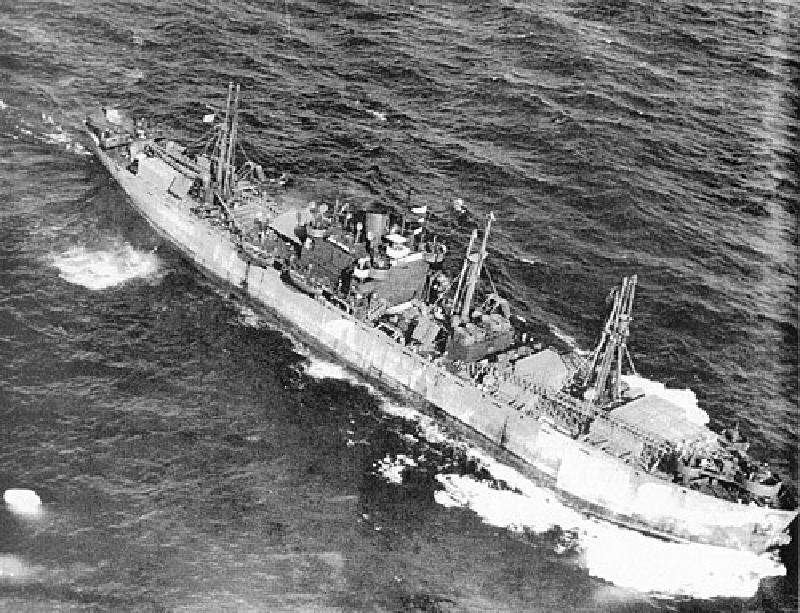
The Schenectady was repaired and returned to service. It survived the war. But the question its failure raised has never been answered fully. How many other Schenectadys are sailing right now, in some other industry, with some other technology, waiting for the right combination of cold water and a square corner?
The answer is all of them. And that is not pessimism. That is just what the evidence shows.