
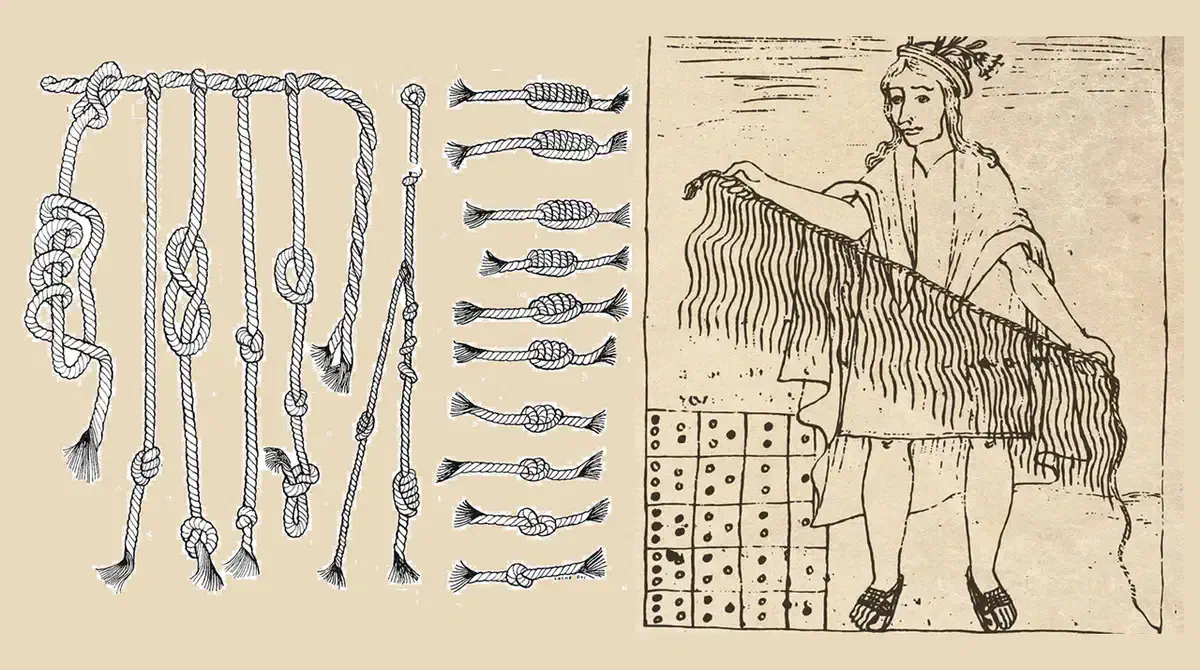
Rope is often viewed as a physical tool for hauling or binding, yet its capacity to connect extends deeply into the human psyche. Throughout history, the simple act of twisting fibers and tying knots has carried profound cultural, spiritual, and communicative weight. As early societies mastered cordage to manipulate the physical world, the sources show they simultaneously adopted knots as powerful symbols to organize their social and religious lives. From the sacred rituals of ancient Rome to the vast administrative networks of the Inca Empire, the knot has served as a mechanism for securing marriages, capturing magic, and preserving complex information.
The Ties of Marriage and Divinity#
The symbolic power of the knot is particularly evident in ancient marital and religious traditions. In the Roman Republic, patrician brides wore a woolen belt tied with a Hercules knot, also known as the nodus Herculeus. This specific knot, which is structurally identical to a square or reef knot, represented the procreative power of the demigod Hercules, who was reputed to have sired seventy children. By requiring the groom to untie this knot on the wedding bed, the ritual symbolized the husband capturing the bride's fertility and the couple entering into a unified bond.
Beyond Rome, intricate knots have held profound spiritual significance across the globe. In Chinese Buddhism, the endless knot, or Pan Chang, consists of a seemingly never ending series of turns that represents the continuous cycle of birth and rebirth. Similarly, the Hindu god Vishnu is occasionally depicted with an endless knot on his chest, signifying the ultimate unity of all things. Celtic traditions also embraced the spiritual geometry of twisted cordage. The Irish dara knot symbolized the intertwined roots and inner strength of the oak tree. The Celts furthermore utilized rope in the marriage ritual of handfasting, wherein a betrothed couple's hands were literally bound together to symbolize their union, a practice that persisted through the eighteenth century in Scotland and remains popular in modern civil ceremonies.
Dark Magic and Superstition#
Where there is spiritual reverence, there is often corresponding superstition. The physical binding properties of rope naturally translated into a folk belief that knots could capture and control intangible forces. In European mythology and folklore, individuals branded as witches were frequently suspected of controlling the weather through the use of wind knots. According to these superstitions, a length of cord was tied with multiple knots, each containing a trapped storm or wind. Enterprising women were known to sell these knotted cords to mariners, who believed they could untie a knot to release a favorable breeze when their ships were becalmed.
The magical associations of rope also possessed a darker, more malevolent edge. Knots were frequently blamed for cursing individuals and destroying lives. In Scotland in 1705, George and Lachlan Ratray were sentenced to death after being accused of bewitching a man and ruining his marriage via the use of magic knots. A few years later in France, an individual was burned alive after a court ruled they had used knots to bewitch an entire family. In these instances, the knot was perceived not as a symbol of unity, but as a malicious tool for binding the fates of others.
The Khipu and Three Dimensional Information#
Perhaps the most sophisticated cultural application of knots occurred in South America, where the Inca Empire utilized rope not just for symbolism, but as a highly advanced information storage system. Without a written alphabet, the Inca relied on complex assemblages of twisted cords known as khipu. According to the sources, a khipu typically consisted of a primary horizontal cord from which numerous vertical cords were suspended. These vertical cords acted as data registries, encoding information through a combination of cord material, color, and the precise type and placement of knots.
The materials used for khipu varied by region. Coastal populations predominantly used twisted cotton, while highland communities often incorporated animal fibers from alpacas, llamas, and deer, which accepted and retained colored dyes more effectively. The knots themselves functioned as a rigorous decimal numbering system. Spanish chroniclers noted that the knots represented units, tens, hundreds, and thousands, organized as precisely as columns in an accountant's ledger.
While long understood as tools for census and accounting data, recent research suggests some khipu may also contain narrative histories. Researchers studying khipu safeguarded in remote Andean villages have discovered intricate logosyllabic symbols that local chiefs claim record epistles about warfare. For historians, decoding the khipu requires analyzing the cordage in three dimensions, physically turning the knots to count the loops and understand their structure.
The creation of khipu survived the Spanish conquest and continues in some Andean communities today, particularly in the form of funerary khipu. These knotted cords are created during wakes to accompany the deceased, symbolically rectifying the dissolution of death by twisting fibers back together to aid the soul in its journey through the afterlife. Whether binding a couple in marriage or cataloging the resources of an empire, rope has proven to be an indispensable tool for tying human societies together.