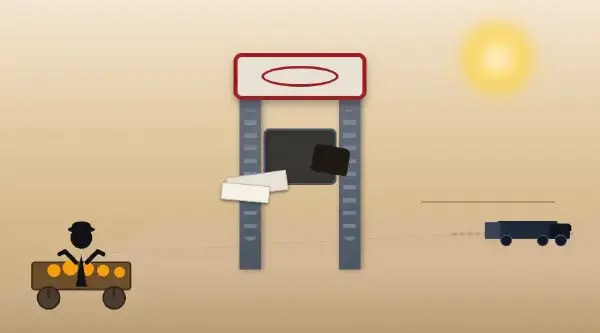
In a tin‑roofed warehouse outside Thika, Kenya, Josephine Wanjiku stares at a stack of papers that will determine whether her avocado cooperative survives the year. The forms are not tax returns or loan applications. They are certificates: GlobalG.A.P. for food safety, an organic label for the European market, a traceability audit that tracks each fruit from tree to container, and laboratory reports screening for pesticide residues the cooperative does not use. Together, the paperwork costs more than the co‑op’s annual income, and it must be renewed before a single avocado is shipped.
“We are farmers, not lawyers,” Wanjiku says, pushing a glossy compliance manual across the table. “Every season they add something new—another test, another auditor, another fee. It is a tax, but it doesn’t build roads or schools. It just makes a few companies rich.”
Wanjiku’s burden is not an accident of bureaucracy. It is the frontline of a quiet revolution in global trade that has unfolded over the past quarter‑century with remarkably little political scrutiny. Technical standards—the specifications for everything from the voltage of a plug to the permissible chemical residues on a mango—have multiplied so rapidly that they now blanket 90% of internationally traded goods. In 1998, the share was about 15%. The transformation has turned the architecture of trade from one governed mainly by tariffs, which are transparent and negotiated openly, to one governed by a thickening mesh of rules that are drafted in private committees, enforced by private auditors, and paid for by the very firms that must obey them.
[Figure 1: The Regulatory Web Expands – Share of global trade affected by standards (1998–2025)]
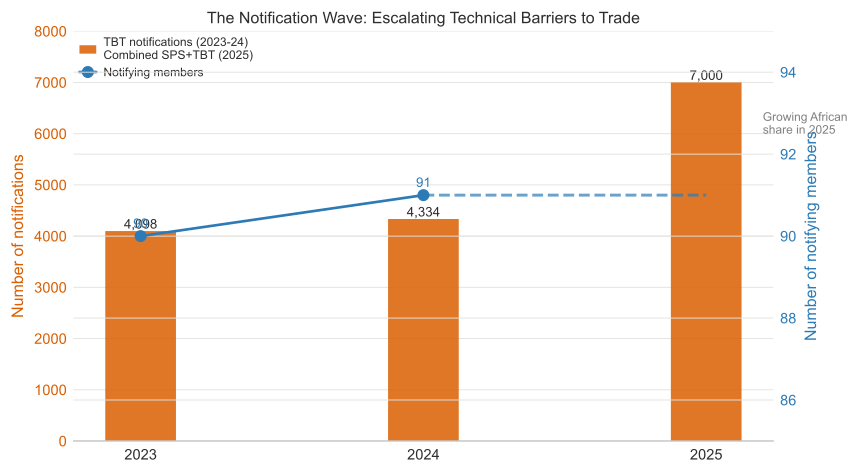
The line is breathtaking. Two data points, 15% and 90%, separated by a generation of rule‑making that has produced more than 25,700 ISO international standards, thousands of national deviations, and an annual torrent of new requirements. In 2024 alone, ISO published 1,533 new standards spanning 88,739 pages; the World Trade Organisation (WTO) received a record 4,334 notifications of new technical barriers to trade from 91 member countries. Add sanitary and phytosanitary measures, and the annual tally of new rules exceeds 7,000. The World Bank’s 2025 World Development Report—the first in half a century to focus on standards—notes that the density of these measures has reached a point where they define market access as decisively as any customs duty.
For trade economists, this is a puzzle. Standards are supposed to reduce trade costs by harmonising requirements. A common plug, a common safety test, a common food‑safety protocol: these should make it easier to sell a product anywhere. That logic is real, and it explains why many large manufacturers in rich countries welcome standardisation. Yet the experience of Wanjiku’s cooperative reveals a parallel reality, one in which standards function less as lubricants of commerce and more as tollgates. The difference lies in who writes the rules, who can afford to comply, and who collects the fees.
The pay‑to‑play infrastructure#
The metaphor that best captures this dual nature is infrastructure. Physical infrastructure—ports, roads, broadband—is expensive to build and expensive to use, but it is at least visible and, in principle, public. Standards are invisible infrastructure, and the tolls they generate are largely private. To gain entry to a rich‑country market, an exporter must pay for testing equipment manufactured by a handful of global suppliers, for auditors trained and accredited in a handful of advanced economies, and for licences to patented technologies that are often embedded in the standard itself. The system is not a conspiracy; it has evolved organically from the intersection of legitimate safety concerns, corporate strategy, and the deep asymmetry of technical expertise between North and South. But its cumulative effect is to convert open trade into a pay‑to‑play regime in which the poorest firms pay the highest relative price.
The numbers on Wanjiku’s table are illustrative, not exceptional. The cost of complying with European food‑safety standards for a small African exporter can easily top $16,000, and the full package—including organic certification, GlobalG.A.P., traceability, and lab testing—ranges between $16,000 and $34,000 per product line, before a single kilogram leaves the farm. For context, the median annual income in rural Kenya is well under $2,000. The cost structure is regressive: it is not proportional to the value of the shipment, nor does it vary with the exporter’s ability to pay. It is an upfront, fixed‑cost barrier that excludes precisely those small producers that development policy purports to help. And the fees do not disappear into a government treasury; they flow to a sprawling ecosystem of private certification bodies, testing laboratories, and consultants, most of them based in the very countries that demand the standards.
[Figure 5: Certification Price Tag for an African Exporter – Itemised costs and range]
The certification burden is multiplied by the ever‑expanding list of requirements. WTO members are required to notify the organisation whenever they introduce a new technical regulation that may affect trade. Those notifications have been climbing steadily, from 4,098 in 2023 to 4,334 in 2024, and, combined with sanitary and phytosanitary measures, to over 7,000 in 2025. Uganda, Tanzania, Kenya, and Rwanda are now among the most prolific notifiers—not because they are erecting barriers, but because they are frantically trying to align their own rules with those of their major trading partners, often adopting European or American standards wholesale in the hope that reciprocity will ease market access. It rarely does. Instead, it creates a regulatory echo chamber in which developing countries spend scarce public resources implementing standards that were designed without their input and that primarily benefit auditors from the standard‑setting economies.
The distance between paper and reality#
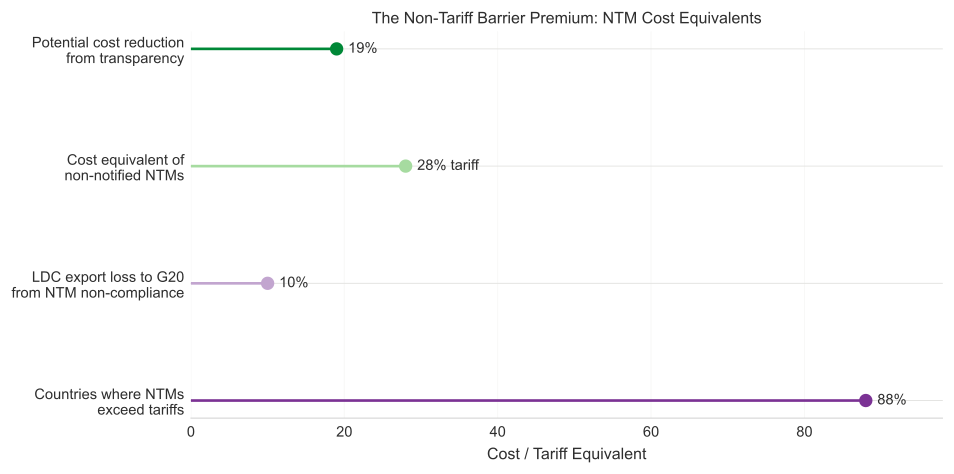
The proliferation of standards is sometimes celebrated as evidence of a maturing global economy in which consumers demand ever‑higher levels of safety, sustainability, and quality. There is truth to that. No reasonable person wants contaminated food or unsafe electronics. But the gap between the stated purpose of a standard and its economic effect is widening. The UN Conference on Trade and Development (UNCTAD) calculates that non‑tariff measures—of which technical standards are a major subset—now impose higher trade costs than tariffs for 88% of countries. For least‑developed countries, the loss is stark: an estimated 10% of their exports to G20 markets are forgone simply because they cannot meet NTM requirements. The cost equivalent of these measures, especially those that are poorly notified or deliberately opaque, can reach 28%—far higher than any remaining tariff on industrial goods in developed economies.
What makes this transformation so politically elusive is its incremental, technocratic nature. Tariffs are law; they are debated in parliaments and published in schedules. A standard, by contrast, is typically issued by a body that most citizens have never heard of—a committee of the International Organization for Standardization, a working group of the Codex Alimentarius, a European Commission delegated act. It arrives not with a bang but with a press release about consumer safety. Yet its economic effects can be swifter and more exclusionary than a tariff hike. A sudden change in the maximum residue limit for a pesticide can wipe out an entire season’s harvest for a horticultural exporter in Ghana; a new requirement for third‑party certification of factory emissions can render a Vietnamese textile mill uncompetitive overnight. And because the standard is sold as a matter of science or public health, there is no mechanism for negotiating compensation, no schedule for phasing it in, and no dispute settlement that a small country can easily access.
Wanjiku’s cooperative is a case in point. Last year, the European Union updated its rules on the maximum levels of certain contaminants in avocado pulp. The new standard was published in the Official Journal with the usual preamble about protecting public health. What it did not mention was that the laboratory test required to prove compliance could be performed in only three accredited facilities in East Africa, none of them in Kenya, and that the cost of sending samples abroad would add $300 per batch to Wanjiku’s expenses. When her cooperative asked the EU delegation for a transition period, they were told that food safety is not negotiable. The asymmetry is absolute: the safety concern is defined by the regulator; the cost is borne by the farmer; and the profit from the required test flows to a lab in South Africa or Germany.
The cartel logic#
The result is a system that looks, in its structural effects, remarkably like a cartel. The incumbents—large multinational firms that helped draft the standards and can spread compliance costs over millions of units—see their competitive position strengthened. New entrants, especially from developing countries, must pay a toll that incumbents have already absorbed or helped to design. And the toll‑keepers—the certification bodies, the test‑equipment manufacturers, the patent holders—have a vested interest in standards that are complex, frequently updated, and enforced through proprietary methods.
This is not mere rhetoric. The World Bank’s 2025 World Development Report, for all its diplomatic language, admits that standards “are no longer invisible infrastructure—they are critical enablers of sustainable, inclusive development” but warns that “too many developing countries are left behind.” The data it marshals are sobering: high‑income countries participate in 84% of all active ISO technical committees; low‑income countries, in just 7%. Advanced economies send 525 delegates to ISO meetings; low‑income countries send nine. When the Kenyan Bureau of Standards wanted to upgrade its laboratory to perform a fraction of the tests required for EU exports, it had to purchase three instruments at a cost of KES 67 million (about $519,000), funded partly by a donor. The equipment, of course, came from a supplier in a high‑income country, and the technicians who installed it had to be flown in.
The invisible net is not a metaphor for conspiracy; it is a description of a system that has grown so dense, so technical, and so costly that it now functions as an independent source of trade friction, separate from the political debates over tariffs that dominate headlines. When a farmer in Thika cannot sell avocados because she cannot afford a $2,000 pesticide test, the effect on her income is the same as if Europe had imposed a prohibitive tariff. The difference is that a tariff would have been voted on, debated, and potentially challenged at the WTO. The standard was issued by a committee she has never heard of, and she has no practical recourse.
A gridlock that can be broken#
The proliferation of standards will not stop. Climate change, digitalisation, and consumer anxiety about supply chains ensure that the pressure to regulate will only intensify. The question is whether the governance of standards can be reformed before the web becomes a wall. The good news is that the conversation has started. The World Bank’s decision to devote its flagship development report to standards is one sign; UNCTAD’s detailed mapping of non‑tariff measures is another. The WTO’s transparency initiatives, if properly funded, could cut the cost of NTMs by nearly a fifth simply by making rules easier to understand and compare. And digital tools—blockchain‑based certification platforms, remote inspection technologies—hold out the promise of cheaper compliance.
But none of this will be enough without a fundamental shift in power. Standards bodies remain opaque and unaccountable. Their committees are packed with the regulated; their voting structures give a permanent veto to a handful of rich economies. Until developing countries have a meaningful seat at the table—not just as observers or recipients of technical assistance, but as co‑authors of the rules that govern their own access to the global market—the standards trap will continue to tighten.
Josephine Wanjiku has a simpler diagnosis. When asked what she would say to the standard‑setters in Brussels and Geneva, she folds her arms and looks at the stack of certificates that have cost her co‑op two years of profits. “I would tell them,” she says, “that we want to grow clean food. We want to be part of the world. But you have made the door so heavy that we cannot push it open.”
In the next article of this series, we will examine the architecture of power behind that door—who sits on the committees that write the rules, whose interests they serve, and how the democratic deficit in standard‑setting sustains a cartel that profits from exclusion.