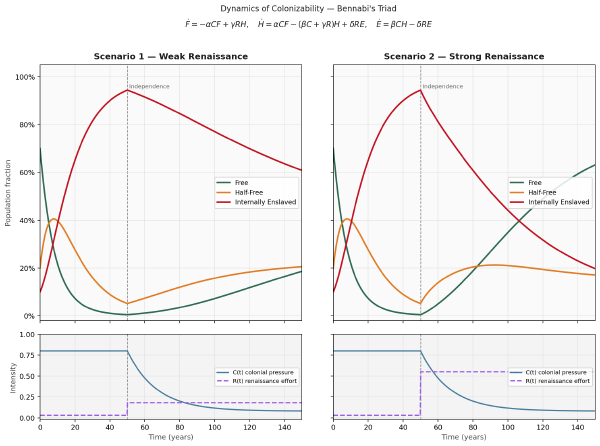
A simple dynamical systems model that captures the core logic of the essay: three psychological types evolving under colonial pressure and an internal renaissance force.
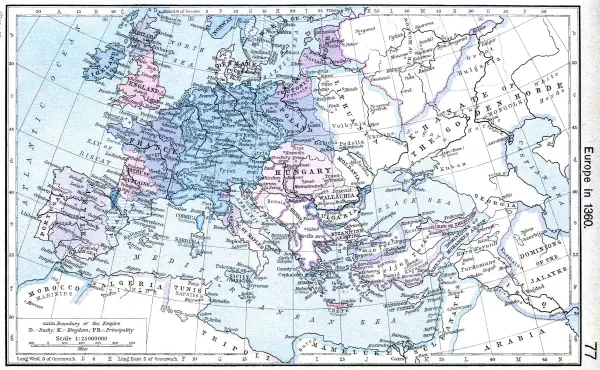
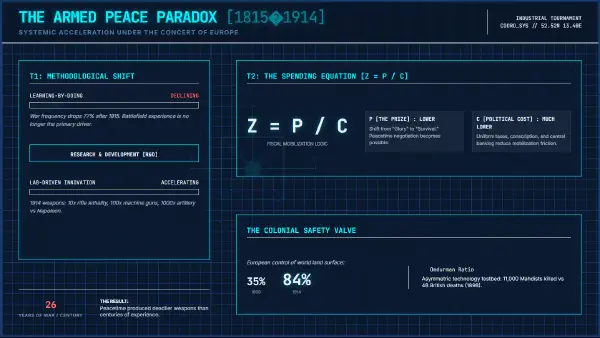
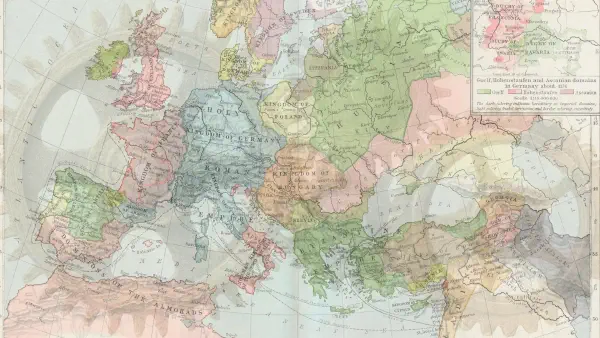
In 900 AD, western Europe was poorer, more violent, and more backward than China, India, or the Muslim Middle East. By 1914, Europeans controlled 84 percent of the world's land surface.
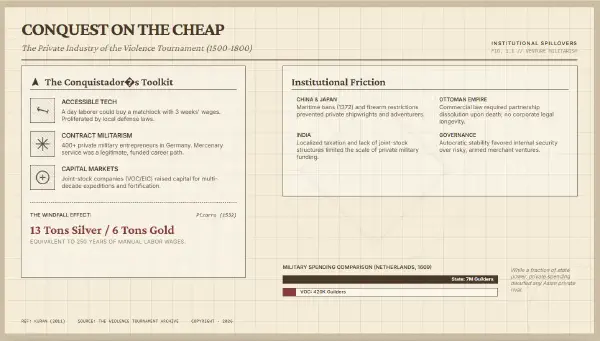
State-funded tournaments produced Europe's military lead, but private adventurers did most of the actual conquering. Cortés, Pizarro, da Gama, and the East India Company all operated with minimal government oversight.
China, the Ottoman Empire, and eighteenth-century India all had frequent warfare and access to gunpowder weapons. None sustained military innovation at Europe's pace.
In 900 AD, western Europe was poorer, more violent, and more backward than China, India, or the Muslim Middle East. By 1914, Europeans controlled 84 percent of the world's land surface.