↓ Skip to main content

Historical Case Studies

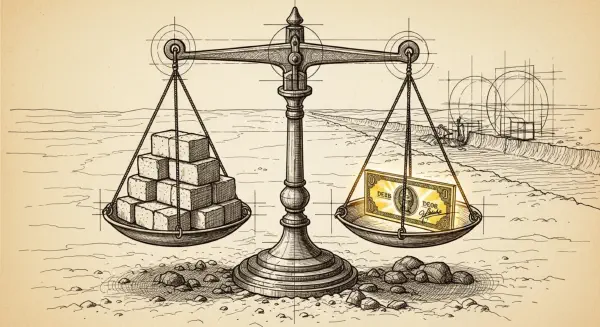
Free Trade: Fact or Fiction?: Part 3 – My Six-Year-Old Son Should Get a Job

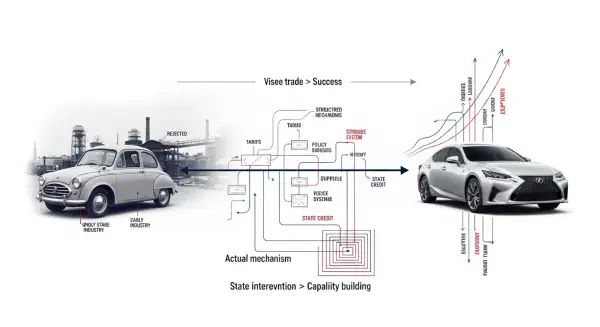
This post examines the theoretical and empirical foundations of free trade as a development strategy, focusing on the gap between the theory's assumptions and the observable conditions of developing country economies. It draws on case studies from Mexico, Ivory Coast, Zimbabwe, and Korea to assess whether rapid trade liberalization produces the outcomes its advocates predict. The argument about capability versus incentive is the analytical core.
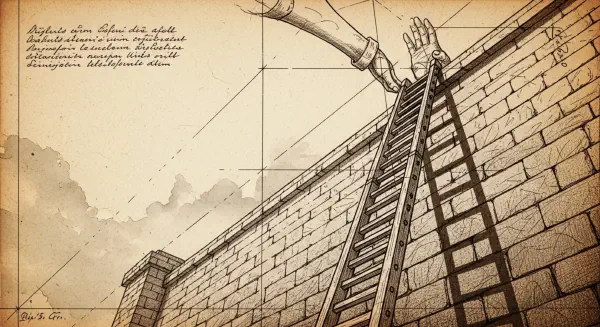
Free Trade: Fact or Fiction?: Part 2 – Do As We Say, Not As We Did

This post examines the development strategies of today's wealthiest nations during the centuries in which they became wealthy, drawing on archival evidence from Britain, the United States, Germany, Japan, and other industrial powers. It places those strategies alongside the policy prescriptions those same countries currently deliver to the developing world. The gap between what rich countries did and what they now recommend is the central subject of the inquiry.

Free Trade: Fact or Fiction?: Part 1 – The Origin Story They Don't Teach

This post examines the dominant narrative about globalization — its origins, its internal logic, and its relationship to the actual historical record. Drawing on comparative development data from the post-war period through the present, it asks whether the policies prescribed to poor countries today bear any resemblance to the policies that made rich countries rich. The stakes are not academic: how a country understands the history of capitalism determines whether it believes it has options.

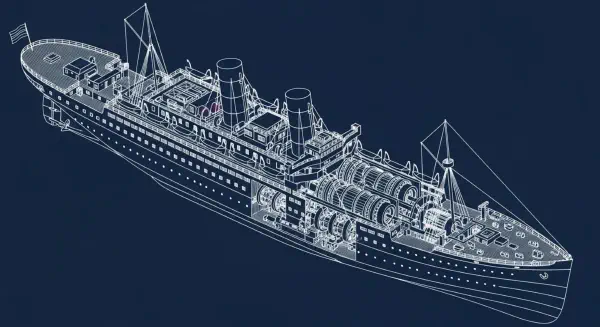
The Industrial Organism: Mechanics of the Early 20th-Century Steamship

The early 20th-century steamship was a transitional industrial organism that achieved transoceanic scale by integrating high-density manual labor with a sophisticated 'closed-loop' thermodynamic system. Quantitative analysis reveals a critical dependence on thermal recycling, where steam volume expanded sixteen-hundredfold to drive quadruple-expansion engines before being condensed to prevent the catastrophic loss of fresh water. The structural mechanism of this integration was a steam-based nervous system that synchronized propulsion, navigation, and life support across a five-hundred-foot riveted steel hull. This analysis requires one post to synthesize the ship's mechanical and logistical unity.

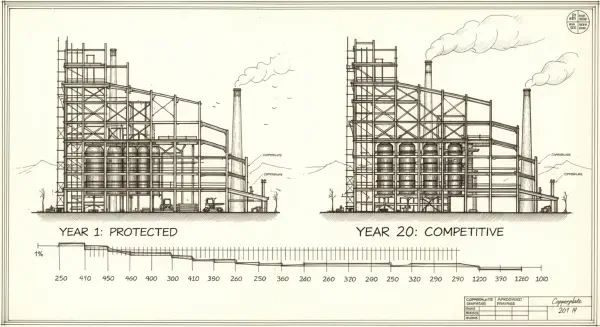
'The Canal That Broke Egypt – Part 5: Egypt's Developmental Divergence, 1820–1920: A Mathematical Model of the Suez Canal's Economic Consequences

From the forced sale of canal shares in 1875 to the British occupation of 1882 to the cotton monoculture that turned a food-exporting nation into a food importer — the endpoint of a chain that began with a handshake in 1854.