

Historical Case Studies

The Edible Idol of Empire – Part 2: The Machinery Behind the Moral Language
·1075 words·6 mins
Institutions at the edge of force

The Edible Idol of Empire
·255 words·2 mins
This three-part series examines how the United States turned democracy from a political principle into the moral packaging of imperial power. It traces the machinery beneath that language—institutions, law, finance, and force—and shows how these structures sustained hierarchy while preserving the image of universal order. It concludes by arguing that Trump did not create this contradiction, but exposed it by openly consuming the very myth America once sold to the world.


The Invisible Hegemon: Deciphering the Architecture of Global Control
·464 words·3 mins
Deciphering the Architecture of Global Control, provides a critical investigation into how the concepts of development and globalization have been utilized as strategic tools for United States hegemony and world domination. Drawing from the analytical framework of Henry Veltmeyer, the series challenges the conventional narrative of global progress, framing it instead as a sophisticated system of imperial extraction and political containment

The Invisible Hegemon – Part 2: From Market Orthodoxy to the Iron Fist
·747 words·4 mins
The transition from economic policy to military force.


The Algebra of Accumulation: Part 4 – Patrimonial Destiny: The Return of Inheritance
·641 words·4 mins
A deep dive into the transition from meritocratic work to inherited wealth as the dominant economic force.
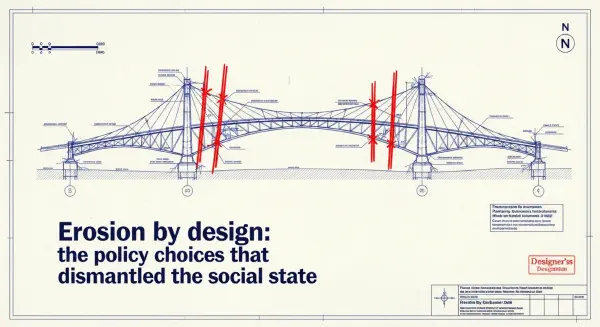
The Algebra of Accumulation: Part 3 – The Policy Pivot: Erosion by Design
·686 words·4 mins
Examining how shifts in progressive taxation and global tax competition accelerated wealth gaps since the 1970s.

The Algebra of Accumulation: Part 2 – The Beta Trajectory: The Weight of the Past
·579 words·3 mins
Analyzing the capital-income ratio (\(\beta\)) and how low growth resurrects the 19th-century rentier class.