On a moonless night in the Donbas, a Ukrainian drone operator stares at a tablet. The feed from the reconnaissance quadcopter is crisp, the latency barely perceptible. He taps a coordinate, and an artillery battery 20 kilometres away adjusts its aim. The entire kill chain—spot, locate, strike—depends on a white dish the size of a pizza box, bolted to the roof of a battered pickup truck.
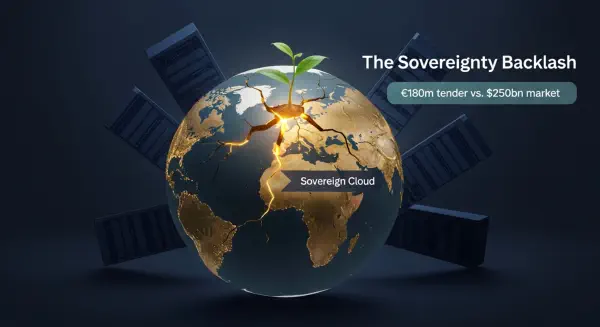
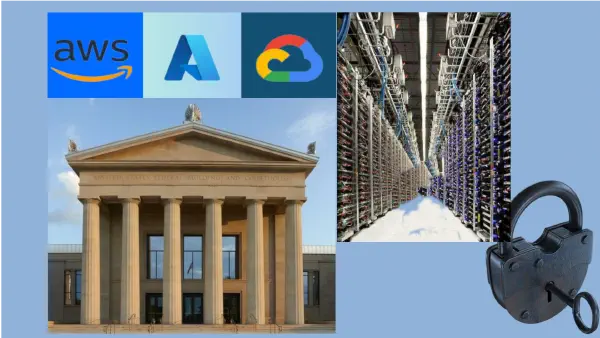
Three firms control 62% of the global cloud market. Governments from Ottawa to The Hague now run their defence, health, and tax systems on rented American infrastructure—and the terms of the lease are not theirs to set.
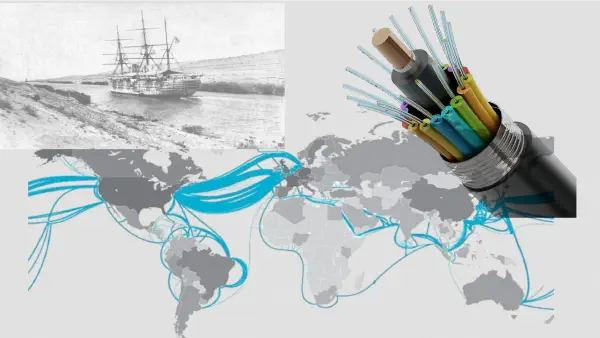
In 1882, Britain seized the Suez Canal to control global movement. Today, three American tech giants control the digital equivalent—and the consequences are just beginning to surface.
Foreign Direct Investment (FDI) is often celebrated as a shortcut to development. But for many developing countries, the reality resembles an old colonial plantation: foreign‑owned enclaves extract cheap labor, land, and tax breaks, while profits flow back to wealthy home countries. Local economies receive low‑wage jobs but little industrial deepening.
The previous three parts have traced a grim continuity: from colonial plantations to Mexico’s IMMEX program to the special economic zones of Vietnam, Bangladesh, Ethiopia, and beyond. In each case, foreign capital gains access to cheap labour, tax breaks, and unrestricted profit repatriation, while the host country receives low‑wage jobs but little industrial deepening. This is not development; it is extraction.
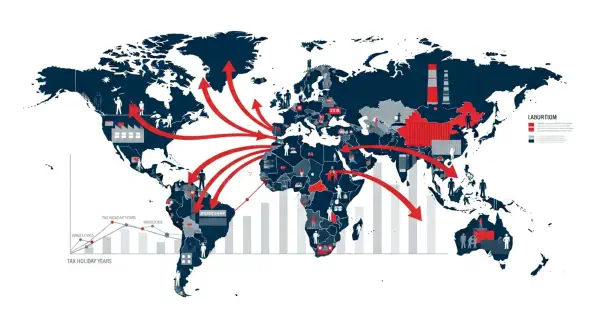
The Mexican IMMEX model did not emerge in isolation. It is one variant of a global policy template promoted by international financial institutions, bilateral donors, and development agencies since the 1980s. Today, dozens of countries operate Special Economic Zones (SEZs) and export‑processing zones (EPZs) that offer foreign investors the same deal: duty‑free imports, tax holidays, weak labour protections, and unrestricted profit repatriation. In exchange, they receive jobs – but rarely the kind of industrial deepening that builds self‑sustaining economies.